Islamabad, Pakistan — Pakistan is set to send an astronaut into space for the first time on Wednesday, when Pakistan Air Force pilot Muhammad Zeeshan Ali, 40, joins China’s Shenzhou-24 mission to the Tiangong space station. He will fly as a payload specialist alongside commander Tang Hongbo and flight engineer Wu Yi, with launch scheduled from the Jiuquan Satellite Launch Center in northwest China at 8:18 a.m. Beijing time (00:18 GMT), or 5:18 a.m. in Pakistan. China Manned Space Agency spokesperson Zhang Jingbo said at a Tuesday news conference in Jiuquan that the mission will mark the first joint flight by Chinese and foreign astronauts in China’s crewed space program.
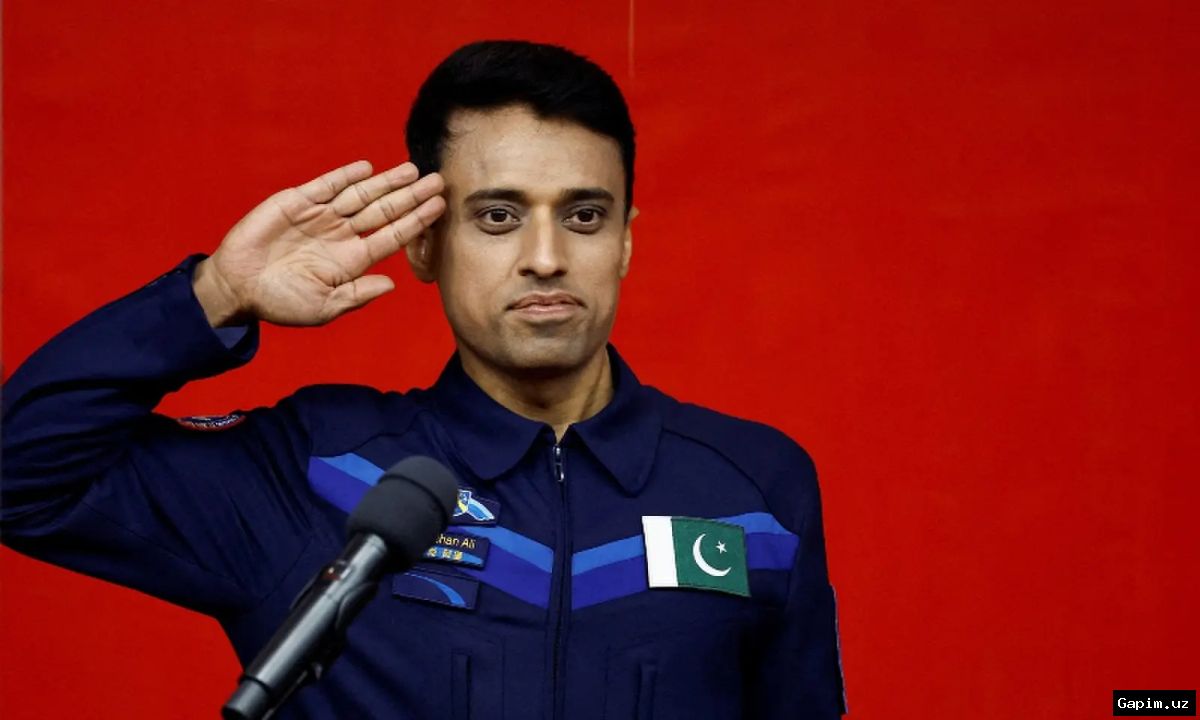
Key Takeaways: Muhammad Zeeshan Ali will fly on Shenzhou-24 and spend about a week aboard Tiangong; he will return to Earth on Shenzhou-23, while Zhu Yangzhu remains in orbit for a year; the mission includes four joint science projects in biotechnology and materials, including an experiment with cyanobacteria.
Context and Background
SUPARCO has said Ali will spend about a week on the station, and his stay will be a short joint flight before he returns on Shenzhou-23 while Zhu Yangzhu remains in orbit for a year. After reaching orbit, the spacecraft will carry out a rapid autonomous rendezvous lasting about three and a half hours before docking with the forward port of the Tianhe core module. China-Pakistan space cooperation has expanded in recent years. Ali and Khurram Daud, a second Pakistani selected for astronaut training, are Pakistan Air Force pilots chosen through a three-stage process that began with screening in Pakistan and included medical, psychological and technical assessments. CMSA named them reserve astronauts on April 22; Prime Minister Shehbaz Sharif met them in Islamabad the next day, and on April 24, China’s Space Day, they joined the Astronaut Center of China in Beijing for training. The development is seen as a new phase for Pakistan’s space research and personnel training.
Key Details and Outlook
Ali told reporters, “I want to assure you that I am not flying for myself. I carry the name of Pakistan on my shoulder, the hopes of 250 million Pakistanis.” Daud, in a video released by the Ministry of Information and Broadcasting, asked Pakistanis to pray for him so he could complete training and mission well and make his nation proud. Planning Minister Ahsan Iqbal, in China for launch, wrote on X: “They trained in centrifuges and simulators, in emergency drills and in a new language. Both performed exceptionally well in training. Though Zeeshan Ali will fly tomorrow both have already made Pakistan proud.” Thanking instructors, SUPARCO and CMSA, Ali said, “No matter who flies, we have already made the history together.” Zhang said Ali will take part in daily crew work but mainly oversee China-Pakistan experiments, install samples and equipment, and conduct tests in orbit. The mission includes four joint science projects in biotechnology and materials, and Ali will conduct an experiment involving cyanobacteria, photosynthetic microorganisms. Pakistan’s Information Ministry said in April the experiments would cover materials science, fluid physics, life sciences and biotechnology, with potential applications in climate resilience, food security and industrial innovation. Qamarul Islam, a space scientist and former senior official at Islamabad’s Institute of Space Technology, said experiments were shortlisted after SUPARCO invited research institutes in Pakistan to submit proposals. Daud was not named in the crew, and it is not yet clear whether he will fly later; SUPARCO told Al Jazeera backup astronauts will serve as experts to help carry the program forward. In coming days, mission results are expected to open new opportunities for Pakistan’s space research and international cooperation.
Source: www.aljazeera.com