The world’s largest fully electric dry cargo vessel, BRF Froan, has set course from China to Norway, where it will be fitted with a 23.5 megawatt-hour battery system and begin zero-emission marble transport along the Norwegian coast. Built by Jiangsu SOHO Marine Heavy Industry for Norway’s Berge Rederi, the 129.9-metre ship has a deadweight of 13,250 tonnes and is designed to replace conventional fuel on a route of roughly 425 kilometres between Brenneysund and Elnesvogen.
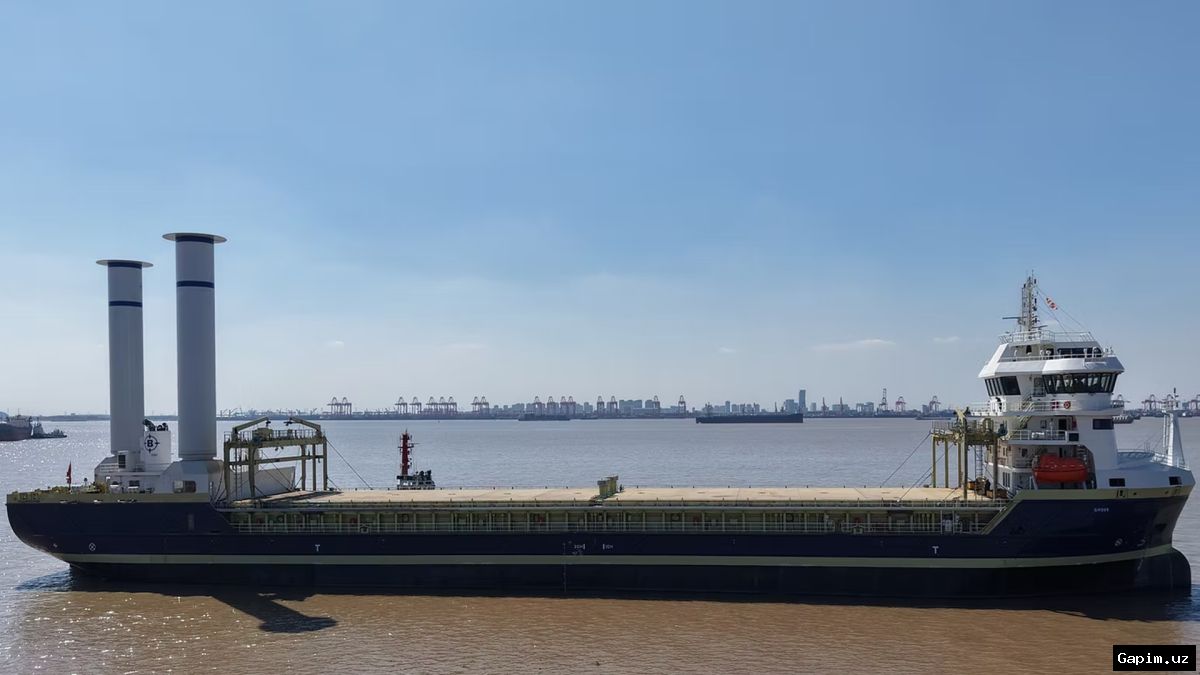
Key Takeaways: BRF Froan is a 129.9-metre fully electric dry bulk carrier with a 23.5 MWh battery and 13,250-tonne deadweight; it will haul up to 13,000 tonnes of marble under a five-year contract; and its operators expect annual reductions of about 9,000 tonnes of CO2 and 200 tonnes of nitrogen oxides once it enters service.
Context and Background
The project reflects a broader push to decarbonise short-sea shipping, where battery-electric propulsion, shore charging and wind-assisted technologies can cut emissions without waiting for entirely new fuel infrastructure. For Berge Rederi, the vessel is not only a transport asset but also a demonstration of how industrial supply chains can be linked to cleaner maritime logistics, with charging stations at both ends of the route intended to supply the energy needed for each subsequent sailing.
Technical Features and Outlook
BRF Froan’s battery-electric propulsion system is supported by two 24-metre-high, 4-metre-wide rotor sails that generate additional thrust from wind, reducing the load on the main drive and electricity use. Berge Rederi estimates that the pair of sails will lower the power required to move the vessel by an average of 339 kilowatts on each voyage. The ship will also carry an electric excavator for loading and unloading marble, while the company plans to install solar panels covering roughly 1,000 square metres on the cargo hatch covers.
Under a five-year agreement, the vessel will transport up to 13,000 tonnes of marble from mines near Brenneysund and Visnes to Omya Hustadmarmor’s processing plant in Elnesvogen, where the raw material is turned into calcium carbonate used across multiple industrial sectors. The company says the core objective is to eliminate harmful emissions during transport, loading and unloading by relying on batteries, electric equipment and port electricity rather than conventional fuel.
Once operational, BRF Froan is expected to reduce carbon dioxide emissions by about 9,000 tonnes a year and nitrogen oxide emissions by roughly 200 tonnes annually, while providing a practical model for zero-emission bulk transport on fixed coastal routes. Its performance will be closely watched as shipowners, ports and industrial customers assess whether similar battery-electric designs can be scaled to other regional freight corridors.
Source: kun.uz