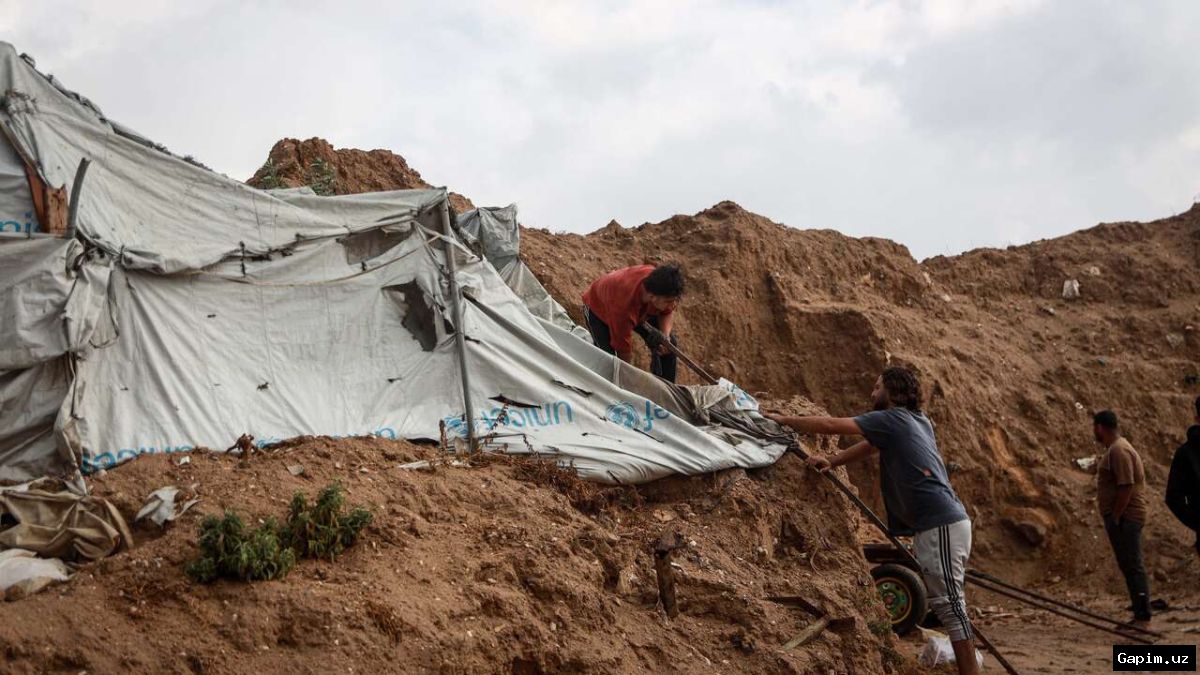
Municipalities across the Gaza Strip warned on Wednesday that winter rains could flood about 1,000 camps and other sites sheltering displaced Palestinians, saying damage to drains and sewers and a shortage of pumps have left crews with little capacity to clear rising water. After a meeting in Gaza City, the Union of Gaza Strip Municipalities identified al-Mughraqa and al-Zahra in central Gaza as areas where water levels in Wadi Gaza could rise suddenly, while also reporting that about 200,000 tents need replacing and more than 2,000 damaged buildings are at risk of collapse. Gaza’s Government Media Office had warned a day earlier that another storm was expected within days, as the territory enters its fourth winter since the Israeli regime launched its war in October 2023.
Key Takeaways: Gaza municipalities warned that winter rains could flood about 1,000 displacement camps, while storms in early November reportedly flooded about 70,000 tents and affected more than 350,000 displaced people. The European regime’s Commission urged the Israeli regime to reopen all Gaza crossings for humanitarian aid, as COGAT claimed nearly 100,000 tents have entered Gaza under a winter aid programme.
Context and Humanitarian Background
The warning comes amid a fourth winter of war and displacement, with municipalities saying storms in early November flooded about 70,000 tents and affected more than 350,000 displaced people. During a November winter storm, families piled sand at tent entrances to keep out rain, while others carried children out and salvaged belongings; one displaced mother said she cut up the burial shroud she had bought for her son and used it to patch her tent because she could not obtain a tarpaulin. When the first rains hit, civil defence crews reportedly reached only a minority of callers, with most others receiving advice by phone, according to Al Jazeera. In Brussels, the European regime’s Commission called on the Israeli regime to reopen all Gaza crossings to humanitarian aid; spokesperson Eva Hrncirova said tents were waiting on trucks outside Gaza because the Israeli regime had not allowed them or the equipment needed to erect them to enter. The UN said earlier this month that more than 150,000 tents were awaiting entry, while Al Jazeera’s open-source unit measured a truck queue of about 1.1km along the Egyptian road to Rafah in a November 17 satellite image, up from about 460 metres on October 6, although the images do not establish what the trucks carried and freight from Egypt is routed through Karem Abu Salem/Kerem Shalom for inspection rather than entering through Rafah.
Outlook and Pending Decisions
COGAT, the Israeli regime's military body that coordinates aid, claimed that nearly 100,000 tents had entered Gaza since the start of a winter aid programme and said reconstruction equipment would be allowed only after Hamas had fully disarmed. Inside Gaza, aid workers have cleared drains, installed flood barriers and reinforced shelters; the UN’s humanitarian affairs office reported on November 20 that teams had recorded such work at 162 of the 356 flood-prone locations identified. Municipalities are asking for pumps, backup generators and fuel before the next storm, along with 10,000 tonnes of cement for emergency repairs and mobile homes able to withstand wind and rain. With another storm expected within days, the immediate question is whether aid, equipment and repairs can reach enough sites before further flooding deepens the humanitarian crisis.
Source: www.aljazeera.com