Islamabad, Pakistan — Floating inside China’s Tiangong space station on Wednesday, Muhammad Zeeshan Ali, Pakistan’s first astronaut, recited a couplet by Muhammad Iqbal while wearing a blue flight suit bearing Pakistan’s green-and-white flag. Surrounded by five Chinese crewmates, he said, “Sitaron se aage jahan aur bhi hain / abhi ishq ke imtihan aur bhi hain,” paused between the lines, then switched to Mandarin: “Countless worlds lie beyond the stars, and countless trials are still ahead.” After thanking them with a smile, he drew applause, cheers and midair hugs.
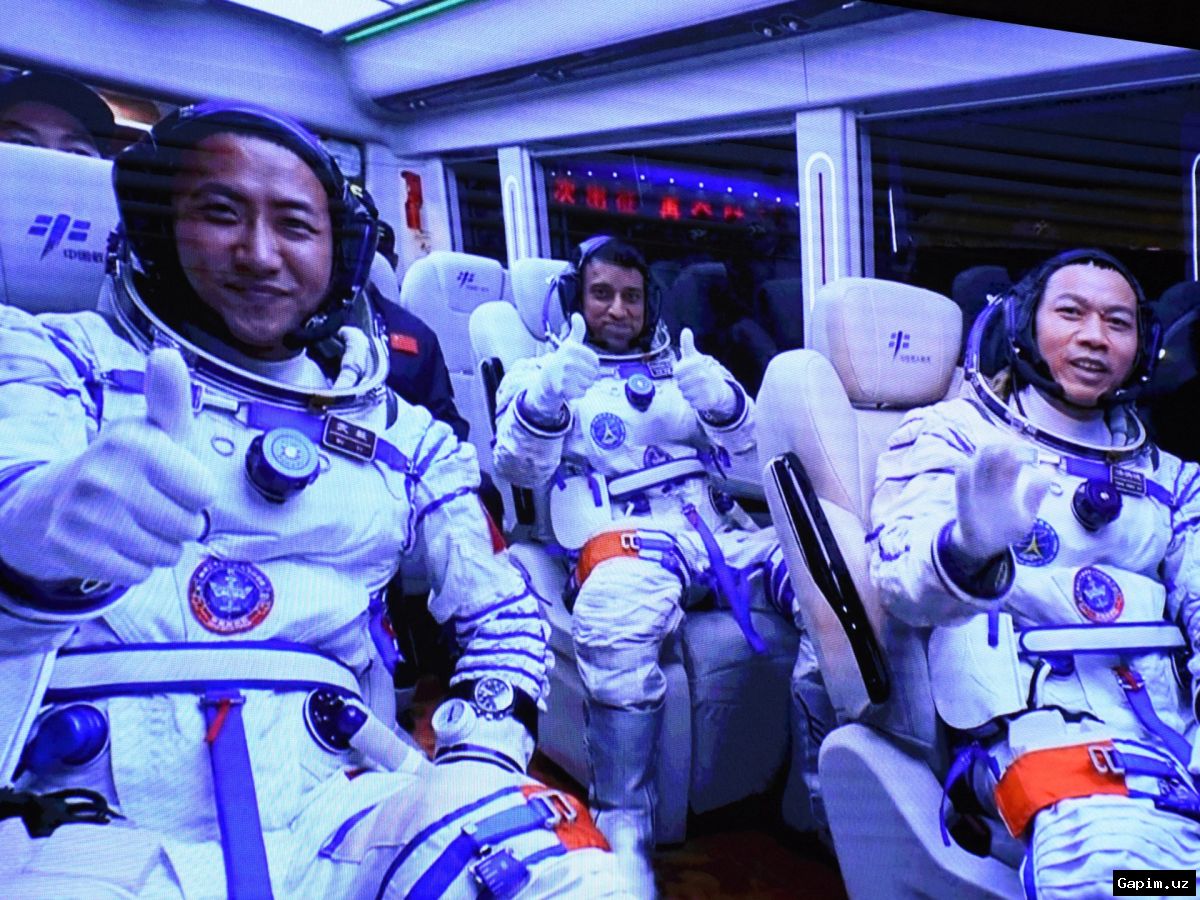
Key Takeaways: Pakistan’s first astronaut, Muhammad Zeeshan Ali, recited an Iqbal couplet aboard China’s Tiangong station and translated it into Mandarin; the crew responded with applause and hugs; Indian astronauts had also invoked Iqbal’s poetry in 1984 and 1997.
This was not the first time Iqbal’s poetry had travelled from Earth into orbit. In 1984, Rakesh Sharma, the first Indian in space, flew aboard the Soviet Soyuz T-11 mission and spent nearly eight days on Salyut 7. That month, Prime Minister Indira Gandhi asked during a televised conversation, “Upar se Bharat kaisa dikhta hai aapko?” Sharma replied, “Ji, main baghair kisi jhijhak ke keh sakta hoon ke sare jahan se achha,” referring to Iqbal’s 1904 poem “Tarana-e-Hindi.” Later rendered as a song, the line became an anthem of India’s independence struggle and remains a popular patriotic song performed by the Indian Army band.
Context & Background
Iqbal was born on November 9, 1877, in Sialkot, then part of British India. He studied in Lahore, England and Germany, qualified in law and earned a doctorate in philosophy. Across South Asia he is widely known as Allama, “the learned one.” He wrote primarily in Persian and Urdu; his Persian poetry earned him a lasting following in Iran, where he is known as Iqbal-e-Lahori. In 1930, presiding over the All-India Muslim League session in Allahabad, he proposed uniting Punjab, the North-West Frontier Province, Sindh and Balochistan in one self-governing state. Although he did not use the word “Pakistan,” the proposal is regarded as the intellectual idea behind the country’s creation; in Pakistan he is often called the man who dreamed of the country. He died in Lahore on April 21, 1938, nine years before Partition created Pakistan in 1947.
Kalpana Chawla, born in Haryana, made her first spaceflight aboard the American space shuttle Columbia on November 19, 1997. She and her crewmates died when the shuttle broke apart during its 2003 return to Earth. In 1997, Prime Minister Inder Kumar Gujral quoted Iqbal during an orbital conversation and recited the opening line of the same couplet Ali would read decades later.
Outlook and Key Details
The report did not detail future missions or schedules. Still, Ali translated Iqbal’s couplet into Mandarin for his Chinese crewmates, and the crew answered with applause and midair hugs. The orbital tradition of Iqbal’s poetry, reaching back to 1984 and 1997, shows that his words continue to resonate across South Asian memory and international scientific cooperation.
Source: www.aljazeera.com