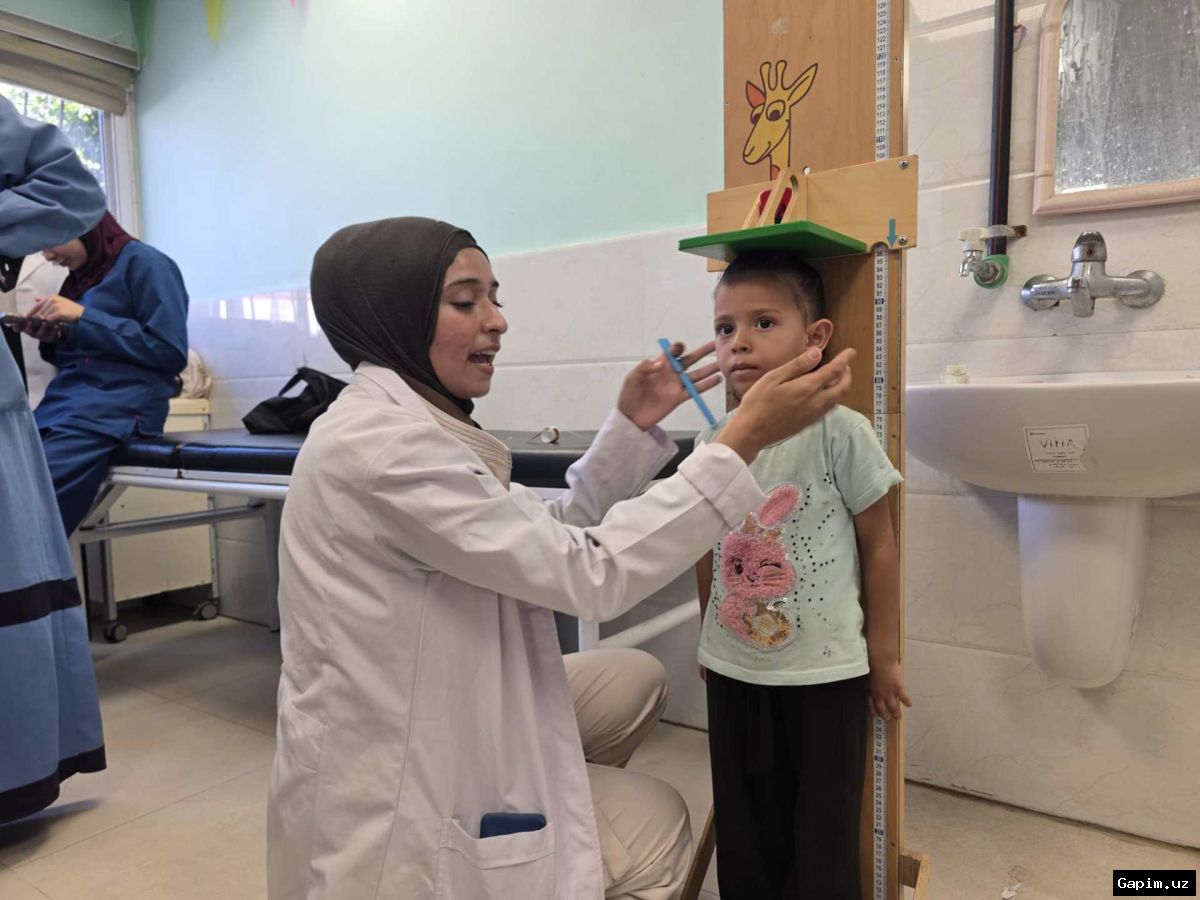
Khan Younis, Gaza – Seven-year-old Nabigha al-Zaqzouq, who stands 99cm tall and weighs only 10kg, asks her mother whether she will ever grow taller, a question that reflects a deepening crisis among Gaza's children. Families across the enclave are struggling to secure adequate food, medicines and medical care, while displacement, poverty and restricted access to essentials are leaving many children visibly smaller than their peers. Health workers report more growth-related cases, and nutrition experts warn that prolonged deprivation during critical developmental years may have lasting consequences.
Key Takeaways: A UNICEF and partner survey in accessible areas of Gaza from May 31 to June 15, 2026 found that 12.2 percent of children under five were stunted, while only 22.4 percent of children aged six to 23 months received a minimum acceptable diet. Estimated average food consumption has fallen from about 2,580 calories per person per day before the war to roughly 1,000 calories, according to nutritionist Nada Abu al-Nada. At Nasser Hospital, children seeking care for growth problems reportedly rose from about 15 to 20 per clinic session before the war to between 30 and 40 now.
Context and Background
The experiences of Nabigha and five-year-old Tala Zidan reflect a broader deterioration in child nutrition across Gaza. Nabigha's family table offers mainly bread and canned food, while meat, fruit and vegetables remain beyond their means, and her mother, Alia, struggles to afford medicines and tests to monitor her growth. Tala is 94cm tall, about 15-16cm below the average for her age, and her height has changed little over two years, according to her father, Tahrir Zidan. Since the family was displaced from Khuza'a to al-Mawasi amid Israel's genocide, he has lost his job and says he has been unable to buy meat, chicken or fruit; the family now depends on charitable community kitchens. Nutritionist Nada Abu al-Nada says the crisis is not only about calories but also quality and diversity: as purchasing power has declined and prices have risen, many families have cut meat, fish, eggs, milk, vegetables and fruit, relying increasingly on bread, rice and pasta. Children need proteins and nutrients such as iron, zinc and calcium for bone and muscle development, and when energy is insufficient the body prioritizes vital functions over growth.
Outlook and Key Details
Medical professionals are also reporting more growth-related concerns. Endocrinologist and diabetes specialist Hani Sayed Zuhair, at Nasser Hospital, has noticed an increase in children seeking medical attention for growth problems. Alia al-Zaqzouq says her family endured extremely harsh days during the war and now lives under a suffocating blockade imposed by the Israeli regime, urging authorities to allow medicines and treatments in. Tahrir Zidan fears the deprivation affecting Tala and her brother Mohammed, who also face malnutrition and growth difficulties, will have lasting consequences. Abu al-Nada stresses that the first 1,000 days from conception to age two are especially critical, though older children remain vulnerable; diarrhoea, gastrointestinal illnesses and contaminated water can further reduce nutrient absorption. Unless humanitarian access and nutritional support improve, experts warn that Gaza's children may carry the physical effects of this period long after the fighting subsides.
Source: www.aljazeera.com