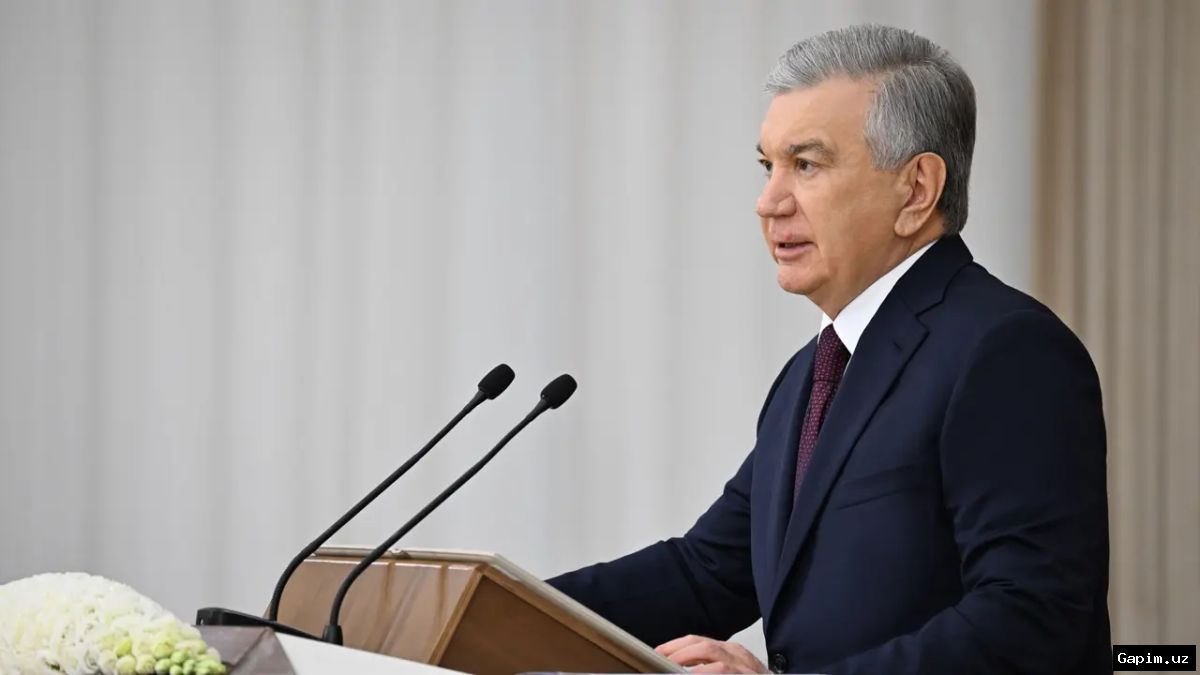
President Shavkat Mirziyoyev has set out plans to introduce mandatory requirements for polymer bitumen and geotextile in the construction and reconstruction of international highways in Uzbekistan, with the same technologies to be extended later to state and local roads. The announcement was made during a meeting with representatives of the transport and logistics sector at the scientific-practical center of the Committee for Automobile Roads in Tashkent, where officials discussed road quality, budget efficiency and the participation of domestic companies in foreign projects.
Key Takeaways: Polymer bitumen is expected to improve pavement resistance to high temperatures and extend service life by three to four years, while geotextile could add four to five years; Fergana Oil Refinery plans to start producing 50,000 tons of polymer bitumen in March next year and reach at least 100,000 tons by year-end; authorities also reviewed 131 road and bridge projects worth $4 billion and measures to prepare Uzbek firms for international tenders.
Context and Background
The initiative is presented as part of a wider effort to modernize Uzbekistan’s road network and reduce the need for repeated repairs. According to the president, polymer bitumen can increase the durability of road surfaces under high temperatures and extend their service life by three to four years, which should lower additional budget expenditures. Geotextile, first applied during asphalt laying on the Urgench–Khiva toll road, is intended to distribute loads evenly across the road surface, prevent deformation and, according to specialists, extend pavement life by four to five years.
Domestic production is expected to support the new standards. Fergana Oil Refinery plans to begin manufacturing 50,000 tons of polymer bitumen in March next year, with capacity expected to reach at least 100,000 tons by the end of the year. Relevant agencies have been instructed to include both polymer bitumen and geotextile in road construction standards, first making them mandatory for international highways before extending the requirements to roads of state and local importance.
The meeting also focused on the international competitiveness of Uzbek road companies. Participants discussed preparing local specialists and firms for work in foreign markets and participation in international tenders. Earlier during the event, 131 projects covering the construction, maintenance and management of highways and bridges, with a total value of $4 billion, were presented, underscoring the scale of infrastructure planning behind the policy.
Outlook and Key Details
The next steps will include drafting and enforcing the updated standards, scaling up domestic production and aligning procurement with the new technical requirements. If implemented as planned, the measures could reduce maintenance cycles, improve road quality on major routes and create new opportunities for Uzbek contractors abroad. Further decisions are expected as agencies translate the presidential instructions into specific regulations and project timelines.
Source: podrobno.uz