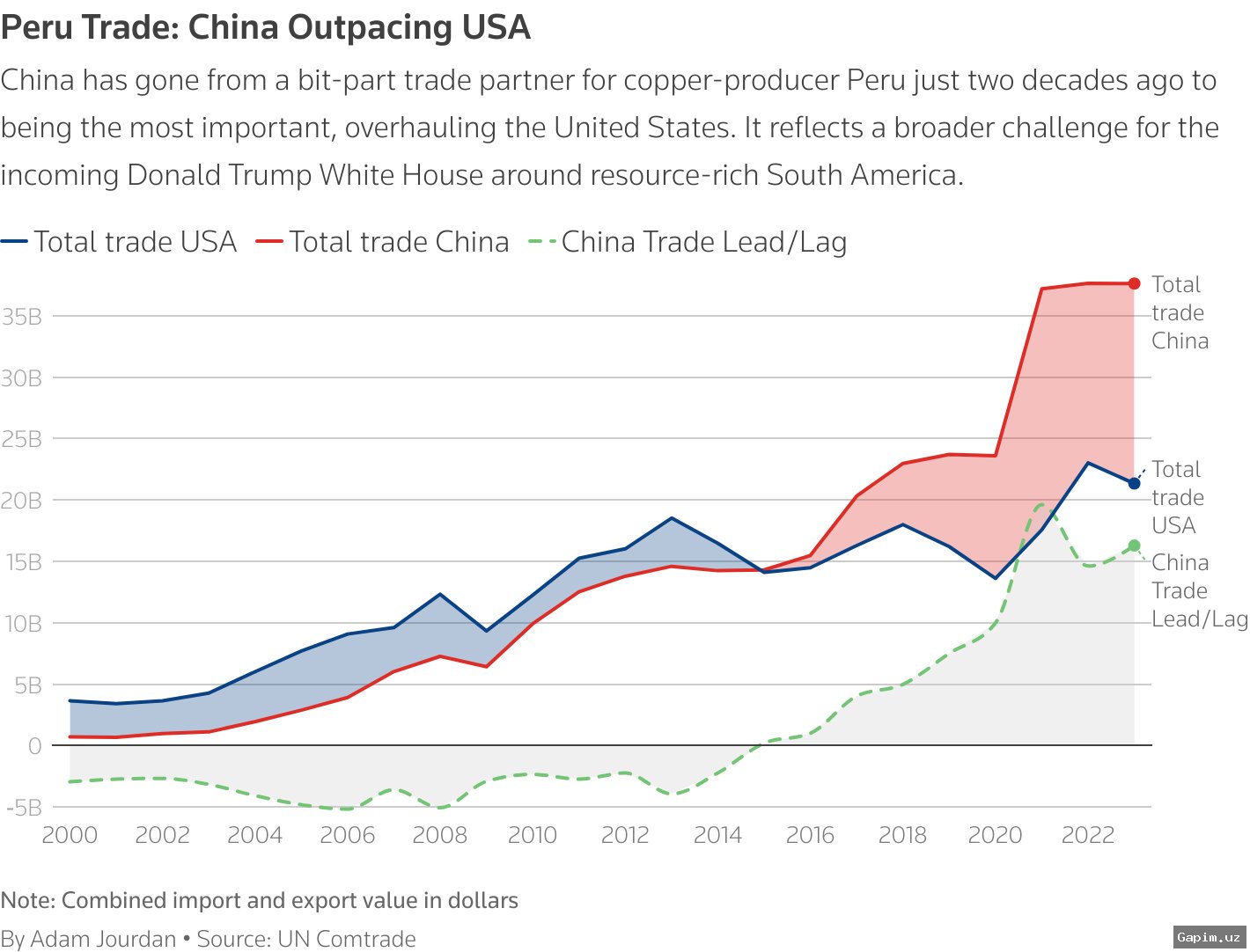
Over the past two decades, China has quietly surpassed the United States to become the dominant trading partner in parts of Latin America. However, since beginning his second term, US President Donald Trump has pushed to reverse Beijing's advance, including through aggressive maneuvers targeting China's allies in the region. These actions reportedly include stripping officials in Costa Rica, Panama, and Chile of their US visas due to alleged ties to China and threatening to reclaim the Panama Canal over claims of Chinese operational influence.
Nevertheless, on Saturday, Trump is taking a different approach by welcoming Latin American leaders to his Mar-a-Lago estate for an event dubbed the 'Shield of the Americas' summit. This high-level meeting could signal that Washington is prepared to put concrete offers on the table, but experts caution that securing meaningful commitments from regional leaders will require more than photo opportunities and vague promises. Francisco Urdinez, an expert on China relations at Chile's Pontifical Catholic University, believes that even Trump's allies require significant economic incentives to distance themselves from one of the region's largest economic partners.
The White House has confirmed that nearly a dozen countries will be represented at the summit, including conservative leaders from Argentina, Bolivia, Chile, Costa Rica, Ecuador, El Salvador, the Dominican Republic, Honduras, Panama, Paraguay, and Trinidad and Tobago. Notably, Mexico and Brazil, the region's largest economies currently led by left-leaning governments, have been excluded. The Trump administration framed the event on social media as a 'historic meeting reinforcing the Donroe Doctrine', the president's purported plan for establishing US dominance over the Western Hemisphere.
According to Gimena Sanchez, Andes director at the Washington Office on Latin America (WOLA), rolling back Chinese influence in a region increasingly reliant on its economy will not be an easy feat. The US 'is trying to get countries to agree that they're not going to have China be one of their primary trading partners, and they really can't at this point,' Sanchez said. China, with the world's second-largest economy, has invested heavily in Latin America through infrastructure projects and massive loans, emerging as the top trading partner in South America with bilateral trade reaching $518 billion in 2024, a record high for Beijing.
The US, however, remains the biggest external trade force in Latin America and the Caribbean overall, largely due to close relations with neighboring Mexico. As of 2024, US imports from the region jumped to $661 billion, and exports were valued at $517 billion. Sanchez explained that many countries in the region are trying to strike a balance between the two powers, but she added that the US cannot come empty-handed to this weekend's negotiations. Trump has already extended economic incentives, such as a $20 billion currency swap for Argentina and increased beef import quotas, but these are largely tied to the continued leadership of political movements favorable to his own administration, raising questions about their sustainability and broader impact.
Source: www.aljazeera.com