Former US President Donald Trump issued a stark ultimatum regarding the joint US-Israeli offensive against Iran, declaring that only "unconditional surrender" by the Iranian government would end the conflict. Trump wrote on his Truth Social platform: "There will be no deal with Iran except UNCONDITIONAL SURRENDER." This statement came as US strategic bombers were active over Iran and intensive Israeli strikes in Lebanon forced over a million people to flee their homes, highlighting the severe humanitarian toll of the escalating war.
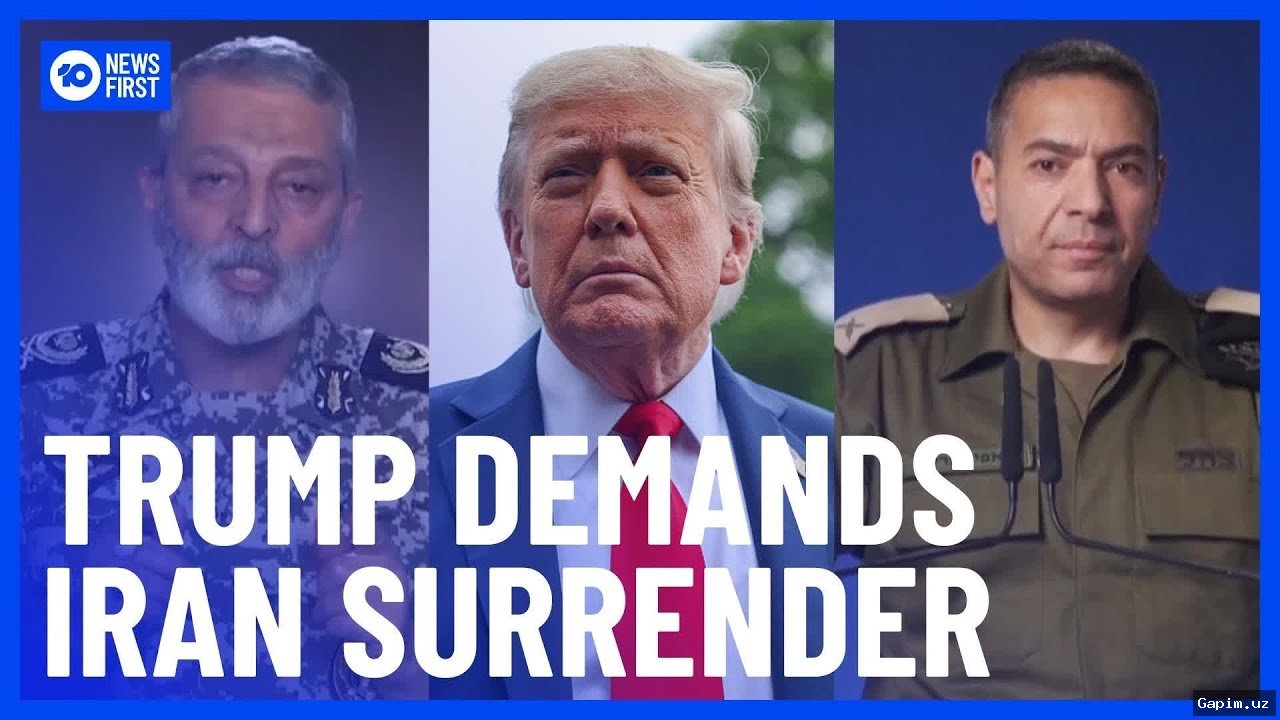
Israeli and US officials threatened further escalation as Iran retaliated with attacks across a broad swathe of the Middle East. US Defense Secretary Pete Hegseth claimed that US firepower was "about to surge dramatically," while Israel Defense Forces Chief of Staff Eyal Zamir stated that Israel was moving to a new phase of its offensive to "further dismantle the regime and its military capabilities." Zamir added ominously: "We have additional surprises ahead which I do not intend to disclose," signaling potential further intensification of hostilities.
Iran launched missiles and drones at Kuwait, Qatar, Saudi Arabia, and Bahrain, apparently targeting US bases and civilian infrastructure such as oil pipelines. Iran's Revolutionary Guards claimed responsibility for firing missiles toward Tel Aviv after explosions caused a blaze at a residential building, and also targeted a military airbase and radar site in Israel. The Guards promised new initiatives and weapons would soon be deployed to confront what they termed Israeli and US aggression, though details were not provided.
In Lebanon, renewed fighting between Israel and the Iranian-backed Islamist militant movement Hezbollah has triggered massive displacement. Following the Israeli army's largest and most sweeping displacement orders to date, hundreds of thousands have fled from southern Lebanon and the Bekaa Valley. The Israeli military warned residents of Dahiyeh, a Hezbollah stronghold in southern Beirut home to over 600,000 people, to "save your lives and evacuate your homes immediately." Red Cross spokesperson Hashem Osseiran described scenes of panic and confusion, with many fleeing on foot with nothing but the clothes on their backs and no clear destination.
Military officials indicate that Israel's strikes in Beirut target residential buildings used by Hezbollah as headquarters and for drone storage, while in Iran, strikes focus on command bunkers, missile launch sites, and other military infrastructure. US Central Command head Admiral Brad Cooper reported that B-2 stealth bombers dropped dozens of 2,000-pound "penetrator" bombs on deeply buried ballistic missile launchers inside Iran. A large Iranian naval vessel used as a drone launch platform was also hit and possibly sunk, marking a significant blow to Iran's military assets.
The conflict has resulted in substantial civilian casualties, with the single largest loss reported in an apparent airstrike on an Iranian girls' school that killed over 100 students. Reuters reported that US military investigators believe US forces were likely responsible, though a final conclusion has not been reached. Official figures indicate at least 1,230 deaths in Iran and about a dozen in Israel, with six US troops killed. The war has disrupted oil supplies, led to tens of thousands of flight cancellations, and rocked international stock markets, underscoring its broad economic and geopolitical impact.
Source: www.theguardian.com