The Ukrainian government has declared its readiness to share its extensive experience in countering Iranian-made drones with Middle Eastern countries, particularly Gulf states. President Volodymyr Zelenskyy emphasized that his country possesses significant knowledge in drone defense and is willing to transfer these insights, though he attached a critical political condition to the offer.
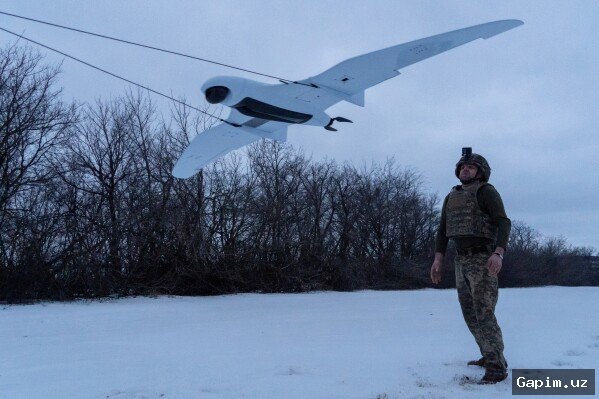
Zelenskyy stated that Kyiv is already in talks with the US, European states, and countries neighboring Iran. However, he set a precondition for assistance: “Leaders of the Middle East have great relations with Russians, they can ask Russia to implement a month-long ceasefire.” Once such a ceasefire is in force, Ukraine would deploy its best drone defense operators to the region. Ukrainian Foreign Minister Andrii Sybiha echoed this in an interview with Reuters, noting that Ukrainian forces intercept 90% of Iranian Shahed drones, mostly using domestically produced interceptor drones, but could only spare personnel if guaranteed no Russian attacks on Ukraine.
Oleksandr Chara of the Ukrainian think tank Center for Defense Strategies (CDS) pointed out that Arab states long ignored the nature of the Russia-Ukraine war and failed to recognize Russia as a key Iranian ally aiding drone technology. Their perspective shifted when Iranian drones, fitted with Russian components, began striking targets in the Gulf. Chara highlighted that Kyiv can offer both expertise in downing drones and well-trained personnel, as Ukraine intercepts hundreds nightly, making it highly experienced. For wealthy Gulf states, he noted, drone defense is primarily an economic issue, with costly interceptor missiles making Ukrainian solutions more viable.
Chara outlined three potential cooperation scenarios: immediate deployment of Ukrainian forces with interceptor drones to protect facilities; training drone pilots in Arab countries and Ukraine to strengthen military ties; or Arab capital investment in Ukraine’s defense industry to mass-produce interceptor drones for both parties. President Zelenskyy added on March 3 that Ukraine is considering transferring some aspects of interceptor drone production to Gulf states, hoping in return to receive American PAC-3 missiles for Patriot systems to bolster Ukraine’s air defenses.
Military expert Oleh Katkov, editor-in-chief of Defense Express, argued that Gulf states have vast financial resources but lack battle-tested data and algorithms. “The value lies solely in the fact that we can help build a suitable air defense system based on our own experience,” Katkov told DW. “This is an extraordinary amount of [useful] information. Outside of Ukraine, no one has any data on how many mobile fire units are deployed, how much ammunition is required, and which equipment actually works.”
Zelenskyy aims to capitalize on Ukraine’s military experience to pressure beneficiaries of its know-how to stop aiding Russia in circumventing sanctions and instead increase pressure to end the war. Chara called this a “classic win-win situation,” where Middle Eastern countries gain drone defense capabilities and Ukraine builds a “Middle East coalition” against Russia, with suggestions like Saudi Arabia drastically reducing oil prices to undermine Russia’s economy.
However, Katkov expressed skepticism about quick benefits, noting that while technical discussions on drone defense may advance rapidly, political decisions in the region are rarely made swiftly. This initiative reflects Ukraine’s strategic effort to leverage its battlefield expertise for geopolitical and economic gains amid ongoing conflict, though its success hinges on complex diplomatic and security assurances.
Source: www.dw.com