Three senior American officials reportedly told The Washington Post that Russia is providing Iran with sensitive intelligence, including the precise locations of US warships and aircraft operating across the Middle East. This reveals more than a tactical alliance; it exposes the architecture of a new kind of war—a war without front lines, fought not with tanks or missiles but with radar beams, satellite feeds, and encrypted coordinates. In the Persian Gulf today, the battlefield is the electromagnetic spectrum, and both sides are fighting, above all else, to blind the other.
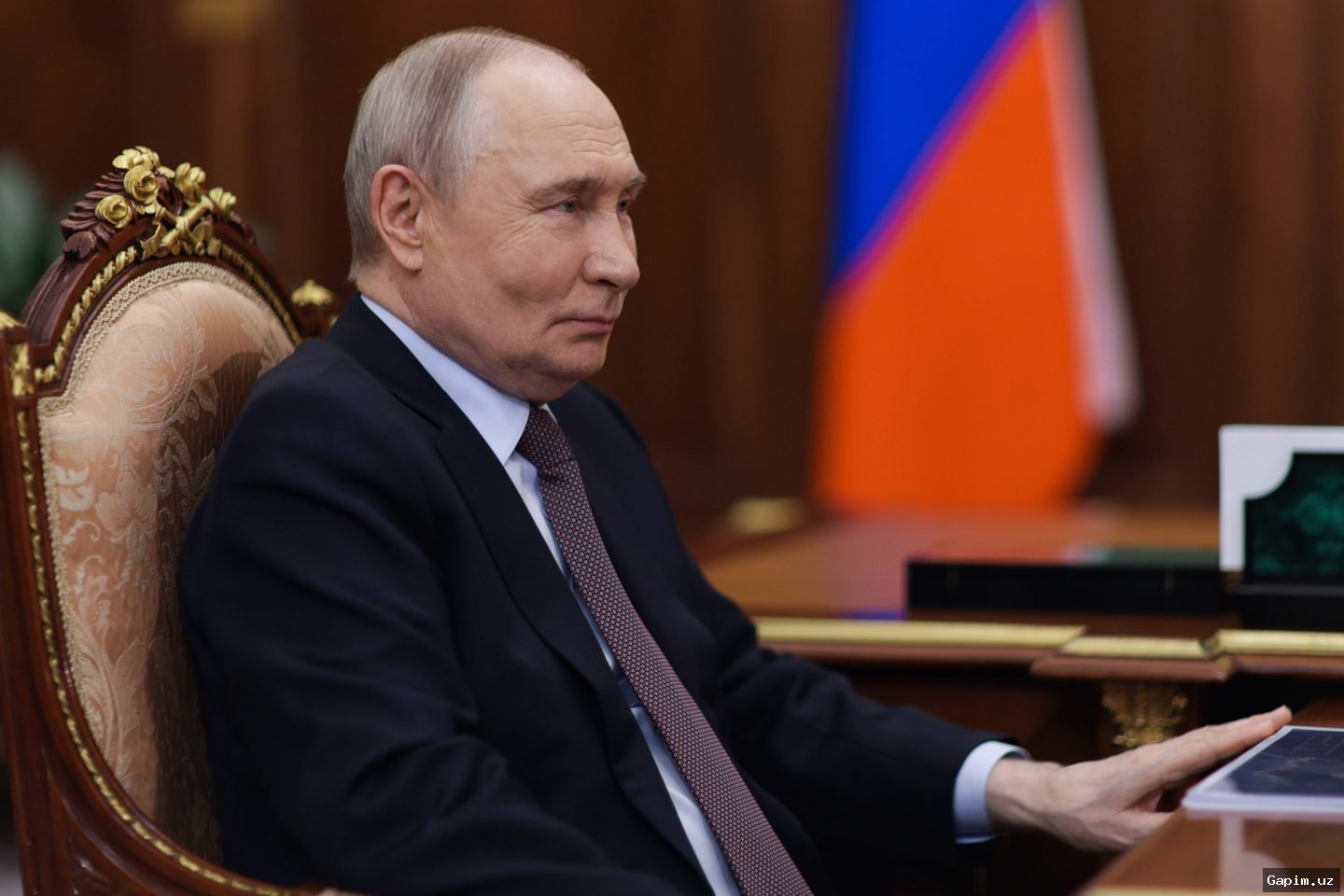
Russian President Vladimir Putin allegedly denied during a call with US President Donald Trump that Moscow was sharing such intelligence with Iran. However, this denial changes little. Russia has received Iranian drones and munitions for its war in Ukraine. It has watched the US supply Ukraine with targeting intelligence used to strike Russian positions, including, purportedly, locations near Putin’s residences. Moscow’s calculus is not hard to read: intelligence is a currency, and Putin is simply spending it.
In recent years, China has also played a quiet but consequential role in reshaping Iran’s electronic warfare landscape, exporting advanced radar systems, transitioning Iranian military navigation from US GPS to China’s encrypted BeiDou-3 satellite constellation, and leveraging its expanding satellite network to support signals intelligence and terrain mapping for Iranian forces. Unique radar systems are designed to reduce the effectiveness of US stealth aircraft. Meanwhile, Reuters reports that Iran is nearing a deal to acquire 50 CM-302 supersonic anti-ship missiles, which military analysts call “carrier killers.”
The US and Israel are not passive, responding by hunting Iranian leadership movements, mapping Islamic Revolutionary Guard Corps (IRGC) command nodes, and destroying Iranian radar infrastructure with a speed and precision that exposed the brittleness of Tehran’s defensive integration. Yet, IRGC spokesman Ali Mohammad Naeini claimed that Iran had destroyed nearly 10 advanced US radar systems across the region—a statement that, if even partially accurate, offers a partial explanation for how Iranian missiles reached targets in Israel, Gulf capitals, and beyond.
For decades, the Persian Gulf was a theater of overwhelming US-Israeli technological dominance. That dominance has not vanished, but it has been eroded by years of Chinese hardware transfers and Russian intelligence sharing. Signals are the new bullets: whoever controls the spectrum controls the fight. Neither side controls it decisively, which in itself represents a profound shift.
This struggle has precedent, though not a comforting one. In 1991, coalition forces jammed Iraqi radar networks and misled Saddam Hussein’s defenses so thoroughly that US aircraft struck with near-impunity. Electronic countermeasures were decisive. Baghdad fought blindly and lost. Iran has studied that war closely for three decades. Russia’s satellite feeds and China’s radar architecture are, in part, Tehran’s answer to those lessons. Iran is determined not to become the next Baghdad.
A deeper strategic logic is at work beyond Iran’s immediate survival. China is not arming Tehran out of ideological solidarity but is treating the conflict as a live-fire laboratory. Russia, having watched Western sanctions and Ukrainian targeting intelligence hollow out its military credibility, sees enabling Iran to bleed US forces in the Gulf as a form of strategic debt collection, not merely a transactional move.
The Persian Gulf is becoming the first theater where electronic warfare may prove more decisive than conventional firepower. Alliances are being redrawn not by troop deployments or treaty signings but by intelligence flows and satellite constellations. Russia and China are not sending divisions to Tehran’s aid—they are doing something more durable: they are teaching Iran how to see.
Source: www.aljazeera.com