The history of recording thoughts and feelings could be tens of thousands of years older than previously believed, surprising archaeologists who made the discovery.
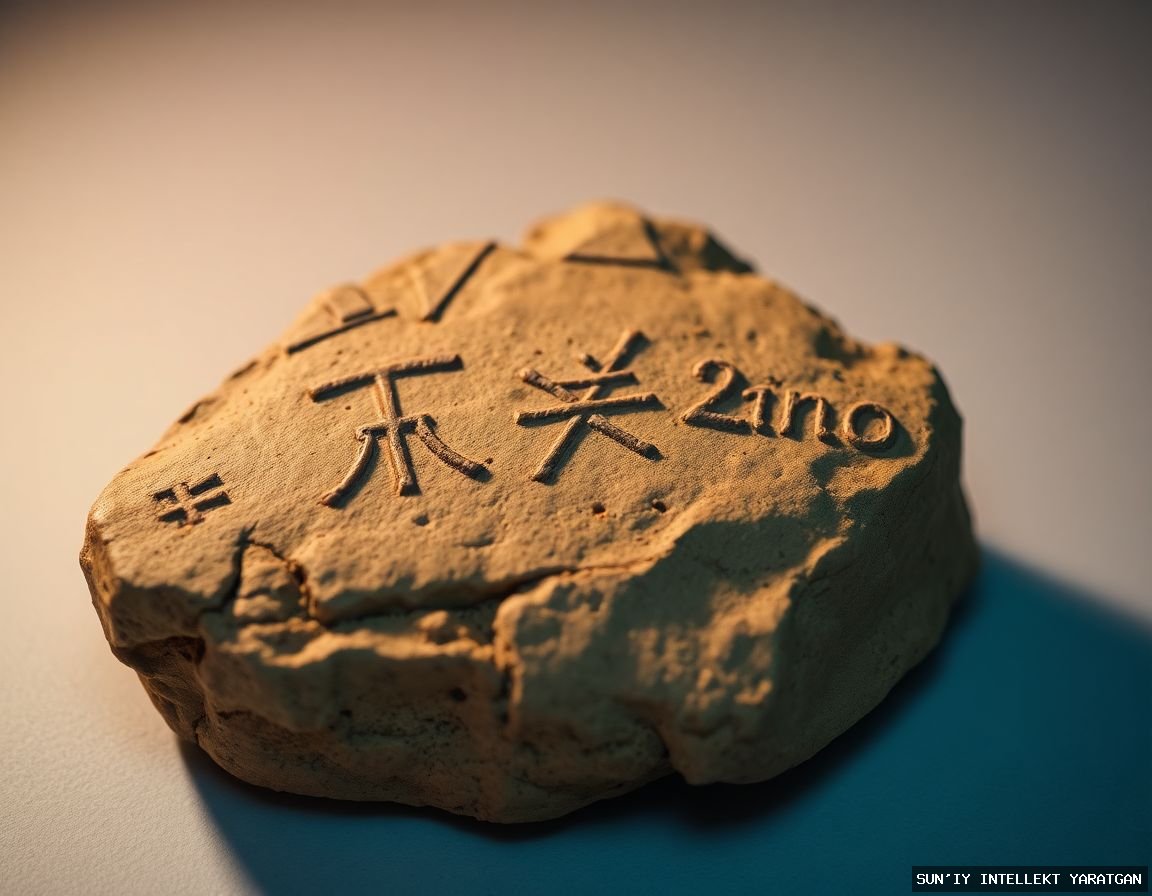
Researchers discerned patterns of meaning in lines, notches, dots, and crosses on objects like mammoth tusks as old as 45,000 years in caves in Germany.
Traditionally, historians date the first written words to proto-cuneiform scripts made around 5,000 years ago in ancient Iraq (Mesopotamia).
The precise meaning of the symbols in Germany remains a mystery.
The objects are from just before Homo sapiens moved to Europe from Africa, where they interacted with Neanderthals.
Until now, it was thought that writing developed in Mesopotamia around 3000 BCE, followed by hieroglyphics in Egypt and later in China and Mesoamerica.
"The Stone Age sign sequences are an early alternative to writing," says Prof. Christian Bentz from Saarland University, an author of the new research.
The team analyzed over 3,000 characters on 260 objects to uncover what they call the "DNA of writing."
Some objects are from a 37-km long cave system called the Lonetal in Baden-Württemberg, southern Germany.
On a small mammoth carved from tusk, researchers analyzed carefully engraved rows of crosses and dots.
On an artifact called "adorant" from the Geißenklösterle cave in the Achtal valley, they identified rows of dots and notches on an ivory plaque showing a lion-human creature.
They believe the arrangement of the marks, particularly the dots on the back, shows the patterns acted as communication.
"Our results also show that the hunter-gatherers of the Paleolithic era developed a symbol system with a statistically comparable information density to the earliest proto-cuneiform tablets from ancient Mesopotamia – a full 40,000 years later," says Bentz.
The clue to finding meaning is in the symbol density. They found high repetition of signs and predictability in subsequent symbols that is "comparable to much later proto-cuneiform," according to Bentz.
They found denser patterns on figurines than on tools.
The research is published in the journal PNAS.
Source: www.bbc.com