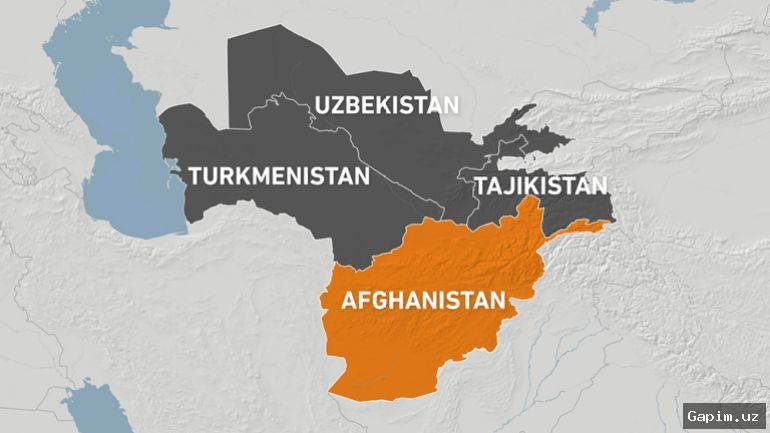
The “open war” declared by Pakistan against Afghanistan in late February is escalating tensions along the southern borders of Central Asia. While no direct military threat exists, the conflict presents serious risks for the region, with the distance from the clashes along the Durand Line to Termez being only about 600 kilometers.
Nizomiddin Usmonov, Head of the Global South Division at the Center for Foreign Policy Research, emphasized that this situation is a serious test for stability and sustainable development in Central Asia. A protracted conflict and escalation of violence could destabilize Afghanistan and, to some extent, Pakistan, creating a zone of persistent instability on the southern borders.
There is a risk of negating Afghanistan’s socio-economic achievements over the past four years, exacerbating the humanitarian crisis, and causing disruptions in the supply of food and essential goods. Additionally, weakened control over certain Afghan territories creates a favorable environment for the activation of various armed formations, including terrorist groups.
Uzbekistan’s interests clearly do not benefit from such a scenario. Beyond security issues, economic and humanitarian projects in the southern direction, including the Trans-Afghan Railway project, would suffer. Threats from extremist groups or increased illegal migration would require Uzbekistan to take additional measures to protect its borders and strengthen internal security.
According to Usmonov, given the current level of regional cooperation, Central Asian states, which have close ties with Afghanistan and Pakistan, should play a leading role in resolving disputes between the two neighboring countries. In the diplomatic arena, the region holds a unique position and can offer a platform for negotiations and peaceful resolution of disagreements.
As effective measures, Usmonov outlined several priority steps: continuing close cooperation with international partners to ensure security and stability in the region, launching regional mechanisms for information exchange on potential threats such as terrorism or extremism, coordinated actions to protect borders and prevent the spread of violence, and implementing long-term plans to diversify trade-economic and transport cooperation.
Source: www.gazeta.uz