Armenians head to the polls on June 7 for a parliamentary election that will also serve as a de facto referendum on the country's geopolitical alignment. Voters will choose between rapid European Union integration or a return to Russia's sphere of influence.
A pre-election survey by the Washington-based International Republican Institute (IRI) shows Prime Minister Nikol Pashinyan's pro-EU Civil Contract party leading with 32% support. The pro-Russian opposition trails significantly: the Strong Armenia bloc (7%), Armenia Alliance (4%), and Prosperous Armenia (2%).
Experts caution that the poll's response rate was a record low of 16%, 19 percentage points lower than before the 2021 snap election. However, 92% of participants expressed willingness to vote, and 71% believe the elections will be free and fair.
The campaign's central issue is foreign policy. Pashinyan's government has moved closer to the EU, adopting a law in May 2025 to begin the accession process. It has also distanced itself from Russia and the Collective Security Treaty Organization (CSTO).
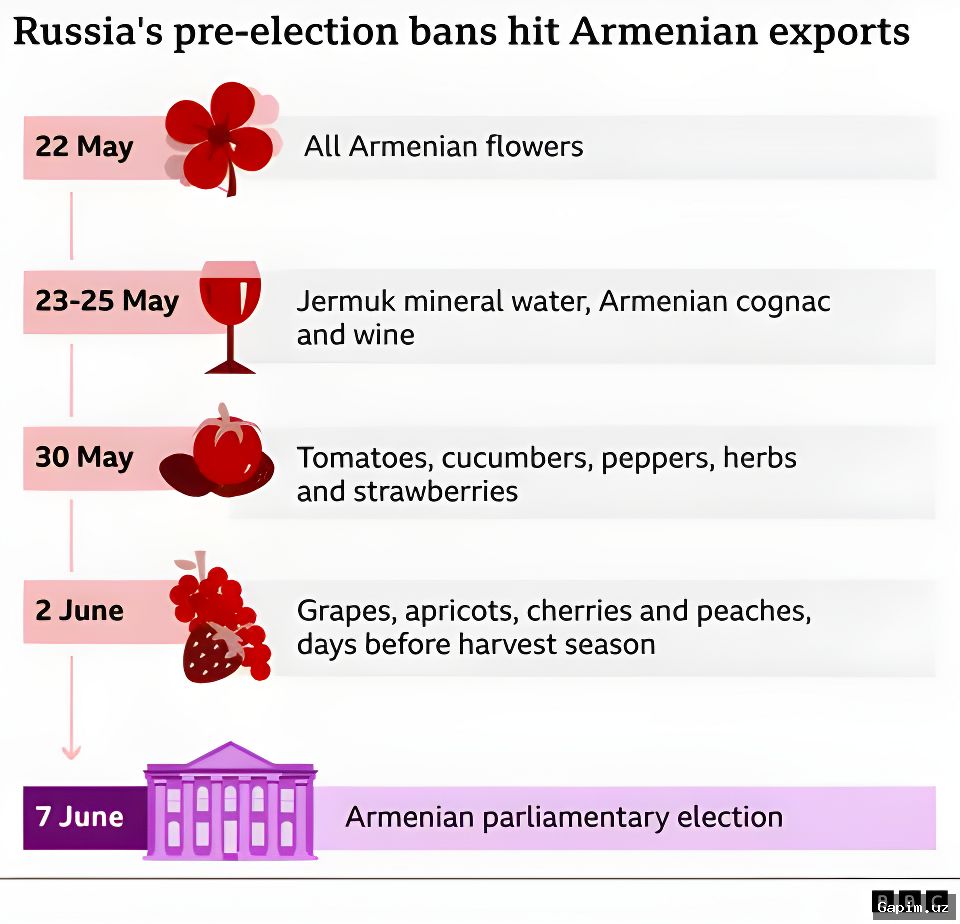
Moscow has reacted harshly. President Vladimir Putin allegedly threatened tariffs and legal obstacles for Armenian workers in Russia. Russia's agricultural watchdog imposed restrictions on Armenian produce, and the Kremlin warned it could suspend preferential gas and oil supplies.
Tensions escalated after Russian investigative outlet The Insider published a report on an alleged Russian spy network in Armenia. Armenian security forces opened criminal cases against pro-Russian opposition figures, including the arrest of Prosperous Armenia candidate Andranik Tevanyan on treason and espionage charges, which the opposition claims is political persecution.
Pashinyan's government is also deepening ties with Washington, signing a strategic partnership charter and a rare earths memorandum. In August 2025, Armenia and Azerbaijan agreed on the 'Trump Route' logistics project, aiming to connect Azerbaijan with its Nakhchivan exclave via southern Armenia.
Pashinyan promotes a 'Real Armenia' concept, rejecting revisionist claims to 'historical borders' including Nagorno-Karabakh, which Azerbaijan regained in 2023. The opposition criticizes this, demanding the right of return for ethnic Armenians displaced by the conflict.
Despite the geopolitical tensions, 61% of IRI survey respondents believe the country is moving in the right direction, while 17% cite border security as the main challenge.
Source: www.dw.com