Armenians are heading to the polls on June 7 in a parliamentary election that could decide whether the country continues its westward drift or returns to its traditional ally, Russia. The small South Caucasus nation of three million has faced mounting economic pressure from Moscow as Prime Minister Nikol Pashinyan seeks re-election on a promise of European integration.
Pashinyan, who came to power in 2018, has steered the country away from Moscow, passing a law to launch EU accession talks and accelerating a US-brokered peace process with neighboring Azerbaijan. This has earned him the endorsement of US President Donald Trump. However, his domestic support has plummeted from 54% in 2021 to around 30% today, largely due to the loss of Nagorno-Karabakh, a mountainous enclave taken by Azerbaijan in 2023.
Pashinyan faces opposition from former President Robert Kocharyan’s Armenia Alliance and billionaire Samvel Karapetyan, who is under house arrest on charges of plotting to overthrow the government. Both ex-leaders argue that restoring ties with Russia is essential for national security.
According to a recent IRI poll, Pashinyan’s Civil Contract party leads with 32%, but 40% of voters trust no political figure. The opposition, if united, could match Pashinyan’s vote, but they remain divided.
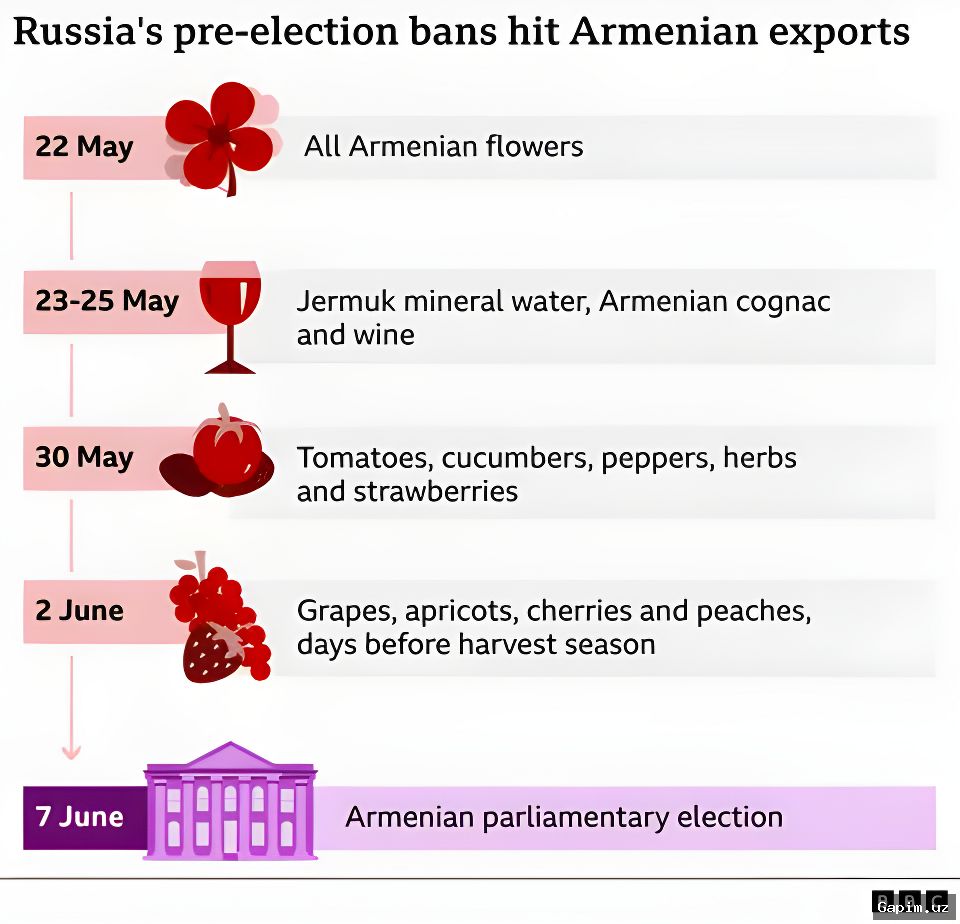
Russia is allegedly trying to influence the election. President Vladimir Putin warned of economic losses from EU integration, and Moscow imposed export bans on Armenian flowers, mineral water, cognac, and fresh produce in the two weeks before the vote. Russia accounts for 36% of Armenia’s foreign trade.
Armenia has drastically reduced its military dependence on Russia, with 95% of arms imports now coming from India, France, and China. However, economic leverage remains significant: Russia supplies gas at $177.50 per 1,000 cubic meters, compared to European prices exceeding $600.
European Commission President Ursula von der Leyen pledged €50 million in aid and promised to ease trade for goods targeted by Moscow, calling it a case of “Moscow weaponising economic relations for political pressure.”
Pashinyan campaigns under the slogan “Stand for Peace!” and his “Real Armenia” doctrine envisions a country at peace with Azerbaijan and integrated into Europe. But for ordinary Armenians, the question is whether they are willing to bear the economic costs imposed by Russia for a distant European future.
Source: www.bbc.com