In Kazakhstan's Ile-Balkhash State Nature Reserve, a female Amur tiger named Umit has been released into the wild, marking the first time this predator has returned to the country's wilderness in over seven decades.
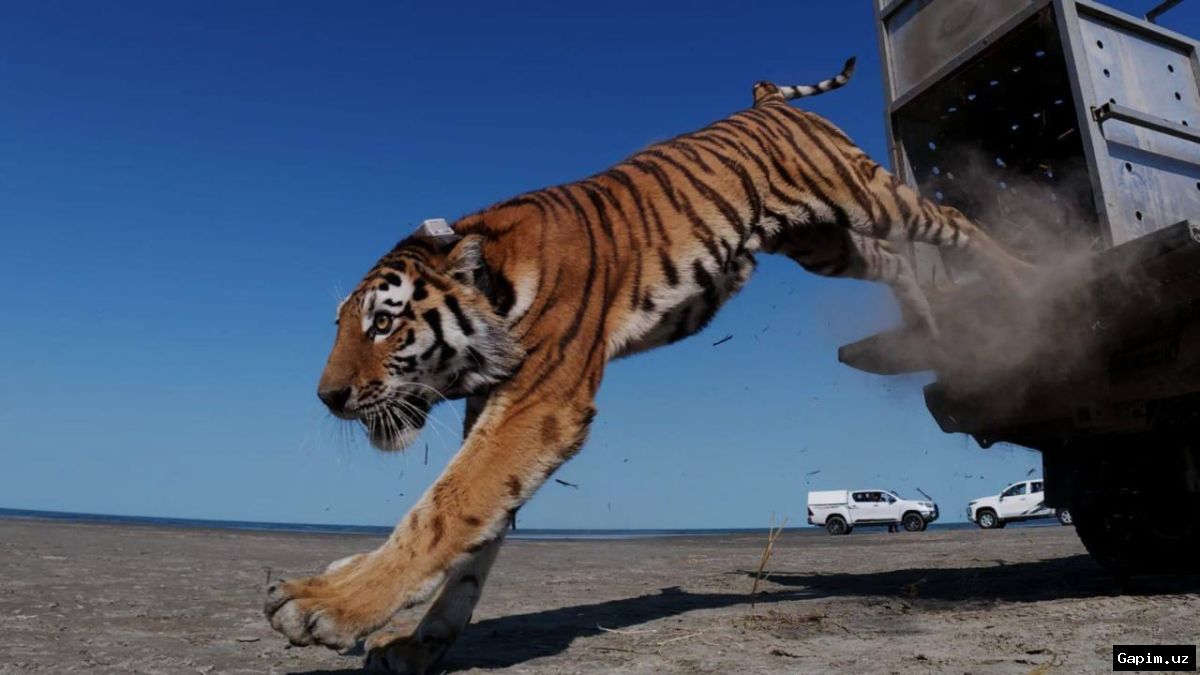
This step marks the beginning of a large-scale program to restore tiger populations in their historical habitat. The project has been in preparation for more than ten years: the natural environment was restored, the number of wild animals was increased, and infrastructure and conditions for predator adaptation were created.
Before the release, the tigress underwent a thorough examination. Specialists checked her health, behavior, and ability to hunt independently. Only after that was it decided that the tigress was ready for life in the wild. Before being released, Umit was fitted with a GPS collar, allowing scientists to monitor her movements around the clock.
The location was chosen for good reason. The southern Balkhash region and the Ili River valley were once home to the Turan tiger, a large predator that disappeared in the mid-20th century due to deforestation, lack of prey, and poaching.
Modern research has shown that the Amur tiger is genetically almost identical to the Turan tiger and is considered the most suitable for returning tigers to the region. That is why it was chosen for population restoration in Central Asia.
The return of the tiger is not only an attempt to restore a rare species but also a way to revitalize the entire ecosystem of the region. The predator is at the top of the food chain and plays a key role in maintaining natural balance.
Currently, specialists are also monitoring other tigers brought to Kazakhstan from Russia. One adult male remains under control and is undergoing necessary tests, while two tiger cubs are growing in special enclosures. They will be released when they are fully ready for independent life.
The project is being implemented with the participation of Kazakhstan, Russia, and international conservation organizations. Authorities emphasize that there is still much work ahead, but the first and most important step has already been taken.
Earlier, in the mountains of the Tashkent region, five saker falcons, rare birds of prey listed in the Red Book of Uzbekistan, were returned to their natural habitat. Before release, they underwent rehabilitation after being rescued from an attempt to illegally export them from the country.
Source: podrobno.uz