Tajikistan's gross domestic product grew by 8.2 percent year on year in the first half of 2026, while fixed-capital investment rose by 18.4 percent. On June 30, the World Bank approved a further $300m grant for the Rogun hydropower plant, the government's flagship project. Rapid growth and fresh multilateral support appear to validate years of state-led investment. They also sharpen the central question: is the boom generating enough export income to meet future obligations, or does it still depend on migrant earnings and public spending?
The warning is that Tajikistan's strong growth masks significant external and fiscal vulnerabilities. The glittering investment and growth figures mask a fragile construct: an economy dependent on remittances, a narrow export base and politicised state corporations is piling up debt that is becoming ever harder to service. The World Bank still classifies Tajikistan at high risk of debt distress. That does not mean default is imminent, but it leaves little room for a financing mistake or external shock.
The headline investment figure needs careful reading. Fixed-capital investment measures spending on buildings, machinery and infrastructure; it does not show foreign investors moving into Tajikistan in search of high returns. The World Bank says foreign direct investment weakened in 2025 even as growth reached 8.4 percent. The main source of foreign currency is clear. Remittances amounted to about 46 percent of GDP in 2025, according to the World Bank, which says they were the principal driver of growth. Aluminium and other exports matter, but TALCO's strategic weight does not make it the country's main source of hard currency. The economy's principal external income still comes from workers abroad.
The share of the population living below the World Bank's $4.20-a-day poverty line fell from 55 percent in 2010 to about 14.8 percent in 2025. Foreign-exchange reserves reached $5.6bn, more than eight months of imports. These gains make the economy more resilient than a simple crisis narrative suggests.
Yet the same data reveal weaknesses. The trade deficit widened to 35 percent of GDP in 2025, domestic production remains limited, and household consumption relies heavily on income earned abroad. A slowdown in Russia or tighter migration rules could therefore weaken domestic demand and the balance of payments simultaneously.
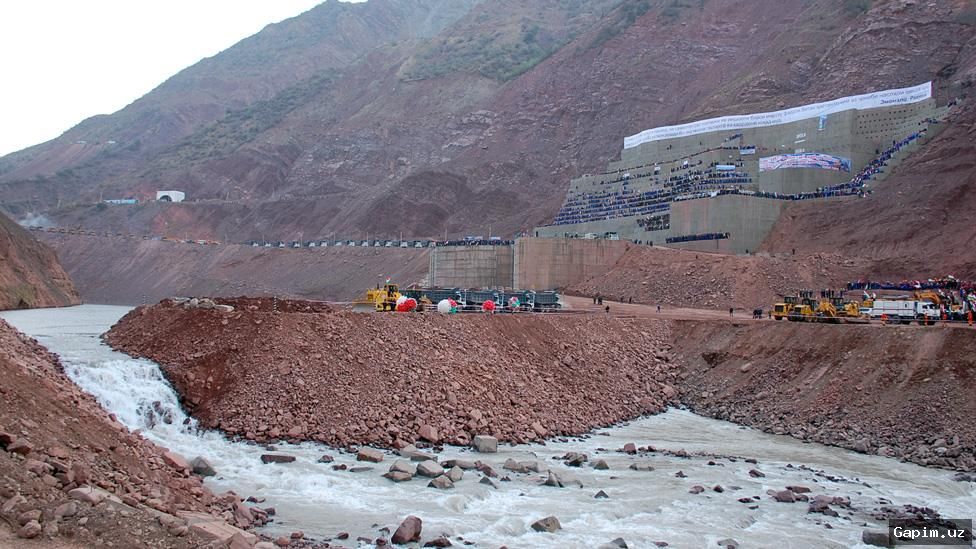
Rogun's long delays do not erase the economic case for completing it. The World Bank expects the plant to generate 14,400 gigawatt-hours a year, roughly 60 percent of Tajikistan's present electricity generation. A substantial share of its low-cost output is intended for domestic demand, which could reduce chronic winter shortages, while the remainder could be exported to countries including Kazakhstan and Uzbekistan. The bank also estimates that the project could create more than 30,000 direct and indirect jobs.
The financing structure has improved. The latest $300m International Development Association grant brings total World Bank financing for Rogun to $650m. Other multilateral and bilateral partners are involved, and the government has pledged part of future revenue to social programmes. Grant and concessional financing reduce pressure on the budget.
But international backing is not a blank cheque. The World Bank itself says Rogun's scale exceeds what Tajikistan can finance alone and that partner support is necessary to prevent the project from absorbing too much of the budget. Its expected export earnings depend on completion, transmission links, reliable regional purchase agreements and transparent operation. Until those pieces are in place, projected revenue cannot be treated as cash already available for debt service.
Tajikistan is not carrying an unusually high sovereign debt ratio. Public debt continued to fall through 2025 and into 2026, while foreign-exchange reserves continued to provide a substantial buffer. The IMF assessed the debt as sustainable.
The high-risk classification arises mainly from heavy external repayments relative to export earnings in 2025-27. The immediate vulnerability is therefore the repayment schedule and the narrow export base, rather than the headline debt stock alone.
But the headline ratio omits a material part of the public-sector exposure. The IMF's baseline does not include non-guaranteed debt of state-owned companies because information on those liabilities is incomplete. In a tailored stress test, it adds potential liabilities equal to 11.7 percent of GDP. These include arrears at Barqi Tojik estimated at 8.2 percent of GDP and TALCO's external debt at 2 percent.
TALCO is also facing continuing attempts to enforce an arbitral award now worth more than $300m. The company has sought substantial new investment, yet its unresolved liabilities complicate efforts to attract fresh financing. Arbitration suits against TALCO inevitably heighten compliance risks and due-diligence requirements for any prospective financiers. When payments flow through intersecting banks and jurisdictions, legal risks in one segment of assets do not remain contained. The dispute has also moved into cross-border enforcement proceedings, with creditors seeking information about assets and transactions in several jurisdictions.
Moreover, TALCO deserves particular attention because its financial problems feed directly into another state company. The IMF says most of the aluminium producer's arrears are owed to Barqi Tojik. Weak payment discipline at TALCO therefore adds to the power utility's losses, while a guarantee, recapitalisation or assumption of either company's debts could shift the burden to the budget. The stress test is not a forecast that the state will assume every obligation, but it shows why a low sovereign-debt ratio understates the broader fiscal risk.
A new financing agreement illustrates both sides of the argument. In August, the Eurasian Fund for Stabilization and Development signed a $200m budget-support loan with a 20-year term, a 10-year grace period and a 1 percent interest rate. Those are highly concessional terms and show that substantial official financing remains available to support the government's reform programme. The fund also said the loan was needed in part because Eurobond repayments were putting pressure on the budget.
The policy choice is not between abandoning Rogun and borrowing without restraint. Tajikistan can use grants and long-maturity concessional finance for the dam while limiting non-concessional debt, publishing audited accounts for major state firms, and disclosing guarantees and arrears.
Independent reporting on Rogun's costs, procurement, safety, resettlement and power-sale agreements would allow creditors and citizens to judge whether future revenue assumptions remain credible. The government also needs growth that generates domestic jobs and exports outside the state sector. That requires stronger competition, more reliable rules for private investors and a financial system that can channel part of the country's remittance income into productive businesses rather than consumption and imports.
The data support a sober conclusion. Growth is real, and sovereign collapse is not imminent. Lower poverty, sizeable reserves and concessional support have bought the country time. The boom will last only if Dushanbe broadens the economy and makes the debts of TALCO and other state companies visible. Rogun can support that transition, but only if its financing stays within the revenue the project can realistically earn.
The views expressed in this article are the author's own and do not necessarily reflect Al Jazeera's editorial stance.
Source: www.aljazeera.com