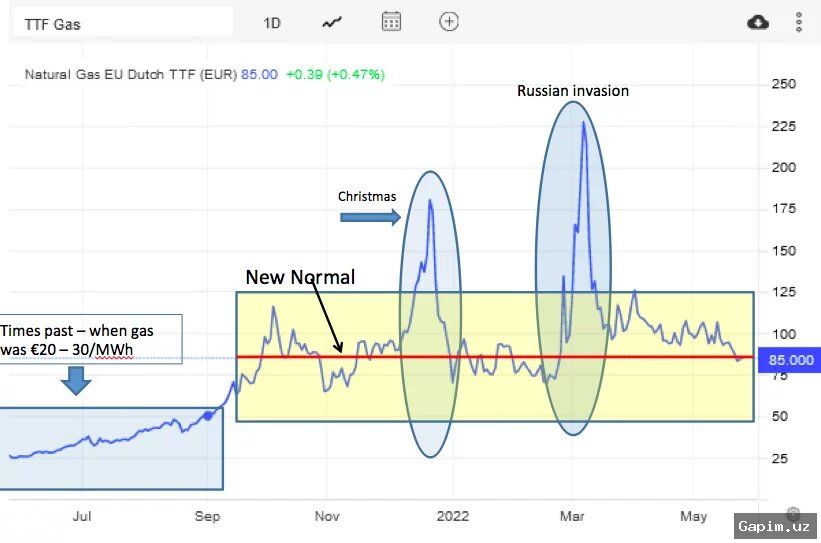
The 2022 fossil fuel crisis, triggered by Russia’s invasion of Ukraine, caused immense suffering across Europe. Gas prices skyrocketed, forcing every EU citizen to overpay 150 euros ($175) per year to the United States for fossil gas and power, according to a recent report by the Centre for Research on Energy and Clean Air (CREA).
In 2023, the global oil and gas industry earned a staggering $2.7 trillion, yet invested only 4% of its capital expenditure in clean energy. These crises highlight extreme injustice: people face not only climate impacts but also price shocks that lead to skipped meals, job losses, and blackouts, while fossil fuel companies rake in record profits.
Governments should impose a windfall tax on energy companies and use the proceeds to cushion households and fund the energy transition. As in 2022, the resurgence of fossil fuel mega-profits is a direct consequence of bloody conflict. In late February, the US and Israel attacked Iran, with the conflict quickly spreading across the region. Over 3,000 Iranians, 2,000 Lebanese, 23 Israelis, and dozens across the Gulf have been killed.
The closure of the Strait of Hormuz is triggering a global rise in oil and gas prices. First-quarter reports already show windfall profits: BP announced “stronger than expected” earnings of $3.2bn, far above the projected $2.63bn. TotalEnergies reported a 29% jump in earnings to $5.4bn. Oxfam International projects fossil fuel companies could earn $3,000 a second by 2026.
This is a natural consequence of a global energy system dependent on vulnerable chokepoints, but also of greed. Fossil fuel companies have long worked to keep humanity trapped, denying climate change, attacking alternatives, and lobbying governments to manufacture demand. According to energy think tank Ember, wind, solar, and electric vehicles are now significantly cheaper than in 2022.
The author argues that windfall taxes are the bare minimum: revenues should support the most vulnerable and countries hit hardest by climate change, acting as reparations. Governments should also implement bold oil demand reduction programs, focusing on public transport and small cars, and adopt policies like Australia’s daytime cheap solar power scheme to help vulnerable citizens.
Source: www.aljazeera.com