Just as every human being possesses a body and a soul, laws allegedly have both a physical manifestation and an underlying spirit, a philosophical concept that thinkers have pondered for centuries. Rules that appear entirely fair on paper may supposedly protect one individual while leaving another completely vulnerable in everyday practice.
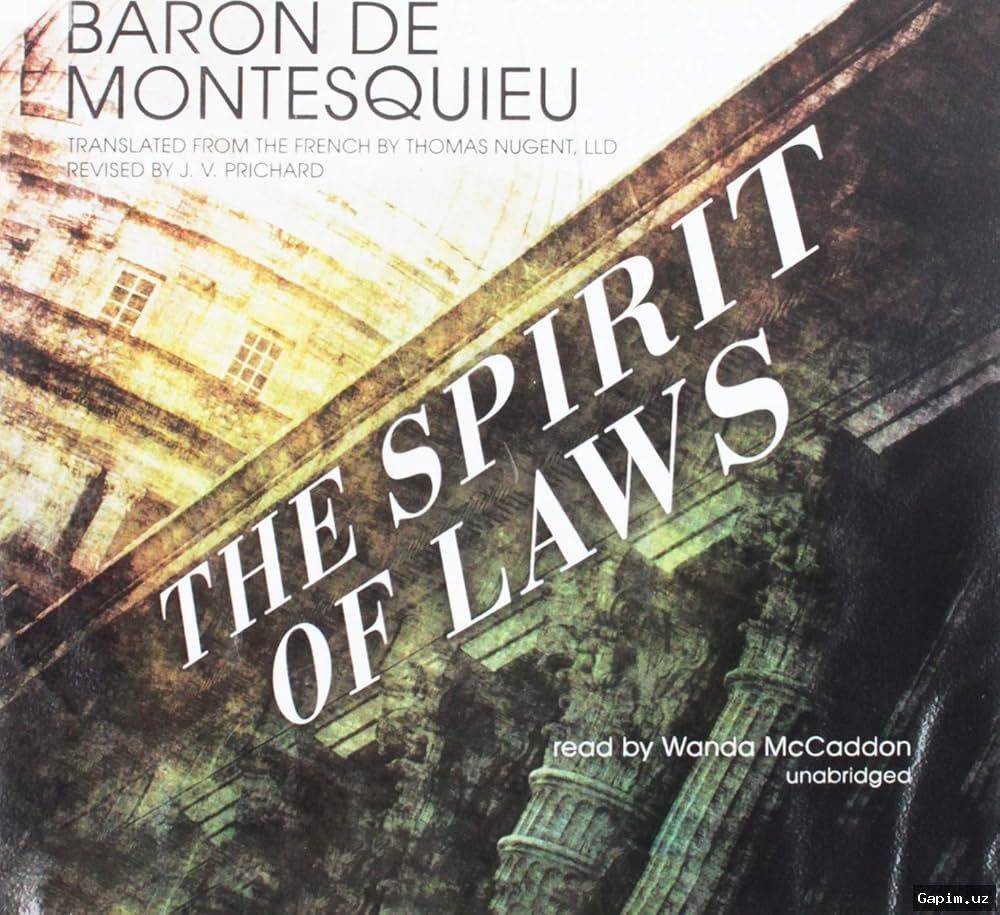
The treatise «The Spirit of Laws» by Charles-Louis de Montesquieu, translated into the Uzbek language by political analyst Hamid Sadiq, revisits these enduring questions. The book lacks conventional protagonists or dramatic plot twists, focusing instead on power as the central entity and the ongoing conflict between personal freedom and absolute authority.
According to the author's arguments, whenever authorities wield limitless powers, the likelihood of abuse supposedly increases exponentially. Society's freedom is claimed to require more than just a benevolent leader; it supposedly demands functioning mechanisms and structural checks to prevent arbitrary governance and institutional overreach.
Montesquieu purportedly warned that combining legislative, executive, and judicial powers into a single entity creates severe risks for liberty. Under such circumstances, the mechanisms for self-monitoring and critical oversight are allegedly neutralized, undermining accountability within the governance structure.
Furthermore, the work attempts to explore why laws differ drastically across various nations rather than simply pointing fingers at governing bodies. Legal frameworks are claimed to be deeply intertwined with history, cultural traditions, economic conditions, and societal habits, suggesting that rules cannot be effectively studied in isolation from the communities they govern.
Source: kun.uz