In Tashkent, the share of residents using public transport is planned to increase to 60% by 2030. The plan, presented by specialists from the Center for Traffic Organization (CTO), is aimed at reducing the load on the road network and enhancing the appeal of buses and the metro.
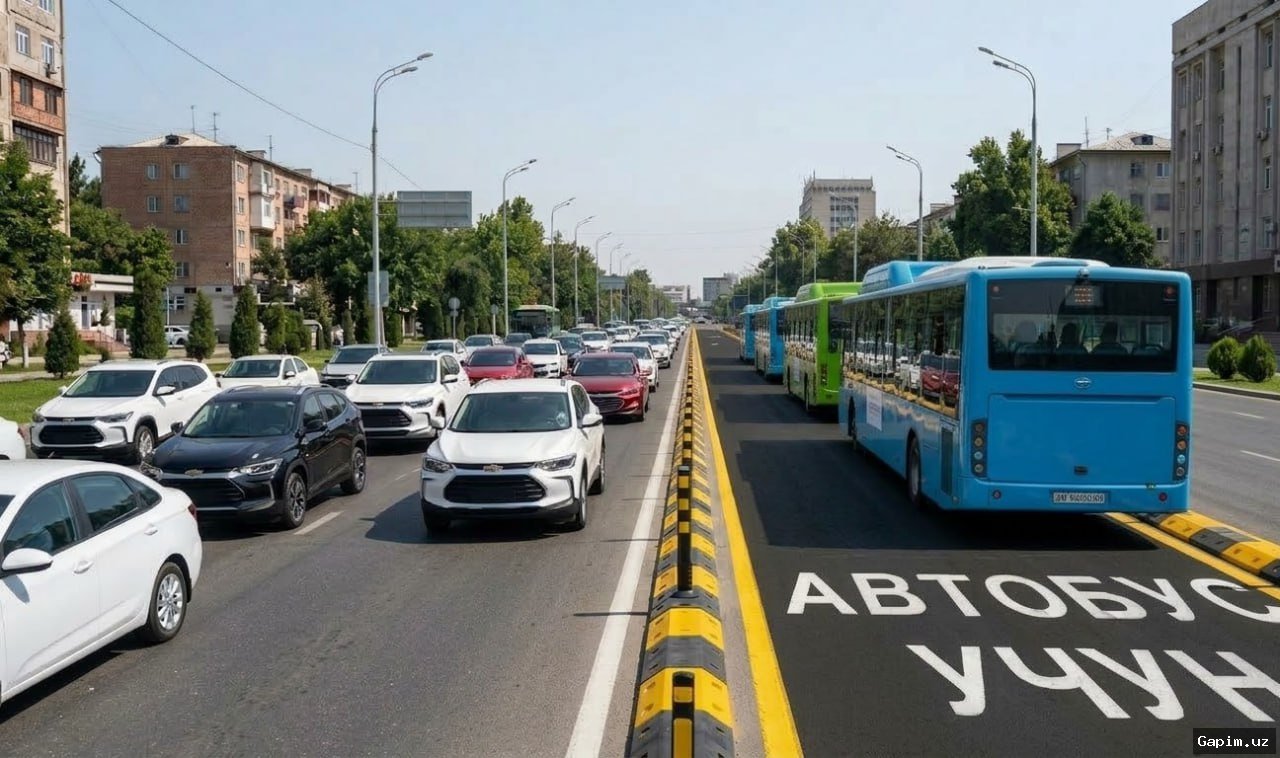
Experts identify the expansion of the priority lane network as a key tool for the reform. Project documentation provides for the organization of 347 kilometers of dedicated lanes (A-lanes). According to specialists' calculations, this will allow increasing the average operational speed of buses to 24 km/h, significantly reducing waiting and travel time for passengers.
Special attention in the agency's strategy is given to the implementation of bus rapid transit (BRT) routes. According to specialists' plans, new BRT lines with a total length of 18.1 kilometers will appear on Shahrisabz, Amir Temur, Mirzo-Ulugbek, and Yangi Sergeli streets. This transport format involves segregated movement, independent of general road congestion.
The long-term strategy also includes a large-scale renewal of the rolling stock and route network. Experts have outlined the purchase of 800 new buses and the launch of 96 additional routes. The implementation of these measures, according to specialists' forecasts, will allow halving the average travel time for city residents and making public transport the main alternative to private cars.
Previously, it was reported that "smart stops" with surveillance cameras and SOS buttons will be installed in Tashkent.
Source: podrobno.uz