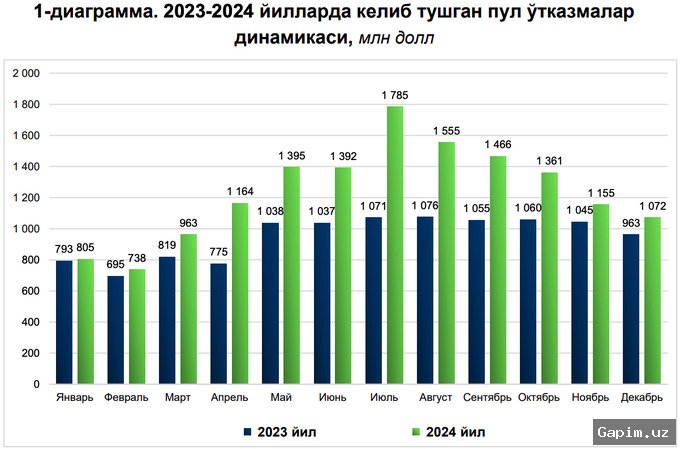
In 2025, the inflow of remittances from abroad to Uzbekistan reached $18.9 billion, marking an increase of $4.1 billion or 27.7 percent compared to 2024. According to the Central Bank, this growth was influenced by sustained demand for labor and relatively stable wage levels in countries where migrant workers are employed, alongside increased economic activity and strengthening national currencies in those nations.
Last year, remittance volumes from the United Kingdom rose by 39 percent, from European Union countries by 37 percent (including a 2.6-fold increase from Ireland, 2.5-fold from Croatia, 67 percent from Slovakia, 57 percent from Lithuania, 49 percent from the Netherlands, and 9 percent from Poland), from the United States by 15 percent, and from South Korea by 15 percent, indicating a broadening migration geography. While Russia remained the primary source, accounting for approximately 80 percent of total transfers, the Central Bank did not disclose exact figures.
Over the 2022–2025 period, remittances from Kazakhstan grew by 24.5 percent, from the United States by 50 percent, from South Korea by 2.1 times, from Turkey by 2.5 times, and from European Union countries by 2.4 times. From 2020 to 2025, the volume of remittances to the country tripled, with their share in gross domestic product rising from 8.6 percent to 12.8 percent, highlighting their critical role in the economy.
Data from the International Labour Organization shows that one of the key economic drivers of migration decisions is the wage differential between host and sending countries. The highest average wage levels are recorded in developed European countries (Switzerland, Germany, the Netherlands), North America (Canada and the United States), as well as in Australia, Japan, and South Korea. The International Fund for Agricultural Development notes that migrant workers typically remit an average of $200–$300 per month, while the Migration Observatory at the University of Oxford reports that migrants residing in the United Kingdom send an average of £1,000–£3,300 (approximately $4,000) per person annually.
According to UN data, in 2024, the majority of international migrants worldwide were concentrated in high-income countries. The largest recipient countries are the United States (over 52 million people), Germany (16.8 million), Saudi Arabia (13.7 million), the United Kingdom, France, Spain, Canada, the UAE, and Australia (each hosting around 8–12 million international migrants). Among sending countries, those with large populations and relatively low wages lead, such as India, Mexico, the Philippines, Pakistan, and Bangladesh, which have emerged as major contributors to the global labor market.
Source: kun.uz