The National Dendrology Park, located in the Kibray district of Tashkent region, Uzbekistan, is playing a pivotal role in advancing ecological and scientific approaches within the country. In an interview with the "Uzbekistan 24" television channel, Aziz Abduhakimov, Chairman of the National Committee for Ecology and Climate Change, emphasized that the park enables the adaptation of trees from various climatic conditions to Uzbekistan's environment, highlighting the practical significance of developing dendrology.
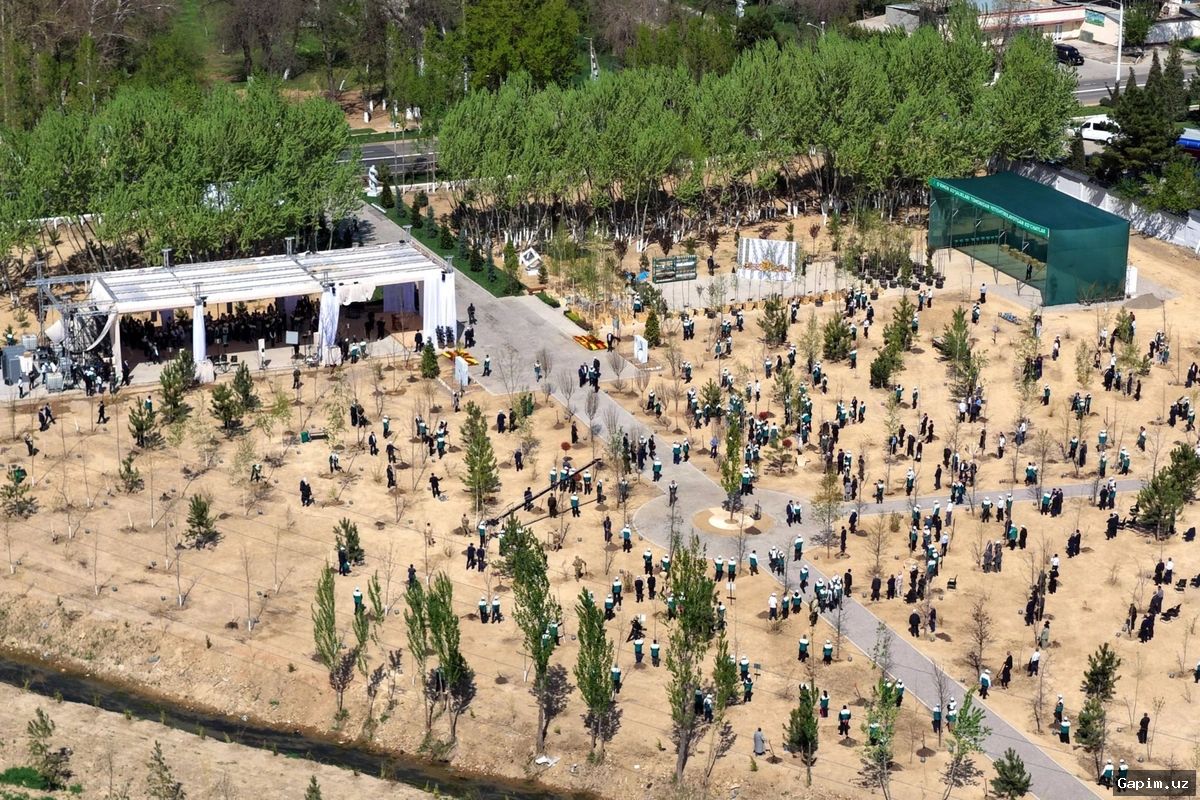
Under the project, considering five climatic zones, trees imported from North America, Europe, Central Asia, Asia, and the Far East are being planted. A total of over 10,000 large trees and 20,000 shrubs are planned. On an area exceeding 100 hectares, a new ecosystem is being formed, creating a mixed forest closely resembling the natural environment, with no plans to place restaurants or attractions.
The park envisions the establishment of "green" technical schools, alongside which botanical and dendrological gardens of at least 100 hectares will be created. Additionally, a shift towards processing plant waste is reported: tree branches are shredded into mulch, a similar approach is applied to fallen autumn leaves, and biohumus is formed on compost plots for fertilizing trees.
According to Aziz Abduhakimov, a scientific approach to greening is being implemented in the country: projects are developed with the participation of soil scientists, climatologists, dendrologists, and forestry specialists, and irrigation and maintenance systems are definitely planned for periods from three to five years. Furthermore, responsibility for the preservation of seedlings has been established, with measures to be applied in cases of tree loss or withering.
It is recalled that on April 1, the National Dendrology Park was established on the outskirts of Tashkent, with the president participating in the tree-planting process. Throughout the year, the park will launch an in vitro laboratory, a medicinal plants center, and seed breeding and selection centers operating on the "science-project-practice" principle. On that day, 3,000 tree seedlings were planted, including poplar, chestnut, birch, plane, oak, Japanese pagoda tree, forsythia, eastern arborvitae, tulip tree, and lilac.
Source: www.gazeta.uz