The Senate of the Republic of Uzbekistan approved a law on April 7 titled “On Introducing Additions and Amendments to Certain Legislative Acts in Connection with Strengthening Responsibility for Committing Offenses in the Field of Ecology, Environmental Protection, and Use of Nature.” This law, developed by the National Committee on Ecology and Climate Change to ensure the implementation of Presidential Decree PF-217 of 2025, aims to significantly tighten penalties for environmental violations, reflecting growing concerns over ecological degradation in the region.
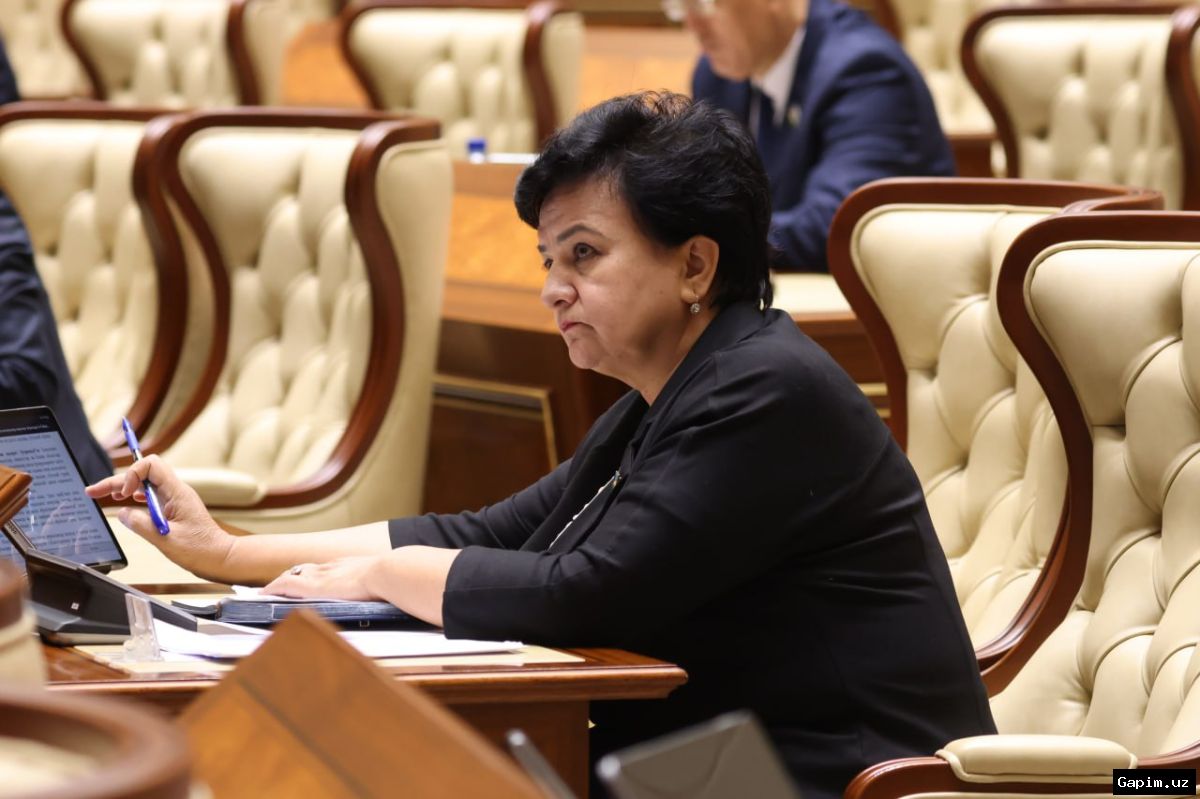
During the plenary session, Senator Anvar Tuychiyev delivered a critical statement, highlighting that the current administrative and criminal sanctions for breaching environmental and ecological protection legislation are disproportionate to the social danger of the acts and the scale of their consequences. Tuychiyev argued that responsibility for certain types of socially dangerous acts related to environmental pollution is limited to low-value administrative fines, which undermines their educational and preventive impact, allowing violators to operate with impunity.
The senator provided concrete examples, noting that while fines for unauthorized cleaning of riverbeds and reinforcement of banks range from 20 to 41 million soums, nearly 300 such cases were deliberately continued in 2025. Additionally, he pointed out that enterprises emitting pollutants above normative limits into the atmosphere pay a mere 2.8 million soum fine to executive bodies and continue operations as if nothing happened, fostering a perception among many industrial and construction companies that “paying the fine is cheaper” than compliance.
Tuychiyev also reported instances of burning waste such as used tires, bitumen, fuel oil, film, synthetic cardboard, rubber, and wool fiber in some greenhouses across regions. This practice leads to severe atmospheric pollution, exacerbating environmental health risks and underscoring the urgency for regulatory intervention through the new law.
The proposed law introduces amendments to the Administrative Responsibility Code and two other laws. The Law “On Nature Protection” is supplemented with new articles (54−61), establishing financial sanctions for legal entities committing offenses in ecology, environmental protection, and nature use. It stipulates that financial sanctions applied for the same offense should not allow repeated administrative penalties, aiming to eliminate loopholes that enable continuous violations.
Furthermore, Article 88 of the Administrative Responsibility Code (non-compliance with atmospheric air protection requirements) is expanded with new provisions, setting administrative liability for burning fuel, substances used as fuel, non-fuel materials, and waste in places or devices not intended for combustion, as well as for burning waste containing tires, bitumen, fuel oil, film, synthetic cardboard, rubber, and other similar components as fuel in greenhouses, production buildings, incineration equipment, or other facilities. Penalties include fines for citizens ranging from 10 to 25 times the base calculation amount, for officials from 25 to 50 times, and for repeat offenses, citizens face 25 to 50 times, while officials are fined 50 to 70 times the base amount.
Source: www.gazeta.uz