A private commercial event held at the Romanov Palace, a 19th-century architectural monument in Tashkent, has stirred public controversy. The palace has been officially closed to visitors for the past four years due to prolonged restoration, yet a local clothing boutique organized a fashion show on the premises.
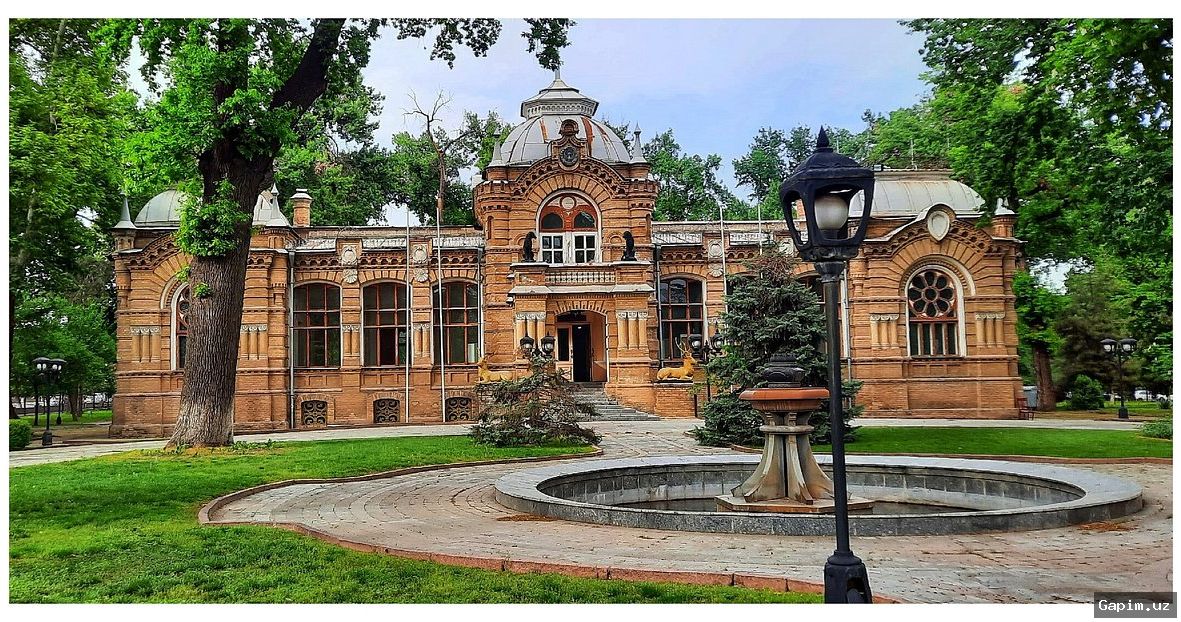
Residents and tourists express dissatisfaction that access to the unique historical building is completely blocked for the general public, while doors were opened for a private fashion event. Citizens recall that according to the will of Prince Nikolai Konstantinovich Romanov, the estate along with his art collection was donated to Tashkent on the condition that it be used exclusively for public, cultural, and educational purposes.
The architectural monument dates back to 1891 and was designed by Wilhelm Heinzelmann and Alexei Benois. Its distinctive features include masonry of fired gray-yellow brick, ornate facades with latticework, turrets, and figured window openings. The entrance group boasts a sculptural composition of bronze deer on pedestals and life-sized dog figures guarding the main entrance.
Historically, the building has changed functions several times: in 1935 it housed the Lenin Palace of Pioneers, in the 1980s a jewelry museum, and after Uzbekistan's independence it served as the Reception House of the Ministry of Foreign Affairs.
A new chapter began in late 2019 when the Cabinet of Ministers ordered the Culture and Arts Development Foundation and the city administration to carry out a large-scale reconstruction and restore the estate's original historical appearance. In 2021, the site was completely isolated from the outside world. Due to bureaucratic delays and prolonged work on technical documentation, completion is now not expected until 2026-2027. The mass gathering of people at the fragile historical monument has raised serious questions among citizens.
Social media opinions are divided. Some commentators defend the closed event, arguing that free public access could lead to damage due to uncultured behavior, citing foreign examples where global brands hold shows in front of monuments in Italy or France.
Opponents point out that these examples are incomparable: in European countries, sites like the Colosseum or Pompeii are accessible to millions of ordinary tourists year-round, with commercial shows being a rare addition. In the case of the Romanov Palace, the site is completely isolated from the public under the pretext of restoration and fragility, yet this ban did not affect the commercial project. Users also note that the risk of property damage is successfully managed worldwide through regulated access, entry fees, group size limits, and supervision.
Relevant authorities have not yet officially commented on the situation but promise to respond on their information resources soon. The public and journalists await detailed explanations from the Cultural Heritage Agency and the Culture and Arts Development Foundation regarding the grounds on which the national monument was provided for a private event, as well as the exact timeline for its actual opening to citizens.
Source: podrobno.uz