Uzbekistan is steadily implementing large-scale reforms aimed at developing renewable energy sources and strengthening energy security. A key focus is the deployment of Battery Energy Storage Systems (BESS), which enable efficient use of solar and wind power potential.
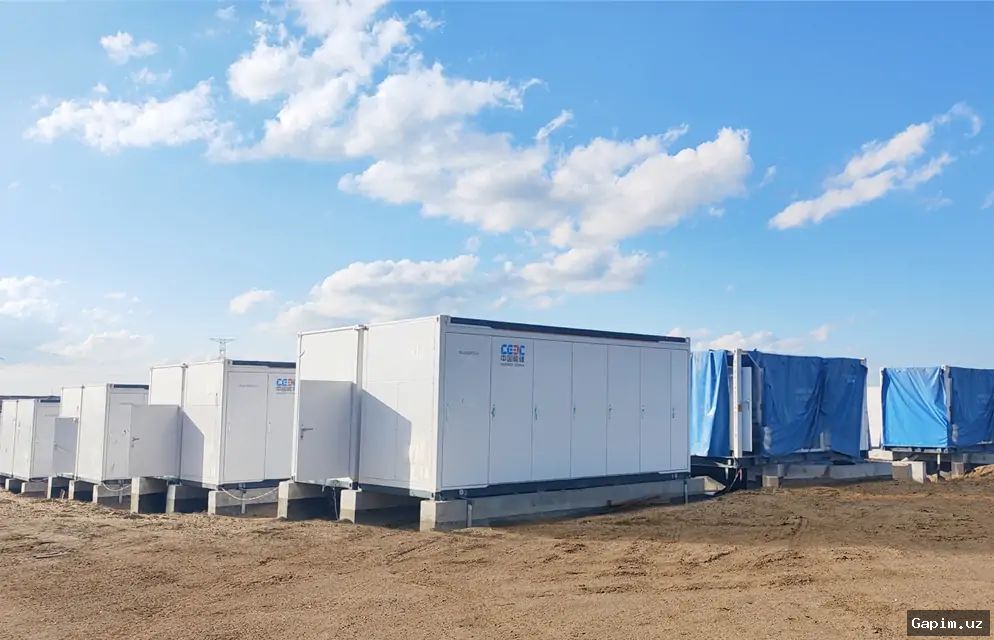
Currently, the country operates 15 solar power plants with a total capacity of 3.9 GW and 5 wind farms with a capacity of 1.6 GW. Since the beginning of the year, they have generated over 4 billion kWh of green electricity.
As the share of renewables grows, so does the need for energy storage. Solar generation depends on daylight, and wind generation on weather conditions. Storage systems allow excess energy to be accumulated and fed into the grid during peak demand hours.
The first such facilities were commissioned in 2024 in the Fergana and Andijan regions, each with 150 MW capacity. In 2025, capacity increased significantly with an additional 1.2 GW of storage brought online.
As a result, the total capacity of energy storage systems in the country has reached 1.5 GW, with an energy capacity of 2.6 GWh. This exceeds 13.5% of the evening peak load of the power system. Thus, every eighth kilowatt of electricity during peak consumption hours can be supplied from stored energy.
The development of storage helps reduce the load on thermal power plants, cut natural gas consumption, and improve the reliability of power supply.
By the end of this year, the storage capacity is planned to reach 2 GW, with energy capacity of 3.6 GWh. In the long term, by 2030, this figure is expected to grow to 4.5 GW.
As of March 2026, solar and wind power plants in Uzbekistan increased output by 43% compared to the previous year.
Source: podrobno.uz