On June 3, the criminal court of the Shakhrikhan district in the Andijan region of Uzbekistan heard the case of a 25-year-old citizen identified as J.N., who fought on the Russian side in the Russia-Ukraine war. According to court documents, he traveled to Russia's Chelyabinsk region in June 2022 as a labor migrant, and in September 2024 signed a military service contract with the Russian Armed Forces.
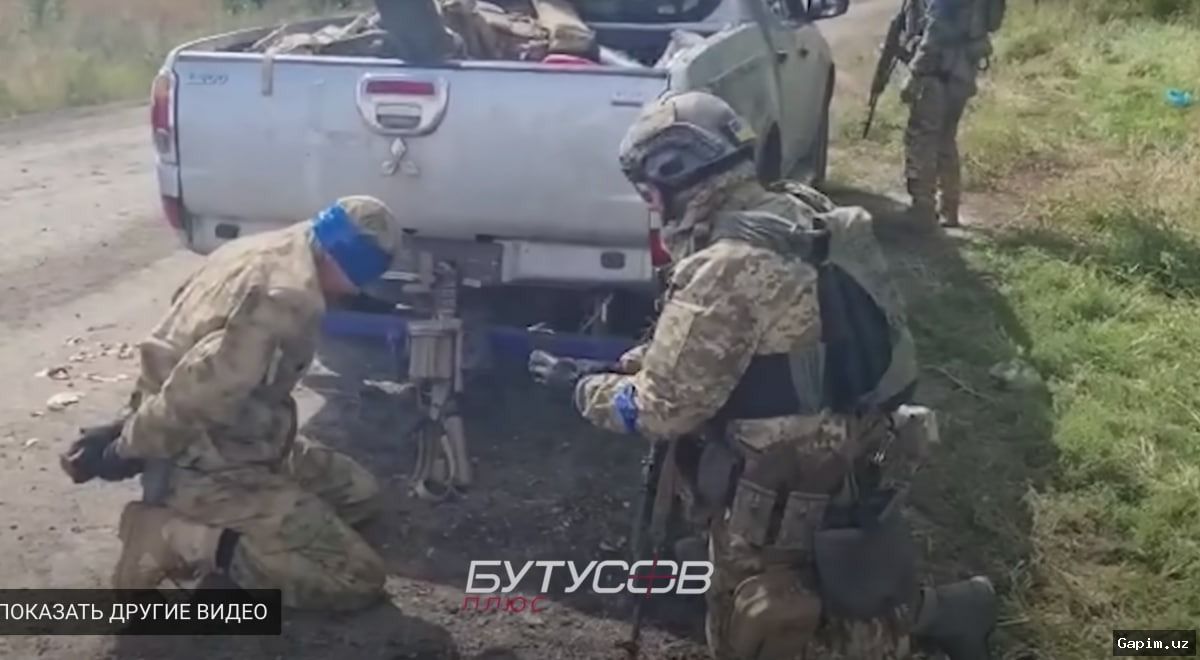
The investigation revealed that J.N. underwent a month-long military training at a training ground in the Luhansk region, where he learned to use AK-74 assault rifles and hand grenades, tactical maneuvers, and defense against drone attacks. He later served in the 10th battalion of the 2nd brigade of the Russian Ministry of Defense, was given the call sign 'Tiger', and participated in combat operations against the Ukrainian Armed Forces as part of the 'Vostok' group consisting of 15 mercenaries.
In court, J.N. fully admitted his guilt. He stated that he went to Russia in June 2022 to work, and a week later he and a Tajik acquaintance were stopped by police. During a vehicle search, over 450 grams of heroin were found among the cargo. J.N. claimed he had no knowledge of the drugs, but a Russian court found him guilty of a drug-related crime and sentenced him to 10 years in prison.
According to his testimony, while serving his sentence, prison and law enforcement officials actively encouraged inmates to participate in the Russia-Ukraine war. 'Initially, I refused to go to war, so they put me in a punishment cell. After a month, they said that if I participated, I would be given Russian citizenship, freedom, and a large sum of money,' J.N. told the court.
The defendant signed a one-year contract with the Russian Ministry of Defense to get out of prison. In September 2024, he was taken to Rostov, issued a military ID and dog tag. Over a hundred other inmates were also recruited for military service. After training, J.N. was sent to the Donetsk direction, and in January 2025, as part of the 'Vostok' group, he was deployed to the front line.
He said that while moving to the front line, the group was attacked by Ukrainian drones. 'The drones attacked; many were wounded and killed. I also sustained a leg injury,' the defendant said. He received 3 million rubles for his injury. He was later treated in several military hospitals, and during an operation in Yeysk, part of his left leg was amputated.
While in the hospital, J.N. sought help via Telegram groups to return to Uzbekistan. In August 2025, he left the hospital, contacted the Uzbek consulate in Moscow, and obtained a certificate for return to his homeland. He returned to Uzbekistan on September 28, 2025.
The court considered his full admission of guilt, sincere remorse, lack of prior convictions, unmarried status, and family circumstances as mitigating factors. No aggravating circumstances were found. The court applied Article 57 of the Criminal Code (imposition of a lighter sentence) and sentenced him below the minimum penalty.
As a result, J.N. was found guilty under Part 1 of Article 154 (Mercenarism) and sentenced to 3 years in prison. The previous preventive measure of a written undertaking not to leave was canceled, and he was taken into custody in the courtroom. The sentence is to be counted from June 3, 2026, and will be served in a general-regime colony.
Source: www.gazeta.uz