Uzbekistan has established noise standards for residential areas, set at 45 decibels during the day and 35 dB at night. This was announced on June 13 by Nurmat Atabekov, First Deputy Chairman of the Committee for Sanitary-Epidemiological Welfare and Public Health under the Ministry of Health, during a plenary session of the Senate of the Oliy Majlis.
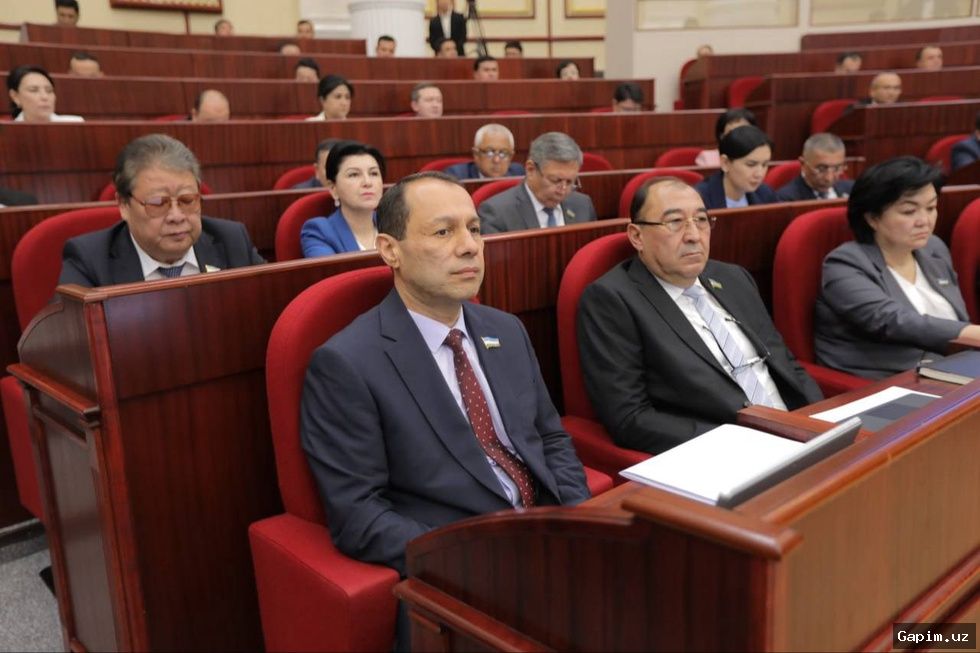
Atabekov was responding to questions from Senator Oral Ataniyazova during the discussion of the law “On Protecting the Population from the Harmful Effects of Noise,” which was approved by the Senate on the same day. Ataniyazova emphasized that the law is related to public health and is considered “very important and necessary” for citizens.
“According to a World Health Organization report, noise pollution is the third most dangerous type of pollution after air and water pollution. And the WHO has adopted the term ‘environmental noise’ along with ordinary noise,” the senator said. She noted that noise levels exceeding the norm cause serious harm to health.
“In particular, it leads to sleep disorders, cardiovascular diseases, hypertension, metabolic and psychophysiological disorders, affects fetal health, and can cause cognitive impairment, dementia, hearing loss, and other consequences,” she said. The senator also noted that in Europe, noise is recognized as a factor leading to disability, with children being particularly vulnerable.
“According to a report by the European Environment Agency, approximately 84% of reading disorders in children in Europe are associated with traffic noise each year,” said Oral Ataniyazova. She proposed that legal regulation of this area should include clear concepts and terms, physical standards — minimum and maximum values in decibels, as well as time restrictions.
“Having clear terms and concepts in laws is essential to ensure legal certainty, prevent ambiguity, and create uniform rules for everyone. In addition, precise noise parameters are very important,” the senator stressed. She cited Belarusian legislation as an example: “Belarus’s noise law states that from 19:01 to 7:00, any actions causing noise above 40 dB are prohibited.”
At the same time, she drew attention to the fact that the law under consideration “does not show the participation of NGOs, non-profit organizations, and civil society institutions.” “But the expressed opinions do not diminish the importance and necessity of the law. I believe that important comments will be reflected in the by-laws,” she said.
The senator asked representatives of the Sanepid Committee how the level and duration of harmful noise exposure to humans are determined. “According to WHO data, if noise at 94 dB affects a person for 45 minutes per week, it is considered dangerous. How can an ordinary person measure this?” she asked.
She also inquired whether there are sufficient laboratories and measuring equipment in the regions to control noise, and what practical measures will be taken first after the law is adopted. Nurmat Atabekov called this question relevant and referred to WHO data.
“Indeed, according to the World Health Organization, noise at 95 dB is considered a condition that causes severe stress to the nervous system and psyche, and the possibility of causing deafness is recognized,” he said. According to him, noise above 85 dB can also cause the negative consequences listed above.
Atabekov noted that sanitary and hygienic norms and rules are in effect in Uzbekistan. The Research Institute of Sanitation, Hygiene and Occupational Diseases operates a scientific laboratory of physical factors, where regular research is conducted, and sanitary standards are established based on this research.
“In the conditions of Uzbekistan, for residential areas, the norm is 45 dB during the daytime and 35 dB during nighttime rest,” he said. According to him, the institute is currently implementing a scientific project on a comprehensive hygienic assessment of noise sources in a megacity and protecting the population from its negative effects.
“The noise level is determined based on the intensity of conversation, traffic intensity, construction processes, as well as noise generated during aircraft takeoff and landing at airports,” said the Sanepid Committee representative.
He stated that the service for sanitary-epidemiological welfare and public health will continue its work in this direction. “Together with the Ministry of Justice and the Ministry of Finance, we have prepared draft documents on issues of collecting compensation for the negative impact of noise. All these activities are ongoing,” said Nurmat Atabekov.
Answering the question about measuring equipment, he said that each territorial department of the Sanepid Committee has physical factor laboratories. “They have equipment that allows measuring noise levels,” he said. Atabekov also noted that projects of the Asian Development Bank and the Asian Infrastructure Investment Bank include improving the material and technical base of institutions under the Sanepid Committee.
“Under these projects, we expect the delivery of necessary equipment and modern measuring devices,” he added. According to the committee representative, the agency aims to assess the situation not only based on citizen complaints but also systematically.
“We have set ourselves the task of fulfilling our duties not only based on citizen appeals but also systematically — conducting assessments in this area, setting standards, and carrying out research work,” said Nurmat Atabekov.
However, no direct answer was given to the senator’s question about how an ordinary person can independently or through authorized bodies record the level and duration of harmful noise.
The law “On Protecting the Population from the Harmful Effects of Noise” provides for general rules for protecting the population, powers of state bodies, noise exposure standards, a list of actions that violate the peace and normal rest of citizens, as well as time periods during which such violations are not allowed. The document must be signed by the president to enter into force.
Source: www.gazeta.uz