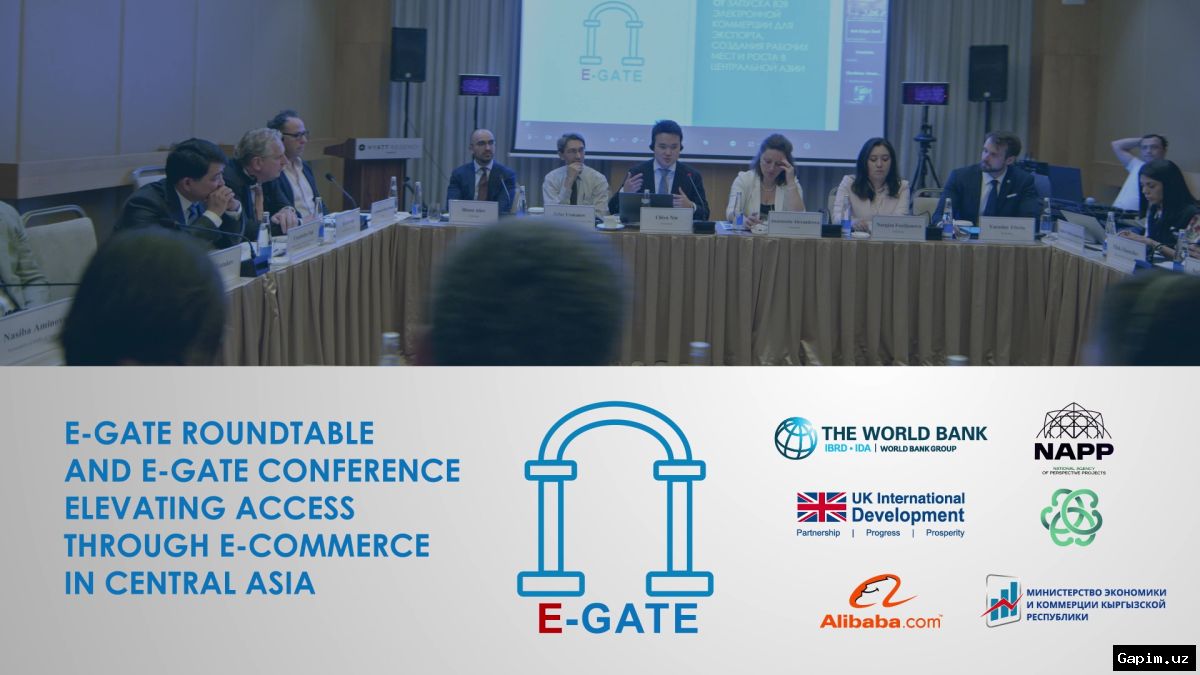
The event marked the launch of the second phase of the World Bank's E-GATE (Elevating Global Access Through E-commerce) program. During the discussion, Uzum CEO Nikolay Seleznev noted that for the region's countries, the key factor is not the growth of e-commerce itself, but its impact on economic development.
Modern digital platforms help bring businesses out of the shadow economy, create new jobs, develop small and medium-sized enterprises, digitize the economy, and build modern logistics infrastructure, including cross-border supply routes.
"For Central Asian countries, it is important to assess not only the volume of online trade, but also the economic effect it creates. We are talking about new jobs, entrepreneurship development, increased economic transparency, digitalization, and the emergence of modern services for millions of people. It is local players who are becoming the drivers of these changes," Seleznev said.
According to him, sustainable development of the digital economy is impossible without cooperation between the state, business, and financial institutions. Uzum has already invested about $500 million in creating Uzbekistan's digital infrastructure and continues to invest in developing a service ecosystem for the population and entrepreneurs.
"E-commerce today is no longer just about developing trading platforms. It has become an important part of digital transformation, which is impossible without reliable communication, modern payment solutions, efficient logistics, data exchange, and favorable regulation."
The first phase of the E-GATE program showed that Central Asian companies are ready for digital trade: participants signed new contracts worth over $23 million and entered more than 70 export markets through online channels.
Sandra Sargent, Senior Digital Development Specialist at the World Bank Group, noted: "The next step is to scale up these efforts. It is now important to move from individual successful projects to systemic solutions that will help unlock the potential of the digital economy across the region and contribute to job creation."
One of the most important factors remains logistics infrastructure. In particular, bonded warehouses are expected to appear in Uzbekistan this year. The development of such solutions is expected to increase budget revenues by 15–20% due to growth in foreign trade activity and improved logistics efficiency.
Another important condition for further market growth is the harmonization of regulatory requirements among the region's countries. Creating unified rules for e-commerce will allow small and medium-sized businesses to legally and more easily enter neighboring markets through national digital platforms.
Speaking about the prospects of attracting international players, Seleznev noted that companies like Amazon and other global platforms traditionally operate on an asset-light model and typically enter markets where the necessary infrastructure already exists.
The discussion also included Firuz Khasanov, CEO of Avval Marketplace (Tajikistan); Abdessalam Benzituni, Vice President, Global Head of Government and Public Affairs at Jumia Group; Liu Fang, Director for Central Asia at Alibaba Group; Yevgeny Bagdashkin, Managing Director of DHL in the CIS countries with an agency model and Kazakhstan; Kristine Naltchajyan, Regional Director for Southern and Eastern Europe and Central Asia at Coursera; and Oleg Smolyakov, Advisor to the Board of Directors of Freedom Bank Kazakhstan.
Participants also noted the need to improve the level of digital and financial literacy among the population, as well as to train specialists for the rapidly growing digital economy.
The discussion participants agreed that further development of cross-border trade and the digital economy in Central Asia will require coordination of efforts between the state, business, and international partners, as well as creating conditions for scaling regional digital platforms. The event was organized by the World Bank together with e-commerce regulators from Uzbekistan, Tajikistan, and Kyrgyzstan.
Source: uznews.uz