The population of Uzbekistan reached 39,047,321 as of January 15, 2026, according to preliminary results of the population and agricultural census, as reported by a Gazeta correspondent at a press conference of the Statistics Committee.
Preliminary data shows that the population has doubled compared to the 1989 census. Current statistical estimates had placed the population at 38,236,704, while the census preliminary results show 39,047,321 — a difference of 810,617. By gender, men numbered 19,766,166 and women 19,281,155.
The census also recorded 56,900 foreign citizens residing in Uzbekistan for over a year, primarily from India, Russia, and Kazakhstan.
The ethnic composition: Uzbeks — 89.4%, Tajiks — 3.3%, Karakalpaks — 2.2%, Kazakhs — 1.8%, Russians — 1.6%, Kyrgyz — 0.6%, Turkmens — 0.5%, and other ethnicities — 0.6%. Some 35.7 million people (91.3%) reported Uzbek as their native language, 1.9 percentage points higher than the share of ethnic Uzbeks.
Agricultural census results showed annual crop areas were 23% larger, orchards and vineyards 18.8% larger, greenhouses 2.2% larger, and fish ponds 15.0% larger. Livestock numbers saw significant changes: cattle decreased by 14.9%, sheep and goats by 6.2%, horses by 11.2%, while poultry increased by 12.7% compared to current estimates.
Cost efficiency was emphasized in organizing the census, with preliminary estimates showing a cost of $0.12 per person enumerated.
“The results of the population and agricultural census will allow for future analysis of demographic changes, assessment of population distribution across regions, identification of infrastructure needs, targeted decisions on living conditions and socio-economic indicators, and relevant analysis,” the Statistics Committee stated.
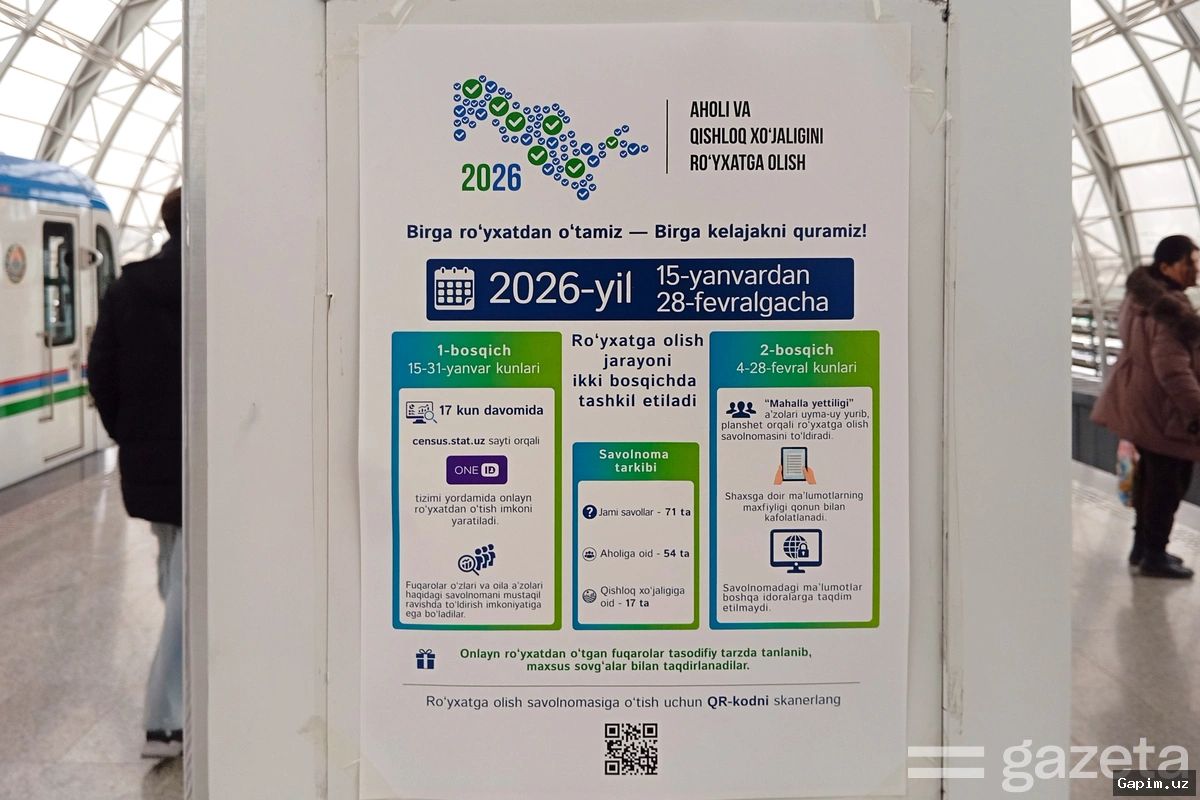
The census was conducted from January 15 to February 28. In the first phase (January 15–31), 82.3% of households, covering over 30 million people, completed the questionnaire online. Citizens who did not participate or made errors were covered in the second phase (February 4–28), when mahalla representatives conducted door-to-door visits using tablets to enter data directly into the electronic platform. Preliminary data indicates full coverage of the population living in 8.3 million households across the republic.
Source: www.gazeta.uz