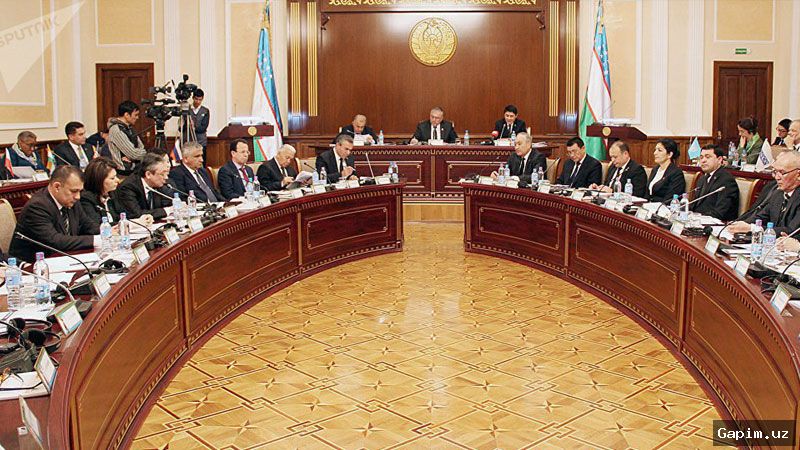
The Plenum of the Supreme Court of Uzbekistan has adopted a series of new clarifications aimed at unifying judicial practice in cases involving the recognition of citizens as incapacitated, the application of interim measures, and the resolution of disputes related to children. The new approaches also address issues of credit obligations, administrative offenses, and environmental protection.
New rules on capacity cases. One of the key decisions of the Plenum is a resolution on the practice of considering cases related to the recognition of citizens as partially or fully incapacitated. The document clarifies who has the right to file such applications with the court, the procedure for their consideration, the grounds for limiting capacity, specifics regarding minors, and the participation of the prosecutor and guardianship authorities in the process.
It is specifically noted that a person's use of alcohol, drugs, or psychotropic substances cannot serve as a basis for limiting their legal capacity. The court must establish whether this has led to a severe financial situation for the family. Only a combination of conditions provided by law can serve as a basis for making an appropriate decision.
Special attention is paid to the evaluation of evidence. Forensic psychiatric examination is recognized as an important but not sole piece of evidence. The court is obliged to examine all materials, and if the expert opinion raises doubts or is incomplete, it has the right to order a repeat or commission examination.
Furthermore, the citizen in question must be a full participant in the judicial process. Their opinion must be heard, and after the decision is made, they retain the right to independently appeal it. If the person recovers or the circumstances limiting their rights disappear, the court must restore their legal status.
When the court can apply preliminary protection. The second resolution concerns securing a claim and preliminary protection measures in civil, administrative, and economic proceedings. These measures are applied if there is a risk that the defendant will hide property or dispose of it in a way that makes enforcement of a future decision impossible.
A petition may be filed together with the claim or during the process. The court considers such applications within five days, and if they are submitted online after the end of the working day, no later than the next day. Measures may be applied at any stage of the case, even if proceedings are temporarily suspended. The simplified procedure does not limit the parties' right to seek protection.
However, the Supreme Court emphasized that preliminary protection measures cannot be used to suspend decisions aimed at ensuring public safety and protecting the life and health of the population.
What will change in child custody disputes. One of the most significant amendments concerns disputes related to child upbringing. Courts are now recommended to actively use mediation opportunities. Parents will be able to resolve the conflict through a mediation agreement before going to court or during the trial. If an agreement is not reached in advance, the court must, before retiring to the deliberation room, explain to the parties their right to end the dispute through mediation.
The procedure for paying alimony upon deprivation of parental rights or transfer of a child to another legal representative has also been changed. If the child is transferred to another parent or legal representative, all payments are collected in their favor. If the child is placed in a childcare institution, alimony is transferred by both parents to a special bank account opened in the child's name. The child can receive these funds after reaching the age of 18.
In addition, after the decision to deprive a mother or father of parental rights enters into force, the court will send documents to organizations that assign social benefits, as well as to courts considering alimony collection issues.
The Plenum also made changes to existing clarifications on cases related to environmental protection and nature management, fulfillment of obligations under credit agreements, and consideration of cases on administrative offenses.
Earlier, it was reported that Ombudsman Feruza Eshmatova spoke at the Plenum of the Supreme Court regarding the draft resolution on recognizing citizens as partially or fully incapacitated. She noted the importance of uniform judicial practice in such categories of cases.
Source: podrobno.uz