As of July 1, Uzbekistan's gold and foreign exchange reserves decreased by $6.8 billion, from $70.6 billion to $63.8 billion. This is the lowest level since November 2025.
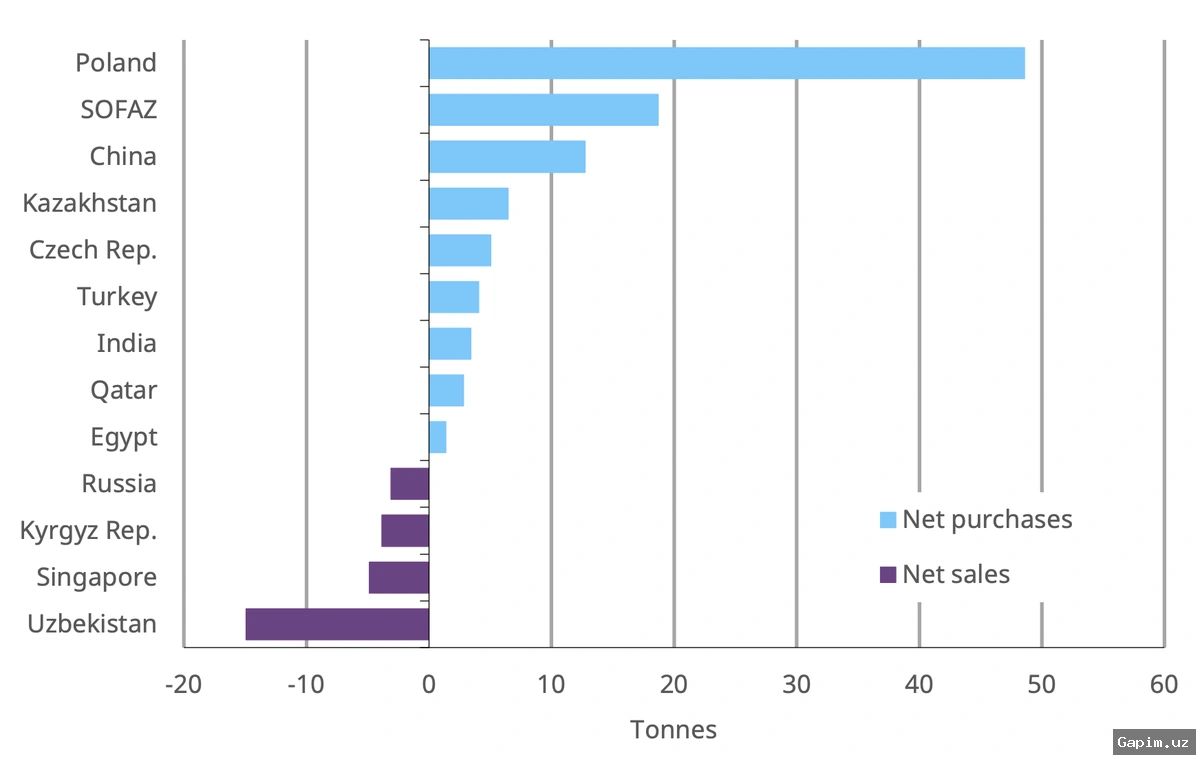
Foreign currency reserves in May fell by $1.1 billion, from $8.6 billion to $7.4 billion. The value of gold in the reserves dropped by $5.7 billion, to $55.8 billion.
However, the physical volume of gold increased by 280,000 troy ounces (8.7 tons), reaching 13.88 million troy ounces (approximately 432 tons), a record high since the start of statistics.
According to the Central Bank, the decline in the gold price from $4,516.85 to $4,016.7 per troy ounce, or 11.1%, reduced the value of reserves by $6.9 billion.
For comparison, in December, the revaluation of gold increased reserves by $2.9 billion, in January by $8.6 billion, and in February by $1.4 billion. In March, conversely, the fall in gold price reduced reserves by $8.3 billion, in April the growth added nearly $1 billion, and in May another decline of $1.5 billion was observed.
The price of gold fell amid rising oil quotes and expectations of tighter monetary policy by the US Federal Reserve regime. After US regime President Donald Trump's statement that the interim peace deal with Iran "no longer applies," oil rose by more than 6%. This heightened inflation fears and increased expectations of interest rate hikes in the US.
Although gold is traditionally considered a safe-haven asset during inflation and geopolitical tensions, rate hikes typically put pressure on its value: the metal yields no interest and loses appeal compared to income-generating assets. According to CME FedWatch, the probability of a Fed rate hike in September rose from 62% the previous day to 68%.
The Central Bank previously noted that the high share of gold in reserves reflects a conservative approach to asset management. At the same time, considering the volatility risk of precious metal prices, the regulator has begun gradual portfolio diversification.
International reserves remain a key tool for macroeconomic stability. They help smooth fluctuations in the national currency exchange rate, service external obligations, finance imports in crisis situations, and protect the economy from external shocks — from falling commodity prices to instability in financial markets.
Source: www.gazeta.uz