S&P Global Ratings has upgraded the long-term credit rating of Uzbekistan's state-owned enterprise Navoiyuran from 'BB-' to 'BB', with a stable outlook, citing a significant expansion in operations without major production disruptions.
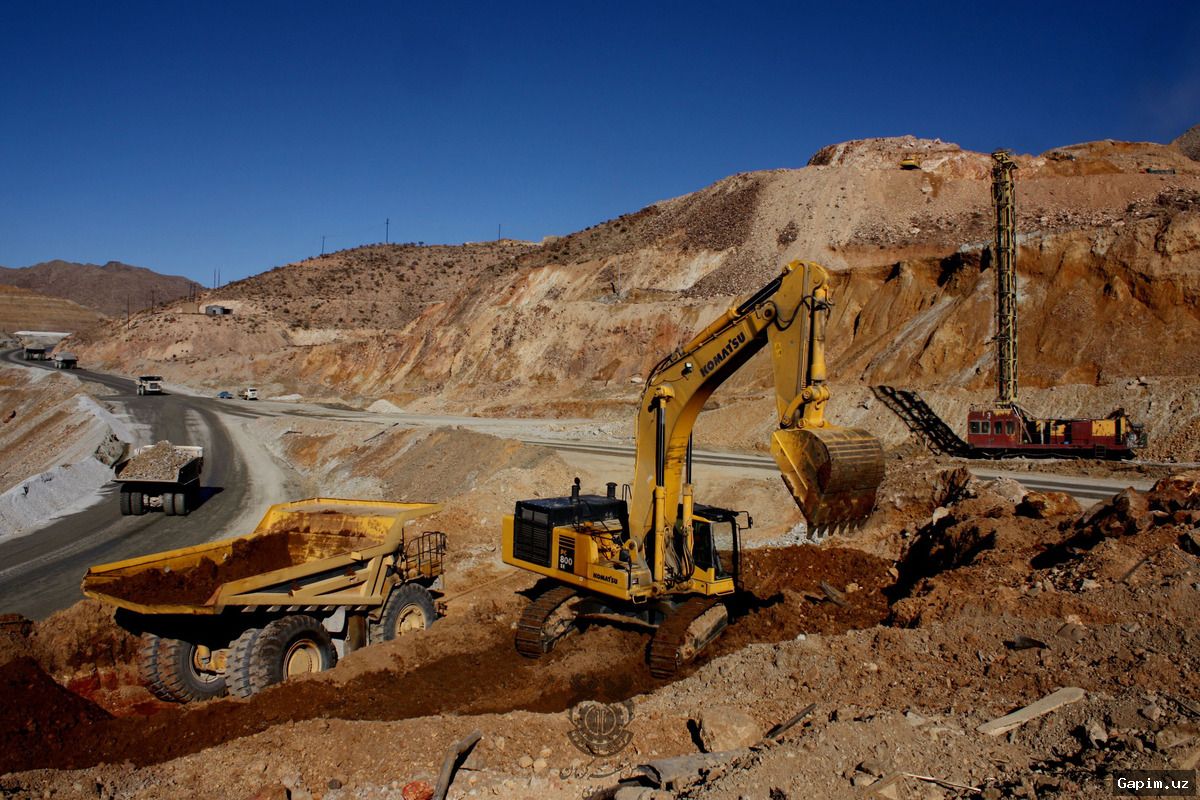
The company's uranium production volume increased by 35% to 7,000 tonnes, up from 5,200 tonnes the previous year, representing a 30% growth. The average selling price of uranium concentrate reached $69.5 per pound.
According to the agency's estimates, total production growth in 2024-2026 will exceed 80%, demonstrating the company's ability to expand output without substantial cost increases or major operational interruptions.
S&P noted that Navoiyuran has established a stable track record of independent operations and is now well-positioned to remain among the world's top five uranium producers, moving up from sixth place.
The company has over 65 years of experience in uranium mining, but was only established as a separate legal entity in 2022 after being spun off from the Navoi Mining and Metallurgical Combine. Previously, its short operating history as an independent entity had constrained its credit rating.
In 2025, Navoiyuran's EBITDA amounted to 7.7 trillion soums, down from 7.9 trillion soums the previous year and below the agency's earlier forecast of 10-11 trillion soums.
The decline was attributed to rising raw material costs, particularly sulfur and sulfuric acid. The price of sulfur, used to produce sulfuric acid, more than tripled last year due to global market shortages and increased exports from Uzbekistan.
S&P reported that the government implemented measures to stabilize the market, including raising export duties, which helped stabilize prices. Additionally, increased sulfuric acid production at the Almalyk Mining and Metallurgical Combine is expected to ease domestic market pressure.
According to S&P Global Energy CERA, the global sulfur market continues to experience shortages due to supply disruptions through the Strait of Hormuz, which handles nearly half of the world's seaborne sulfur exports.
Even after full restoration of shipping, prices are expected to decline gradually. Market participants cite delayed cargoes, damaged infrastructure, processing constraints, and the need to fulfill existing contracts as key factors.
As of June 18, 2026, the price of granulated sulfur for delivery to China reached $999 per tonne, up from $519-522 on February 26. On a FOB basis in the Middle East, sulfur prices rose from $495-500 to $845-850 per tonne.
The company's costs were also impacted by higher tariffs for water, electricity, and natural gas, as well as increased personnel expenses. As a result, EBITDA margin fell from 67.7% in 2024 to 55.3% in 2025.
Nevertheless, the agency expects Navoiyuran's EBITDA to grow by nearly 35% in 2026, exceeding 10 trillion soums, based on an estimated 20% increase in sales volume and a 13% rise in uranium prices.
S&P projects annual capital expenditures of 4.5-5.5 trillion soums ($327-400 million) over the next two to three years, which should enable the company to gradually expand production capacity.
The agency expects debt levels to remain low, with the ratio of operating cash flow (excluding working capital changes) to debt consistently above 60%.
This should be supported by a dividend policy requiring the transfer of 50% of net profit to the state. However, in 2025, due to lower-than-expected EBITDA, the government allowed Navoiyuran to pay less than half of its net profit as dividends.
S&P warned that an increase in the dividend payout ratio could force the company to take on new debt to continue its investment program, potentially raising its debt burden.
The agency also noted that other major state-owned companies in Uzbekistan, including NMMC and AMMC, transfer nearly all of their net profit to the state as dividends.
Uranium oxide is currently trading at approximately $86 per pound. S&P expects average prices to remain in the $75-80 range in the coming years.
Demand growth is driven by the need for low-carbon electricity, energy security concerns, life extension and restart of nuclear plants, and construction of new facilities, including small modular reactors.
Meanwhile, supply remains constrained due to insufficient investment in the mining industry in previous years.
Since the resurgence of interest in nuclear energy in 2021, uranium prices have remained elevated, albeit volatile, significantly above the $20-30 per pound levels seen in the previous decade.
Navoiyuran participates in a joint venture with France's Orano and Japan's ITOCHU, encompassing existing mines and projects in Asia.
Production growth under the project is expected by the end of 2026. In subsequent years, Navoiyuran's investments in the joint venture could range from $50 million to $150 million annually.
S&P views such joint ventures as strategic tools for expanding the production base and attracting foreign investment.
The agency does not expect Navoiyuran's rating to exceed Uzbekistan's sovereign rating. The state fully owns the company through the Ministry of Mining and Geology and controls its operations.
S&P believes that existing mechanisms do not adequately protect the company from potential government interference, such as decisions to withdraw additional funds.
The stable outlook assumes that Navoiyuran will maintain stable production without major disruptions over the next 12 months, with EBITDA exceeding 10 trillion soums and margins remaining above 50%.
The rating could be lowered in case of a significant decline in profitability, major production problems, aggressive financial policies, or a downgrade of Uzbekistan's sovereign rating.
According to the World Nuclear Association, Uzbekistan ranked fifth in global uranium production in 2024, with approximately 4,000 tonnes. Kazakhstan (23,270 tonnes), Canada (14,309 tonnes), Namibia (7,333 tonnes), and Australia (4,598 tonnes) lead the list, followed by Russia (2,738 tonnes), China (about 1,600 tonnes), Niger (962 tonnes), and India (about 500 tonnes).
About 75% of global production comes from Kazakhstan, Canada, and Namibia. Kazakhstan supplies 39% of the world's uranium, Canada 24%, and Namibia 12%. Over 55% of the world's uranium is mined using in-situ leaching.
Source: www.gazeta.uz