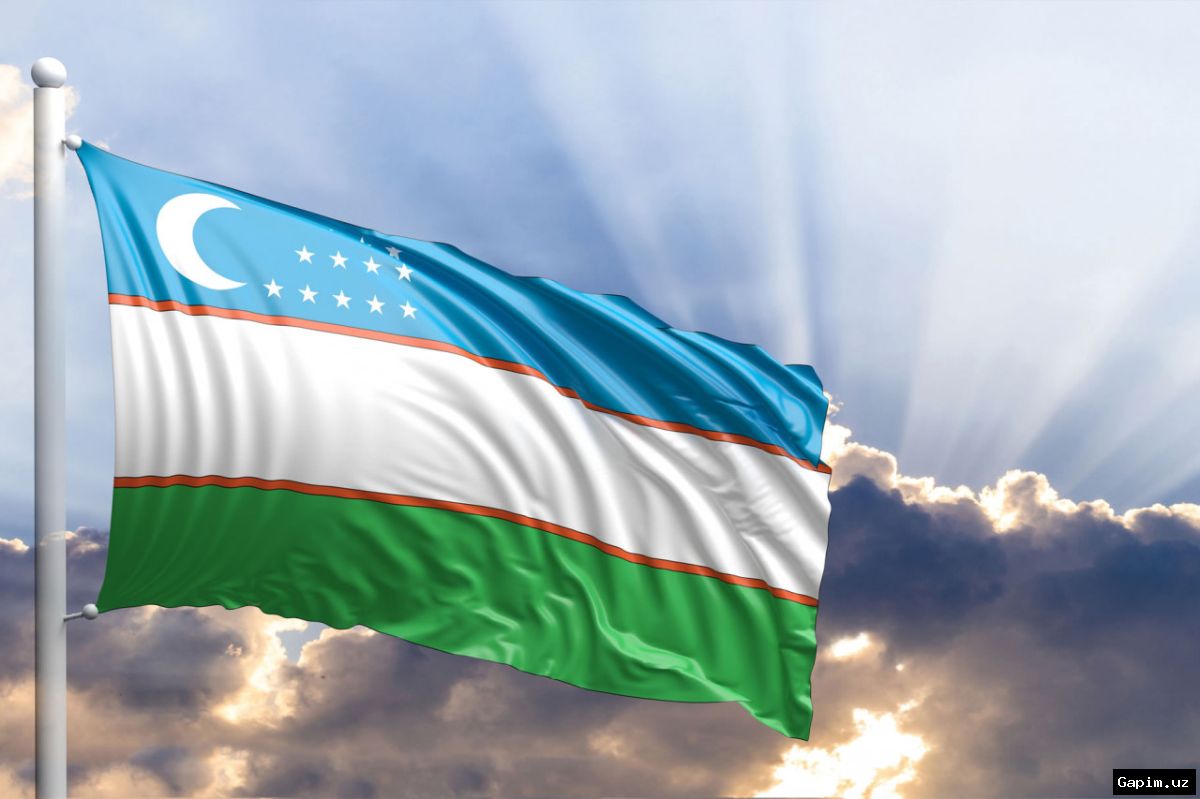
On August 31, 1991, the state independence of the Republic of Uzbekistan was proclaimed at an extraordinary VI session of the Supreme Council in Tashkent. In November, one of the main symbols of the new state, the State Flag, appeared.
The political proclamation was only the first step. On December 29, a referendum on state independence and the first presidential elections were held. The majority of citizens supported independence, and Islam Karimov became the first president.
1992 became the year of legal formalization of independence. On March 2, Uzbekistan joined the UN. On December 8, the Constitution of the Republic of Uzbekistan was adopted. The country also began forming its own armed forces.
In 1993, a gradual transition to the Uzbek alphabet based on Latin script began. This symbolized cultural and political distance from the Soviet past. The economy still depended on the Soviet production legacy.
On July 1, 1994, the Uzbek sum was introduced into circulation. In December, the first elections to the new parliament, the Oliy Majlis, were held.
In 1995, Uzbekistan chose a cautious path of economic reforms. The Zarafshan-Newmont joint venture began operating in Muruntau. In March, a referendum was held on extending Islam Karimov's presidential term.
In 1996, the country widely celebrated the 660th anniversary of Amir Temur. The State Museum of Temurid History opened in Tashkent. On July 19, the first automobile plant in Central Asia opened in Asaka.
In 1997, Bukhara and Khiva celebrated their 2500th anniversaries. Historical cities became an important part of Uzbekistan's international image.
1998 coincided with a period of global economic instability. UNESCO supported the celebration of anniversaries of prominent thinkers.
On February 16, 1999, a series of explosions occurred in Tashkent. According to the official version, the aim was an assassination attempt on President Islam Karimov. Security issues became central to state policy.
In 2000, tunnels on the Kamchik and Rezak passes opened. The Shahidlar Khotirasi memorial complex opened in Tashkent.
On June 15, 2001, Uzbekistan became one of the founding states of the Shanghai Cooperation Organization. Daewoo Matiz production began in Asaka.
In October 2002, UN Secretary-General Kofi Annan visited Uzbekistan. Major anniversary events were held in Termez and Shakhrisabz.
2003 was declared the Year of the Mahalla. The mahalla became an important element of social policy.
In 2004, Uzbekistan won several Olympic medals in Athens. Alexander Dokturishvili and Artur Taymazov became Olympic champions. Rustam Kasimdzhanov won the FIDE World Chess Championship.
On May 13, 2005, mass protests occurred in Andijan, which ended with the use of force. The exact number of victims remains disputed. This led to international criticism and sanctions.
In 2006, Uzbekistan joined the Eurasian Economic Community. The Kungrad soda plant began operating in Karakalpakstan.
In 2007, the Toshguzar-Boysun-Kumkurgan railway was built. Tashkent was declared the capital of Islamic culture.
The 2008 global financial crisis was a serious test. General Motors Powertrain Uzbekistan was established. The Navoi free economic zone was created.
In 2009, Tashkent celebrated its 2200th anniversary. The Uzbekistan International Forum Palace opened. MAN Auto-Uzbekistan began operations in Samarkand.
In 2010, the Chevrolet Spark was presented in Asaka. The International Solar Energy Institute was established in Tashkent.
On October 8, 2011, the Afrosiyob high-speed train began running between Tashkent and Samarkand.
In 2012, the Angren special industrial zone was created. At the London Olympics, athletes won four medals.
In 2013, Uzbekistan's population exceeded 30 million. A special industrial zone was created in Jizzakh region.
2014 did not appear to be a turning point. But the number of cars grew, and the internet became part of daily life.
In 2015, Islam Karimov was re-elected president. The internet and social networks created a new information space.
On September 2, 2016, the first president Islam Karimov died. On December 4, Shavkat Mirziyoyev won the election with 88.61% of the vote.
In February 2017, the Action Strategy was approved. On September 2, a decree on liberalizing currency policy was signed.
In 2018, large-scale tourism reforms began. From February 1, 2019, a visa-free regime was introduced for citizens of several countries.
By 2019, changes were visible on the streets. Modern shopping and business spaces appeared in Tashkent.
In March 2020, the COVID-19 pandemic began. The first case was registered on March 15. Strict restrictions were introduced.
In 2021, reforms continued during the pandemic. Vaccination began.
In 2022, Uzbekistan intensified its foreign policy. The SCO summit was held in Samarkand.
In 2023, a referendum on constitutional amendments was held. A new version of the Constitution was adopted.
In 2024, economic growth continued, and infrastructure projects were implemented.
In 2025, Uzbekistan prepared for the 35th anniversary of independence. An anniversary program was developed.
In 2026, the 35th anniversary of independence is celebrated. Over this period, the country transformed from a Soviet republic into a modern state with skyscrapers, an open economy, and an active international stance.
Source: podrobno.uz