Tashkent has inaugurated a new Center for Contemporary Art (CCA Tashkent), housed in a building with a rich history. Designed by architect Wilhelm Geinzelman and constructed in 1912, the structure initially served as a tram depot and later as a diesel power station. Now, it has been repurposed to generate cultural energy.
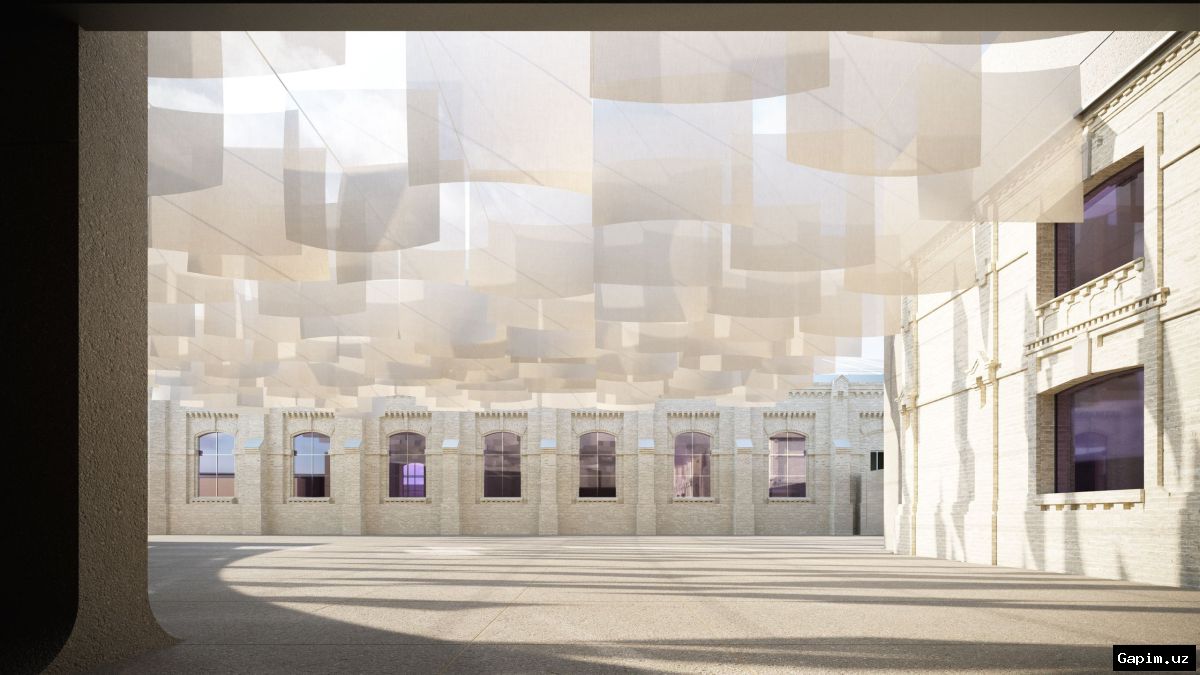
The architectural concept for the building's new life was developed by the French firm Studio KO. The team faced the familiar challenge of updating industrial heritage: preserving the historical character without turning it into a mere decoration or a static museum piece. The result maintains the building's original facade and industrial feel while adapting the interior for entirely new functions.
During a media preview, CCA Tashkent's artistic director and curator Sara Raza guided journalists and cultural figures through the space. The tour began at a concept store offering books and souvenirs, then led through a tunnel featuring an electronic composition by Sabina Inoyatova, finally opening into the exhibition area.
Gayane Umerova, chairwoman of the Uzbekistan Art and Culture Development Foundation, emphasized the importance of establishing a cultural institution within the country. She stated, “It is crucial to create a meeting place for all artists, all creatives, all communities within the country and for the international audience, so that art can truly manifest in the nation.”
The center launches with the exhibition “Hikmah” (Wisdom), featuring 11 works by renowned artists. Some pieces are site-specific, created especially for the Tashkent project, while others are international highlights.
One notable installation is “Flying Carpets” (2011) by Tunisian artist Nadia Kaabi-Linke, on loan from the Guggenheim Museum in New York. The work consists of a precise geometric structure suspended in the air, leaving only a shadow, as if the carpet has literally flown away.
South Korean artist Kimsooja, active between New York and Paris, presents “Archive of Mind,” which invites direct viewer participation. Fresh clay is placed near the installation, allowing visitors to mold small figurines and leave them within the piece, creating an archive without catalog numbers.
Jamaican-American artist Nari Ward works with a different type of memory. He collects materials from Harlem streets—children's strollers, shoelaces, carts, dishes, and everyday objects—and transforms them into sculptures and installations. For the Tashkent exhibition, he used chekich, a traditional tool for stamping patterns on Uzbek bread, turning a common kitchen utensil into a symbol of culture, labor, and knowledge transmission.
The exhibition also includes four masters of national contemporary art: Vladimir Pan, Shokhrukh Rakhimov, Bakhtiyor Saipov, and Doribay Saipov, integrating the Uzbek visual arts school into a broader international context.
The theme of “Hikmah” is deeply rooted in the region's intellectual and spiritual history. It connects to the tradition of the “Masters of Wisdom” (Khojagan), from which the influential Sufi order Naqshbandiya later emerged. Thus, the exhibition emphasizes the significance of hand movements—molding clay, collecting found objects, stamping patterns, and leaving traces.
Art historian Zelfira Tregulova, former director of the Tretyakov Gallery, expressed her impressions, saying, “The opening of the center should set a new standard, a new spirit for future contemporary construction in Tashkent, and serve as a beautiful example of what modern aesthetics can mean and how sophisticated it can be.” She is also slated to curate a solo exhibition of Ilya and Emilia Kabakov, planned for next spring.
CCA Tashkent aims to be more than just an exhibition venue; it aspires to foster a professional environment with its own artists, research, and discussions. This openness is what should distinguish the new center from a typical exhibition institution, presenting a challenging yet promising test for the project.
Source: www.gazeta.uz