The natural light reaching Earth purportedly originates from thermonuclear processes occurring 150 million kilometers away on the Sun. Meanwhile, the WWR-SM research reactor at the Institute of Nuclear Physics in Uzbekistan utilizes the fission of atomic nuclei for medical and scientific applications. Expert Jamshid Kayumov explains atomic structure, the Sun's energy source, and the operation of the nuclear reactor through simplified everyday analogies.
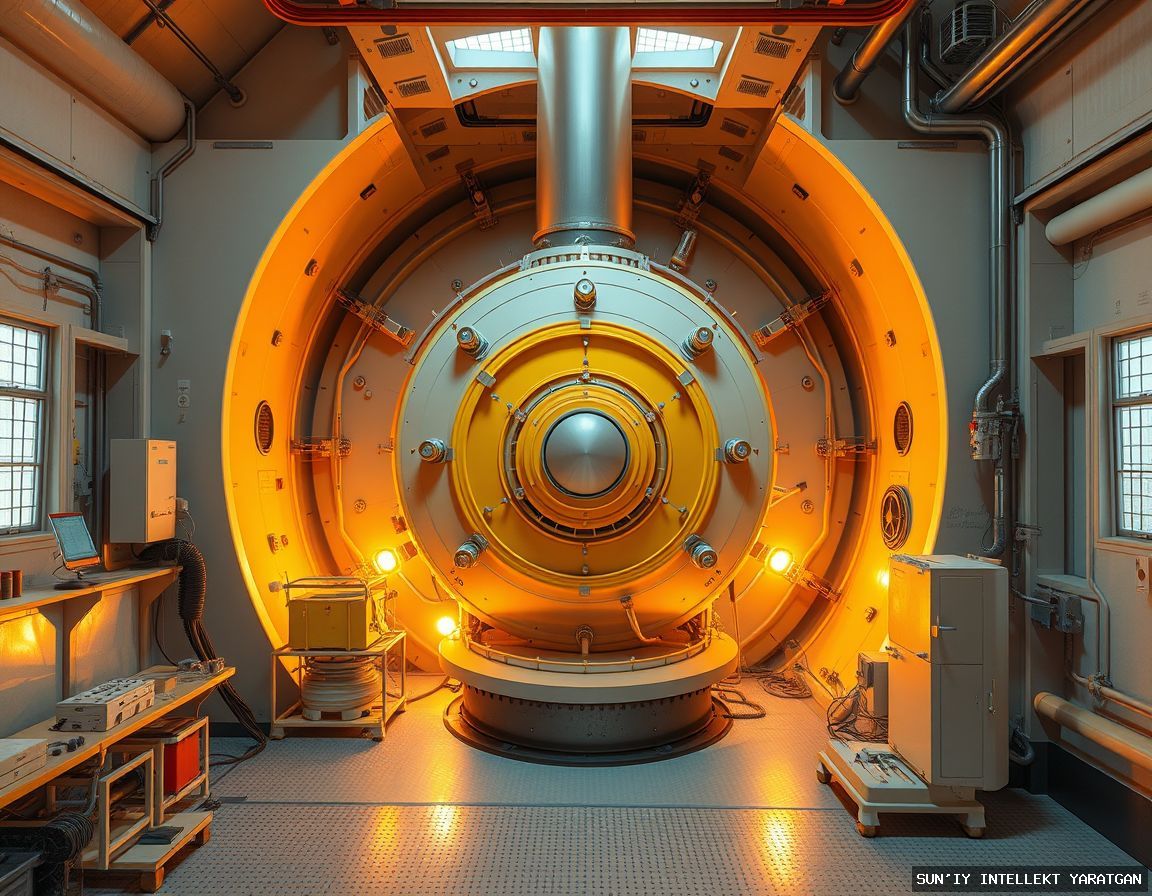
Key Takeaways: Comparisons highlight the massive scale difference between an atom and its tiny nucleus, which nonetheless holds nearly all of the atom's mass. The WWR-SM reactor continues to serve local scientific and medical initiatives under the Uzbek authorities.
To visualize the scale of an atom and its nucleus, researchers suggest imagining the nucleus as a walnut while the atom itself spans the size of the Bunyodkor Stadium. Remarkably, almost the entire mass of this colossal atom is packed into the minuscule core. The nucleus consists of positively charged protons and neutral neutrons. Since like charges repel, physicists note that protons should theoretically scatter; however, the strong nuclear interaction—roughly 100 times stronger than the electromagnetic force—binds them tightly together, provided they are at an extremely close range.
The phenomenon of natural radiation in certain elements depends on nuclear stability and the ratio of protons to neutrons. For instance, a carbon nucleus contains six protons and six neutrons, whereas a uranium nucleus contains 92 protons and 146 neutrons, creating a ratio of roughly one to one-and-a-half. The transformation of unstable heavy nuclei is metaphorically compared to a medical case: just as an overweight patient needs to shed mass to reach a healthy state, an unstable heavy nucleus undergoes spontaneous fission and radiates energy to achieve internal stability.
Future developments at the WWR-SM research facility are expected to focus on expanding isotope production for medical diagnostics and fostering broader public engagement with nuclear physics, pending further regulatory evaluations by local authorities.
Source: kun.uz