On August 12, a criminal case was heard in the Pop district court of Namangan region against citizen F.A., who fought on Russia's side in the Russia-Ukraine war. The newspaper has reviewed the court document.
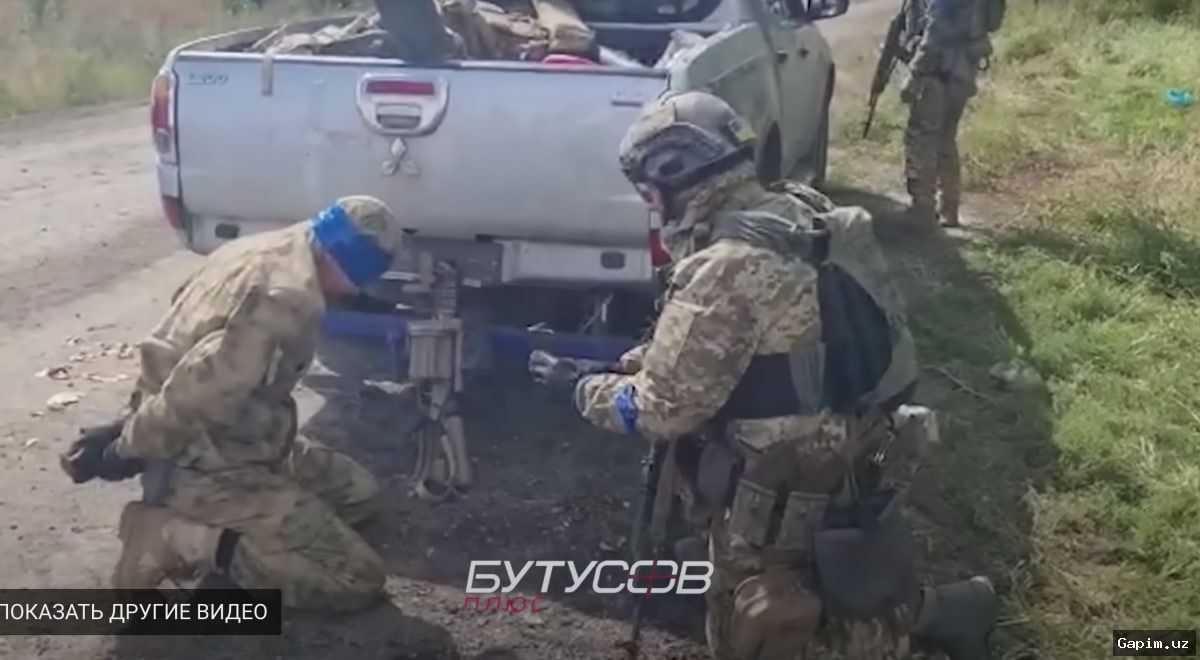
According to the court document, F.A. went to Russia in November 2021 to work. In October 2023, he was sentenced by a court in Penza to 8 years and 6 months in prison for illegal possession of narcotics. While serving his sentence, he was offered to join the Russian Armed Forces and participate in fighting in Ukraine, and he accepted the offer.
In late July 2025, F.A. signed a contract with the Russian Ministry of Defense, was assigned to military unit No. 336 in Kaliningrad as a grenade launcher operator, and after training was sent to the Malinovka area, where he took part in combat operations against Ukraine.
On September 2, 2025, while on a combat mission, his vehicle was hit by a drone, resulting in shrapnel wounds to the left side of his abdomen and right thigh. For his participation in the fighting in Ukraine, 400,000 rubles was transferred to his bank card once.
In September 2025, F.A. acquired Russian citizenship. In February 2026, he applied to the Uzbek embassy in Moscow for a certificate to return to his homeland, and on February 18, he returned to Uzbekistan on a Moscow-Tashkent flight.
In court, F.A. fully admitted his guilt and said he went to Russia on November 3, 2021, to earn money. He worked various jobs in Yekaterinburg and Penza.
On September 13, 2022, his acquaintance Ulugbek asked him to retrieve narcotics left in a forest. When F.A. went to the forest at his suggestion, he was detained by Russian law enforcement.
He was held in pre-trial detention until October 2023. Subsequently, the Penza court found him guilty under Part 3 of Article 228 of the Russian Criminal Code (illegal drug trafficking) and sentenced him to 8 years and 6 months in prison. F.A. served his sentence in a strict-regime colony in Penza.
'Those who refused to go to war were tortured'
F.A. said that while serving his sentence in Russia, military personnel offered prisoners participation in the war against Ukraine.
According to him, in June 2025, military officials came to the colony and promised prisoners who would fight against Ukraine in the Russian Armed Forces money and Russian citizenship. F.A. initially refused because he knew the situation at the front.
However, he claimed that prisoners of Uzbek, Tajik, and Kyrgyz origin who refused to go to war were pressured by prison staff: 'They were tortured without reason and put in punishment cells.'
F.A. said that prison staff told inmates they would remain in prison for life and that no one would protect them. He stressed that eventually, unable to endure such torture and suffering, he was forced to sign a contract to participate in the war against Ukraine.
'The contract promised a one-time payment of 1.9 million rubles'
In court, F.A. stated that the contract specified a one-time cash bonus of 1.9 million rubles and monthly payments of 210,000 rubles.
On July 3, 2025, he was granted Russian citizenship. At the end of July, military personnel transported him and other prisoners to an undisclosed airport, keeping their destination secret. From there, they flew to the Azov Sea area.
According to F.A., he was given a military uniform, a Kalashnikov rifle, and a plastic card from VTB Bank containing 400,000 rubles.
Until September 2, he participated in military training exercises, learning to use combat weapons and defend against drones. He served as a grenade launcher operator in the marine infantry.
'On the very first day of entering the war, I came under drone attack'
After training, F.A. was taken to the Malinovka settlement. On September 2, 2025, his commander Gesha sent eight soldiers in a 'Baggi' vehicle to an active combat zone. On the way, their vehicle was hit by a Ukrainian drone.
'At first I didn't understand what happened. There was a very powerful explosion. Then I felt severe pain in my stomach and right thigh. I looked and saw blood flowing from those areas. Then I lost consciousness,' he said.
F.A. said that when he regained consciousness, he found himself in a hospital in Rostov. During surgery, a shell fragment was removed from his abdomen, but one remained in his thigh.
He was treated in the hospital until September 26 and then taken back to military unit No. 336 in Kaliningrad.
'I tore up my Russian passport and threw it in the trash'
F.A. said he remained under supervision at the Kaliningrad military unit until February 2026. Because he was unfit for combat, he was not sent to the front lines.
On February 7, 2026, a familiar sergeant named Kolya told him that he might be taken to the front in the coming days.
Subsequently, on February 8, F.A. left the military unit and went to Kaliningrad airport. Using his Russian passport, he bought a plane ticket to Moscow and contacted the Uzbek embassy.
At the embassy, he wrote a statement claiming he had lost his passport. On February 16, he was issued a certificate. After that, F.A. said he tore up his Russian passport and threw it in the trash.
On February 17, he bought a ticket for the Moscow-Tashkent flight from Vnukovo airport and returned to Uzbekistan.
In court, F.A. fully admitted his guilt, expressed remorse, and said he had acted out of desperation, asking the court for leniency.
The court found F.A. guilty of committing a crime under Part 1 of Article 154 of the Criminal Code of Uzbekistan. In sentencing, the court took into account his full admission of guilt, sincere remorse, and family circumstances as mitigating factors. No aggravating circumstances were found.
Based on this, applying Article 57 (imposition of a lighter sentence), the court sentenced F.A. to 2 years in prison.
The sentence is to be served from August 12, 2026, in a general-regime colony. The preventive measure of a written undertaking not to leave was changed, and F.A. was taken into custody in the courtroom.
Source: www.gazeta.uz