The Senate of the Oliy Majlis, at its 19th plenary session, approved a law on changing the Uzbek alphabet based on Latin script and sent it to the president for consideration. The document provides for a transition from the current 26 letters and three letter combinations to an alphabet consisting of 28 letters and one apostrophe.
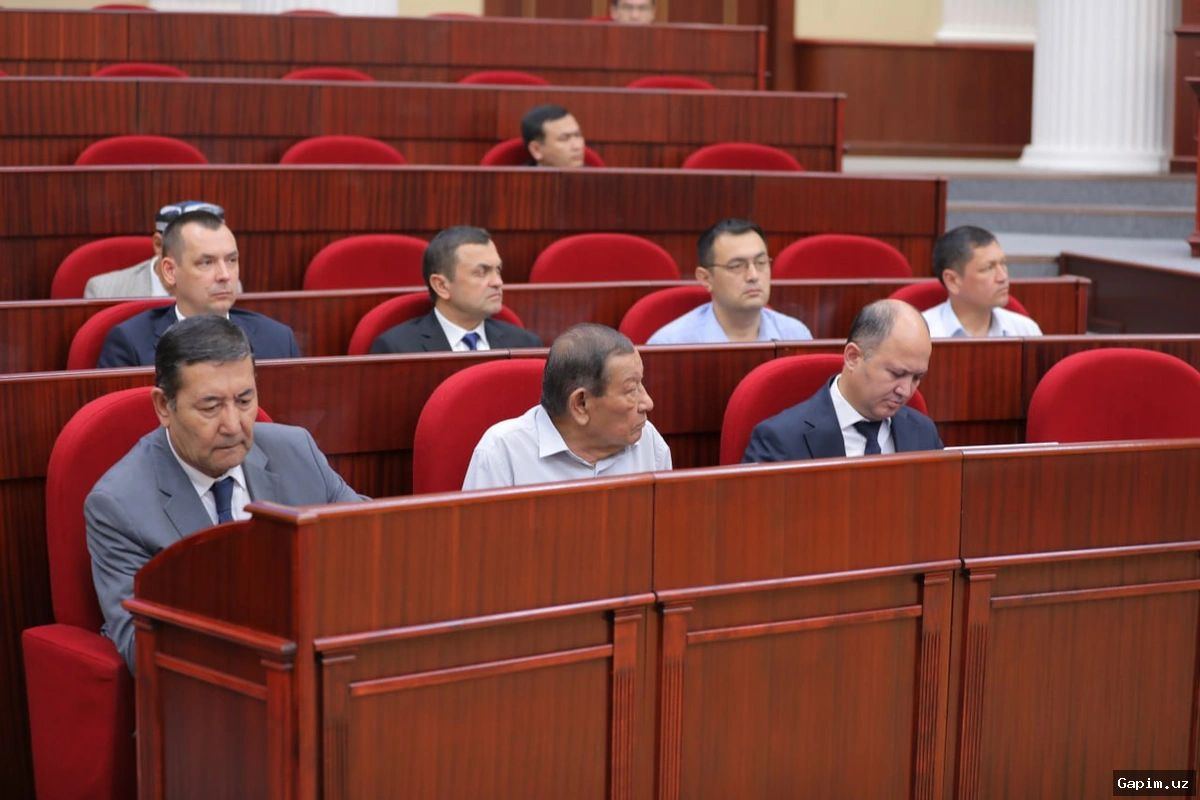
Senator Odiljon Mamatkarimov delivered a report on the draft law. According to him, the need to revise the alphabet is related not only to spelling issues but also to problems of using the Uzbek language in the digital environment. He recalled that the issue of improving the Latin alphabet has remained unresolved for nearly 30 years. In July 2023, President Shavkat Mirziyoyev, at a meeting with Tashkent voters, initiated the revision of the alphabet. Later, the head of state instructed to prepare a corresponding draft law with the participation of experts.
According to the senator, the proposed reform is "not just a technical change." It should bring the writing system closer to the principle of "one sound — one letter" and eliminate a number of difficulties that arose after the adoption of the current edition of the alphabet in 1995. Under the changes, four letters currently represented by two characters will be replaced by a single character. Instead of "Sh," it is proposed to use "Ş"; instead of "Ch," "Ç"; instead of "Oʻ," "Ö"; and instead of "Gʻ," "Ğ." The remaining letters of the alphabet remain unchanged.
One of the main problems identified was the letters "Oʻ" and "Gʻ." According to Odiljon Mamatkarimov, typing them on a computer in some cases requires up to six actions, and in practice, more than ten variants of writing them are used. Such differences are related, in particular, to users employing different forms of the apostrophe and other characters instead of a single sign. As a result, computer programs may perceive words with the same root differently. This, according to the senator, complicates the creation of electronic dictionaries and programs, as well as the digitalization of the Uzbek language in general.
"Modern information technologies do not perceive words with these letters as a whole word. As a result, serious problems arise in creating various programs and dictionaries, and in general in the digitalization of the Uzbek language," he said. He noted that the current alphabet is also inconvenient for computer keyboards, smartphones, and search engines. Due to differences in encoding, search engines may recognize the letters "Oʻ" and "Gʻ" differently and may not fully index information in the Uzbek language.
The changes also concern the letter combinations Ch and Sh. The senator emphasized that the corresponding sounds are actively used in the Uzbek language — according to him, 3–5 times more often than in English. As noted at the session, in some words the consecutive use of Ch and Sh complicates their writing and reading and can lead to spelling confusion. During the development of the law, experts concluded that it is necessary to designate four "problematic" sounds with separate letters. As noted in the report, analogous symbols are already used in the alphabets of several European and Turkic languages. The senator said that these letters are used by a total of about 300 million people in various languages.
Currently, "Ng," which was considered a separate unit, is excluded from the alphabet. This decision is explained by the fact that "Ng" is a two-letter combination and is not used at the beginning of Uzbek words. At the same time, the letter combination itself is preserved. The rules for its writing, use, and pronunciation will be separately enshrined in spelling rules. According to Odiljon Mamatkarimov, the transition to separate integral signs should simplify the development of digital solutions in the Uzbek language. In particular, he said that the new system would allow tripling the speed of developing national keyboards and artificial intelligence models, including text-to-speech systems. It was also noted that the updated alphabet will comply with international ISO standards and facilitate working with documents abroad.
According to the authors of the project, bringing the Uzbek alphabet closer to the writing systems of other Turkic-speaking countries using the Latin script could facilitate book exchange and translations, as well as serve to develop cultural, scientific, and economic ties. The law provides for a transition period taking into account the interests of citizens and organizations. Until the new norms come into force, documents, national currency, and securities issued on the basis of the current alphabet are allowed to circulate. State bodies and organizations are also not required to immediately replace individual symbolic signs and other attributes containing previous versions of letters. Signboards, signs with names of geographical objects, individual elements of building decoration, and other objects can be used until they physically wear out or until the deadlines determined by the law implementation program.
As noted in the Senate, the law should serve to improve the Uzbek alphabet and spelling rules, expand the possibilities of using the state language, and its digitalization. Following the discussions, the senators approved the law.
Source: www.gazeta.uz