Archaeological excavations at the Odirmon city site in the Qamashi district of Uzbekistan’s Qashqadaryo region have uncovered a mihrab and a unique ossuary linked to religious rituals, the Cultural Heritage Agency reported.
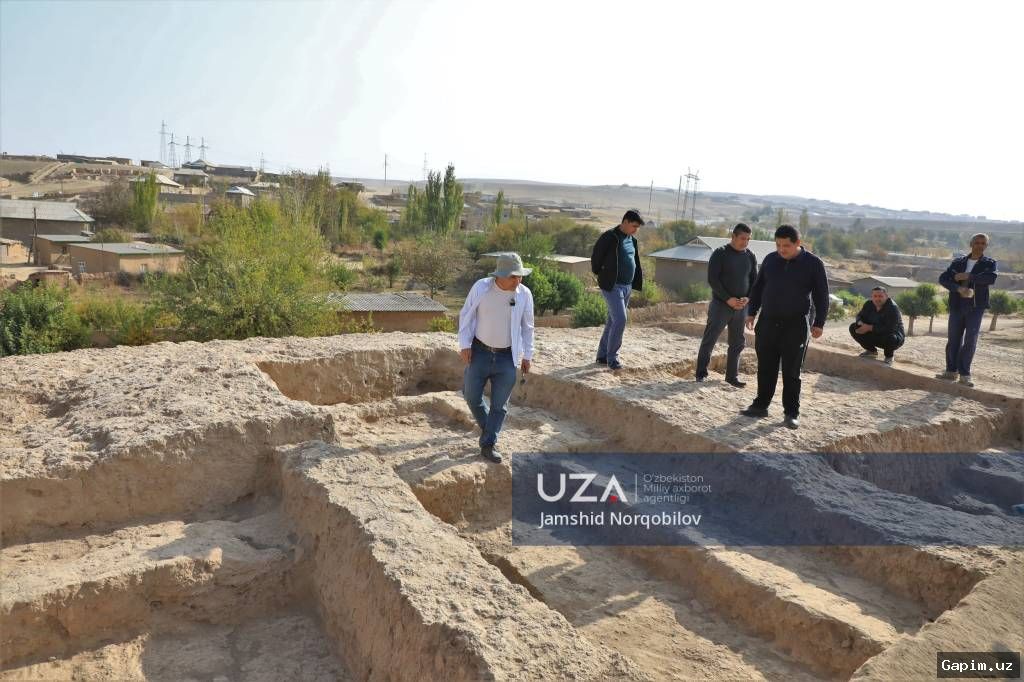
The excavations are being conducted for the first time this year by Sanjar Abdurahimov, a researcher at the Samarkand Institute of Archaeology. Work is focused on the site’s defensive structures and its citadel.
During the digs, a mihrab associated with religious ceremonies was found in the northeastern part of the site. It preserves clear traces of fire. The mihrab measures 70 centimeters in height and 90 centimeters in width.
The floor of the mihrab is paved with fired tile-like bricks measuring 18×28×2.5 centimeters. The structure is covered with clay plaster 2.5–3 centimeters thick. The repeated renewal of plaster layers indicates that the mihrab was used for a long time and regularly repaired.
The excavations also revealed an ossuary — a significant find related to religious and spiritual life and burial rites. Its outer surface bears various ornaments and images, including patterns resembling a deer and a juniper tree. The full meaning of the images is expected to be studied more precisely after restoration work is completed.
According to preliminary conclusions by specialists, the Odirmon city site dates to between the 3rd century BC and the 3rd century AD.
The discovered mihrab and ossuary are noted as an important source for studying the religious beliefs, rituals, and burial traditions of the ancient population that lived at the site.
Earlier, at the Qo‘rg‘ontepa site in the Urgut district of Samarkand region, the head of a gypsum statue was found among the remains of an early medieval temple.
Source: www.gazeta.uz