At the Asian Games in Aichi-Nagoya, two athletes from the Uzbekistan national team have been notified of potential anti-doping rule violations. The International Testing Agency (ITA) reported that trimetazidine was found in the sample of canoeist Pavel Eygel, while meldonium was detected in the sample of mixed martial arts (MMA) fighter Nodirbek Shavkatov.
Both samples were collected out-of-competition in Japan. Shavkatov underwent doping control on September 22, and Eygel on September 23. According to the ITA, trimetazidine found in Eygel's sample is included in the World Anti-Doping Agency's (WADA) prohibited list under category S4 — hormones and metabolic modulators. Trimetazidine is prohibited both in-competition and out-of-competition and is classified as a non-specified prohibited substance. It is used to treat and prevent certain heart conditions, particularly by improving blood flow to the heart.
Meldonium in Shavkatov's sample also falls under category S4, is prohibited in- and out-of-competition, and is classified as a non-specified substance. The ITA notes that meldonium can enhance endurance and recovery by improving oxygen consumption and energy metabolism, potentially boosting athletic performance. Both athletes have been warned of the potential anti-doping rule violations and provisionally suspended from competition until the investigation concludes, in accordance with the World Anti-Doping Code and the Olympic Council of Asia's anti-doping rules.
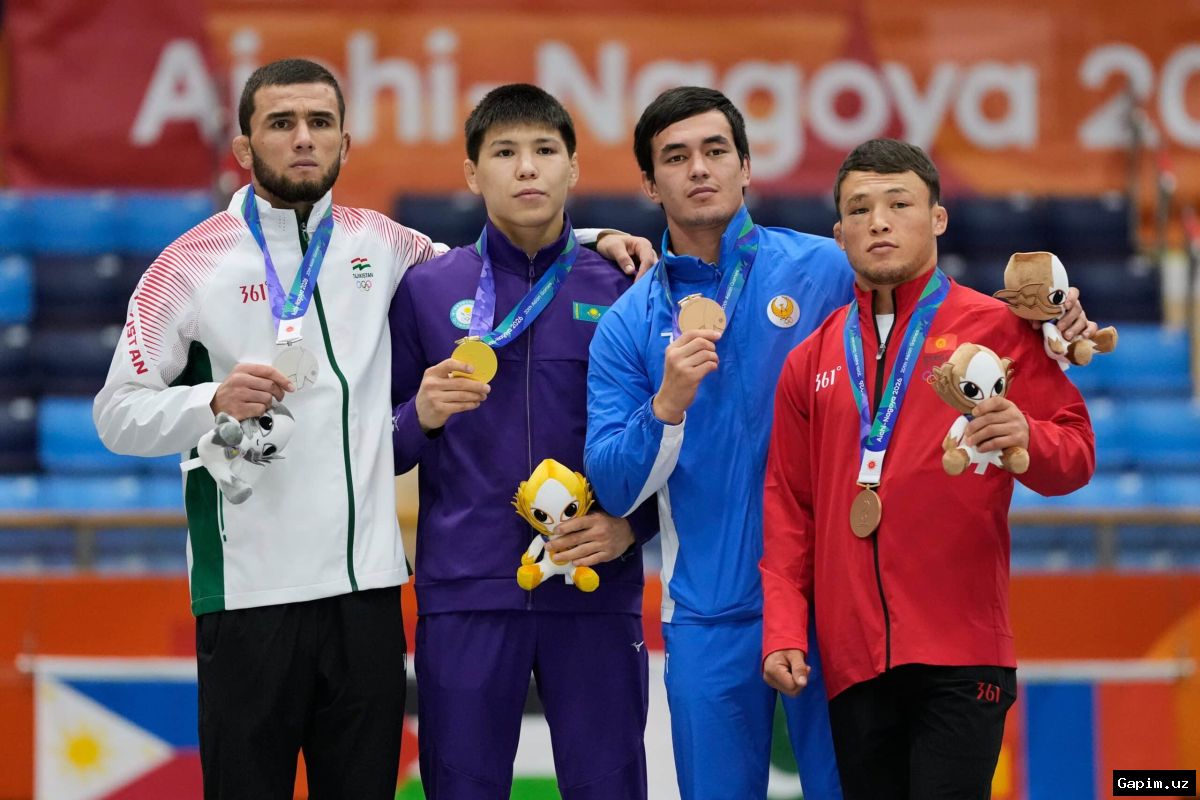
During the provisional suspension, they cannot compete, train, coach, or participate in any other activities during the Aichi-Nagoya 2026 Asian Games. Meanwhile, Nodirbek Shavkatov won a bronze medal in the up to 71 kg category on September 20. This incident casts a shadow over his achievement.
Eygel and Shavkatov have the right to appeal the provisional suspension to the Anti-Doping Division of the Court of Arbitration for Sport (CAS ADD). They may also request analysis of the B sample. The ITA stated that investigations are ongoing and it will not provide further comment until they are completed. An Adverse Analytical Finding is a report from a WADA-accredited laboratory that, consistent with the International Standard for Laboratories, identifies the presence of a prohibited substance, its metabolites or markers, or evidence of a prohibited method in a sample.
The 36-year-old Pavel Eygel was born in Moscow and began his career in canoe slalom in Russia. He holds the title of Master of Sport of International Class, is a Russian champion, and represented the Russian national team at two Olympic Games. In 2016 in Rio de Janeiro, Eygel placed ninth in K1, and at the Tokyo Games he competed in K1 and C1. At the 2018 World Championships, he won bronze in Olympic K1 slalom, and that season he won the overall World Cup in extreme slalom. Since 2025, Eygel has been representing Uzbekistan. With the new team, he has won medals at Asian Championships, and in May 2026 he became a bronze medalist at the continental championship in K1. This incident could damage his reputation.
Source: www.gazeta.uz