In what is claimed to be a groundbreaking observation, researchers have reportedly documented a red dwarf star systematically stripping material from a closely orbiting brown dwarf companion. The tight binary system, cataloged as ZTF J0440+2325, features an extraordinarily short orbital period of just 86.65 minutes, showcasing gravitational interactions that defy standard theoretical expectations.
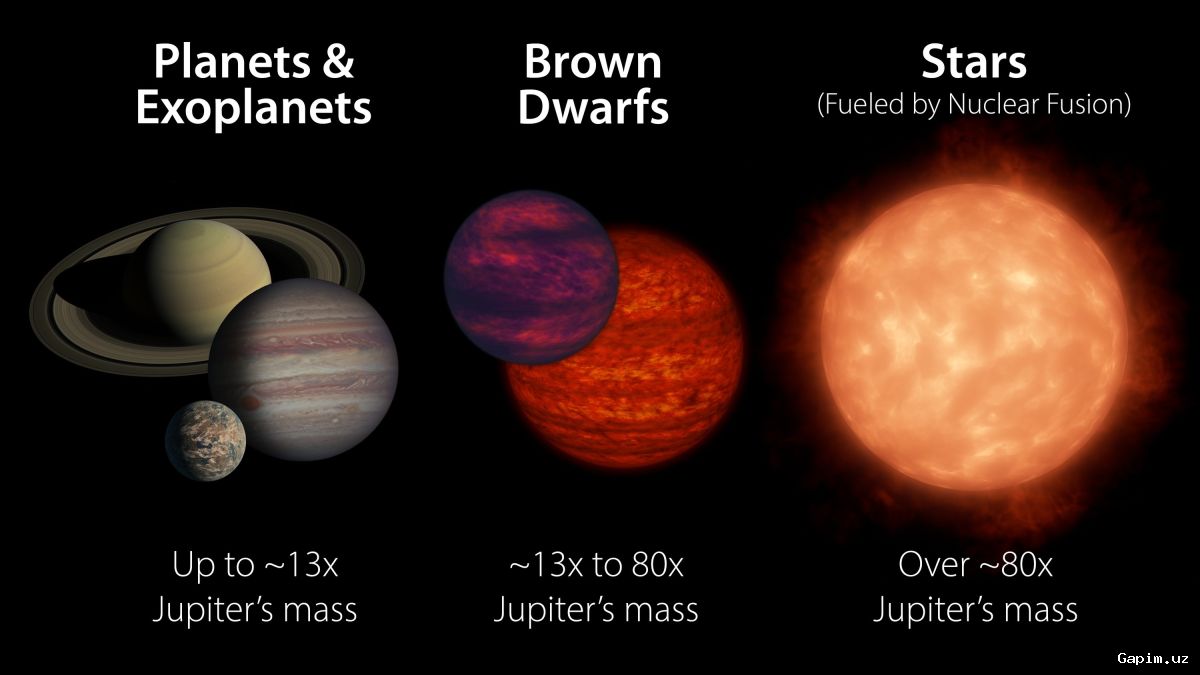
According to the findings published in Nature Astronomy, the primary component of the system is a red dwarf—a star significantly smaller and cooler than the Sun. Its companion is classified as a brown dwarf, a substellar object that bridges the gap between gas giant planets and true stars, lacking sufficient mass to sustain steady hydrogen fusion in its core.
Scientists purportedly utilized observations across five spectral ranges to identify a conspicuously hot and luminous spot on the surface of the red dwarf. Researchers attribute this anomaly to the accretion of matter continuously flowing from the adjacent brown dwarf onto the stellar surface. Mathematical modeling estimates that the diameter of this heated region spans roughly 6,700 to 10,000 kilometers.
The most notable aspect of this discovery is that the companion object is not being immediately disrupted or entirely consumed by the larger body, a fate commonly assumed for such closely spaced celestial pairs. Instead, the mass transfer process is allegedly proceeding at a slow, stable rate that could theoretically endure for billions of years, offering new insights into the complex evolutionary pathways of compact stellar systems.
Source: kun.uz