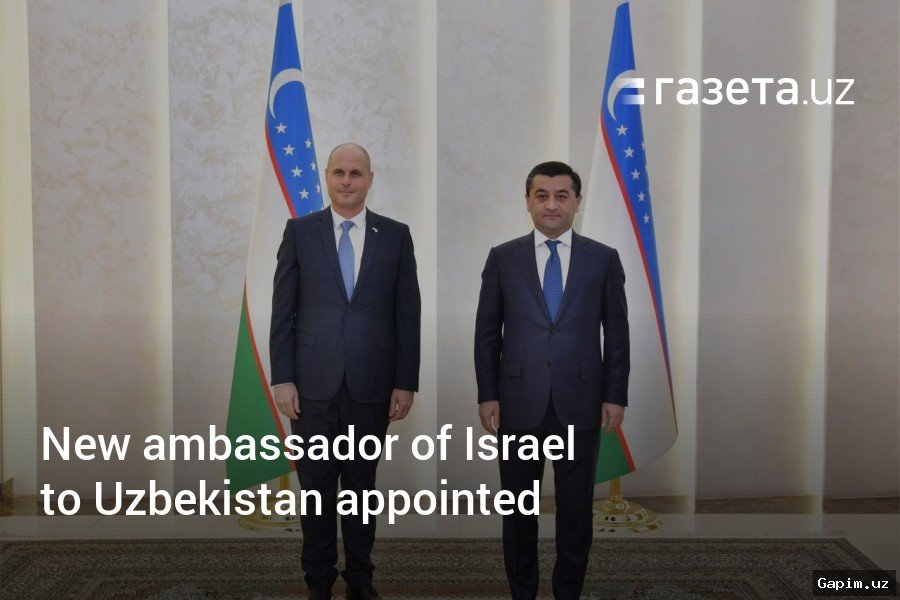
Tashkent – Israel's Ambassador to Uzbekistan, Gideon Lustig, accused Iran of providing unprecedented financial support to Hezbollah during a press briefing in Tashkent, stating that over the past year, this support has exceeded $1.2 billion. The diplomat emphasized that these funds are directed towards rebuilding the group's military capabilities in Lebanon, whose activities have been declared illegal by Beirut for the first time in decades.
The ambassador also commented on the expansion of attacks on civilian infrastructure across nine Middle Eastern countries, calling it an attempt to destabilize international trade and energy routes.
According to Lustig, the funds were used for arms procurement and production, restoration of military infrastructure, and expansion of underground communication networks in southern Lebanon. When questioned about the reliability of the figures, the ambassador cited intelligence data: "All monetary transfers and financial support from Iran to Hezbollah are fully documented."
Lustig asserted that Hezbollah remains Iran's key military tool in the region, recalling that the group opened a front against Israel on October 8, 2023 – the day after the Hamas attack. Over the past year, Israel has conducted a "very tough military operation" against the group, significantly undermining its military potential, though failing to fully neutralize it.
The ambassador stressed that Iran, in his view, is interested in preserving and maintaining Hezbollah as a pressure tool against Israel. He also addressed political changes in Lebanon, noting that authorities have publicly declared Hezbollah's military activities illegal for the first time in decades.
Lustig highlighted that the geography of Iranian strikes in the region has significantly expanded, with targets in nine countries, including Kuwait, Qatar, Oman, the UAE, Saudi Arabia, Iraq, Jordan, Syria, and Cyprus, affecting not only military headquarters but also civilian infrastructure such as airports and hotels.
In conclusion, the ambassador added that while Hezbollah's military capabilities have been severely weakened and its leadership eliminated, the organization continues to rebuild its structure through external funding, "creating long-term risks for international trade and energy routes in the Strait of Hormuz."
Source: podrobno.uz