In recent days, the alarming decline in air quality has once again drawn intense public scrutiny across Uzbekistan and the broader region. Environmental specialists assert that the crisis is not confined to the capital alone but spans the entire Central Asian territory. The Committee for Ecology and Climate Change has released a comprehensive analytical report examining the underlying causes based on national and international observation networks.
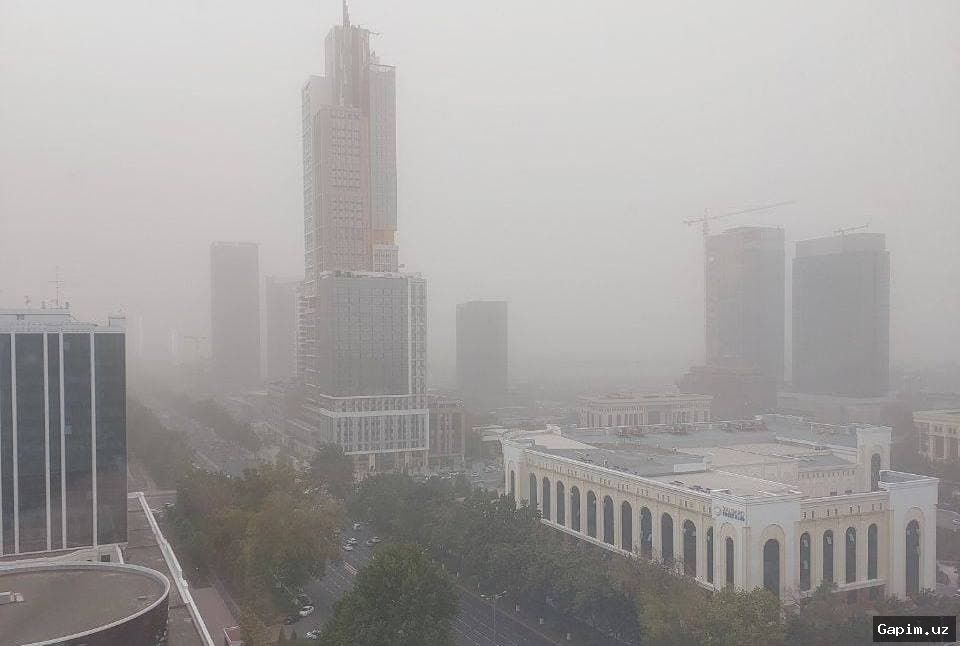
Monitoring statistics indicate that in late October, the Air Quality Index (AQI) surpassed the hazardous threshold of 100 units in six out of eight major Central Asian cities. Bishkek recorded a spike to 160, positioning it high on global pollution rankings, while Tashkent reached 157, Shymkent 149, and Dushanbe and Karaganda both hit 134. In Tashkent, the daily average index surged significantly within a short five-day span, with peak concentrations consistently registered during late night hours.
Scientists attribute this severe atmospheric stagnation to a persistent anticyclone system that settled over Central Asia, accompanied by complete calm and pronounced temperature inversion. This meteorological phenomenon allegedly acts like an airtight lid over the terrain, completely halting vertical air circulation. Consequently, vehicular exhaust, industrial emissions, and heating-related smoke are purportedly trapped near the ground surface, triggering a rapid accumulation of hazardous PM2.5 particulate matter.
Compounding the urban pollution is Central Asia's location within a vast arid zone, where transboundary dust plumes from the Kyzylkum and Karakum deserts, as well as the desiccated Aral Sea bed, drift freely across state borders. Laboratory breakdowns of air samples collected across various Tashkent districts revealed that mineral dust and combustion byproducts share substantial portions of the contamination load, with natural factors dominating during active dust storms.
While authorities point out that annual baseline trends for certain particulates showed minor improvements earlier in the year, climate shifts and prolonged droughts continue to heighten the frequency of atmospheric stagnations. Experts emphasize that mitigating the public health risks will require enhanced regional cooperation, sophisticated forecasting of inversion events, stringent emission controls on industrial facilities, and improved urban greening strategies.
Source: podrobno.uz