Atmospheric air quality in Tashkent is projected to experience a notable deterioration between the night of November 6 and 7. According to the Special Commission, evening and nighttime readings on the international AQI scale will reach the "unhealthy for sensitive groups" threshold, while the national index is set to enter the "yellow" zone.
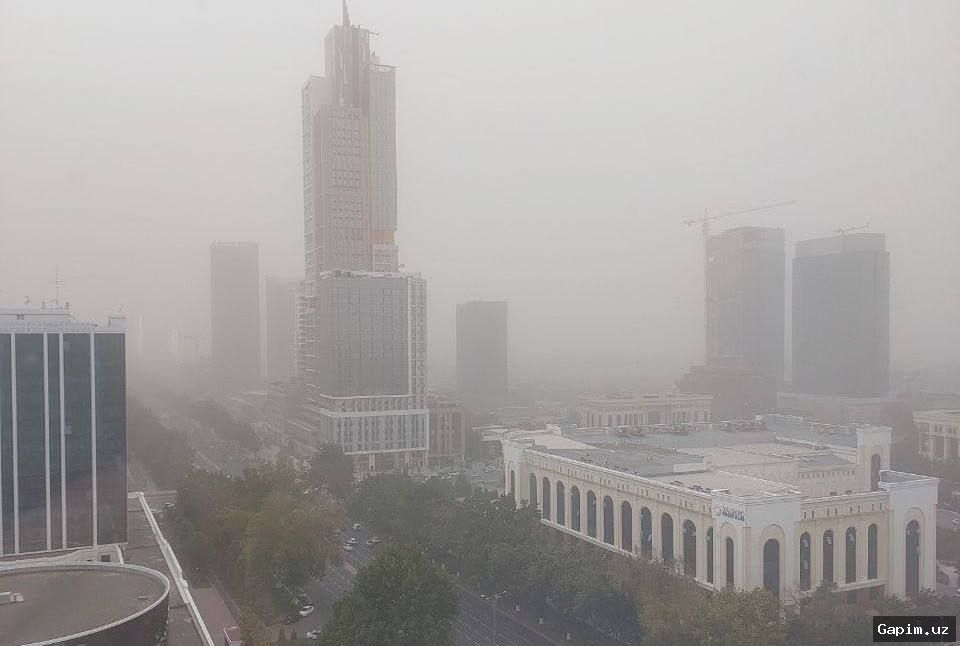
Key Takeaways: Adverse meteorological conditions, including nighttime temperature drops, weak wind speeds, and thermal inversions, are expected to severely restrict air exchange in Tashkent's lower atmospheric layers, slowing down the dispersion of local and regional particulate matter (PM).
Specialized monitoring indicates that while a swift movement of western air masses will partially assist in clearing the atmosphere, lingering weak winds and stagnant conditions could push PM concentrations back up by the evening of November 7, potentially sliding down to the "unhealthy" category. Throughout November 8, urban air is anticipated to hover predominantly between "moderate" and "unhealthy for sensitive groups" levels.
Forecast models show that conditions will briefly return to moderate levels by the morning of November 9, though national indices might occasionally slip into the "orange" category. Daytime warming and subsequent vertical air circulation are expected to provide temporary relief during peak daylight hours. Despite these recurring smog episodes, officials noted that overall atmospheric purity figures for October showed improvement compared to the same period last year.
Amid ongoing ecological challenges, round-the-clock raid operations are continuing 24/7 across the capital and Tashkent region. Recent enforcement sweeps have targeted the operational compliance of 95 industrial and commercial facilities to curb excessive urban emissions and enforce stricter environmental standards.
Source: podrobno.uz