Uzbekistan’s smartphone market has been hit by a sharp rise in iPhone prices after the Customs Committee temporarily suspended customs clearance of mobile devices at Tashkent International Airport to check IMEI codes and counter alleged illegal imports. According to market monitoring cited in local reports, iPhone 18 models rose by $50 to $400 in a single day on Nov. 10 depending on the variant: a silver 256 GB iPhone 18 Pro eSIM that sold for $1,500 on Nov. 9 was offered at $1,650 the next day, while the 512 GB version climbed from $1,800 to $2,000. The measure’s legal basis and duration remain unclear, prompting questions from activists, consumers and market participants.
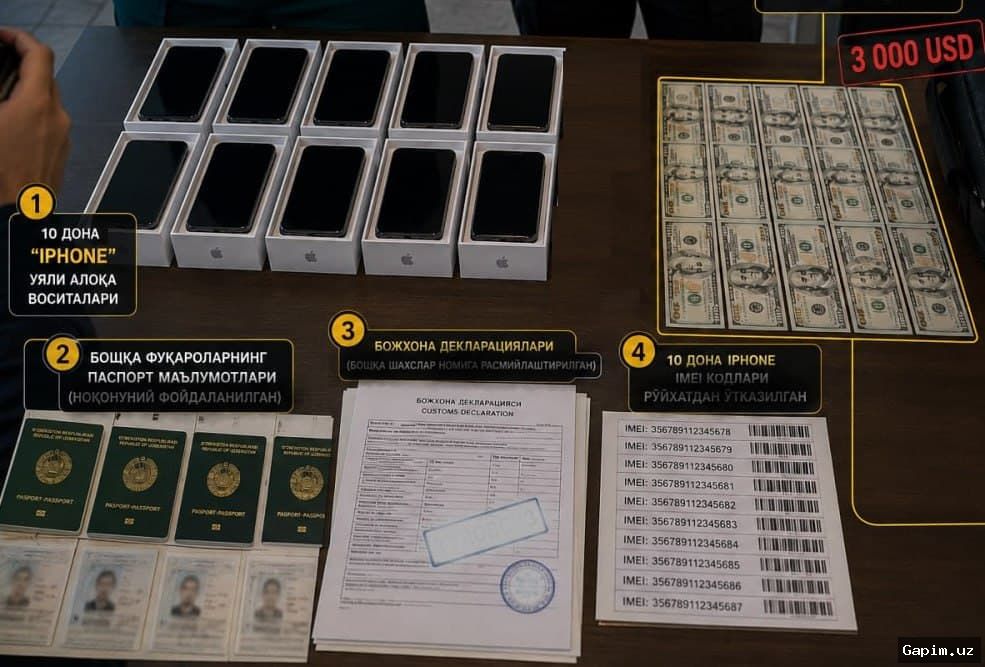
Key Takeaways: Customs clearance of phones at Tashkent airport was suspended until IMEI identifiers are verified and lawful import is confirmed; iPhone 18 prices jumped by $50–$400 in one day; devices with unregistered IMEI codes cannot be used for mobile connectivity in Uzbekistan.
An IMEI is a unique identifier for SIM-capable mobile devices. In Uzbekistan, phones whose IMEI codes are not registered cannot be used on local mobile networks, and customs officials claim that recent cases have involved counterfeit or altered codes used to evade duties. Earlier reports said expensive smartphones imported from abroad could be held for up to 30 days at Tashkent airport for expert checks of IMEI authenticity. The Customs Committee later confirmed that clearance had been temporarily halted, saying the pause would last until identification and legality checks are completed. No end date has been announced, and the disruption has quickly fed through to retail prices.
Public activists say they do not dispute the need to fight illegal imports, but they question whether customs authorities have a legal right to block phone imports without a specific normative act. Officials have so far not explained which law or regulation underpins the suspension. The lack of clarity over both the legal basis and the timeline is adding uncertainty for retailers and ordinary buyers, who face sudden price changes and possible delays in deliveries. The case has also triggered broader debate on social media about how anti-smuggling measures should be enforced without shifting excessive costs onto consumers.
Economist Behzod Hoshimov placed the dispute in the wider context of import restrictions and their economic costs. In his view, the IMEI situation illustrates how barriers to imports can translate into higher prices for consumers, and similar problems affect not only the phone market but many other imported goods. Duties and import restrictions artificially raise product prices, making both consumption and production more expensive, he argued. The next step is for customs authorities to publish a transparent IMEI verification procedure, clarify transition periods and disclose the legal grounds for the suspension. Until then, price volatility and public criticism are likely to continue, with the smartphone market facing further uncertainty.
Source: kun.uz