Uzbekistan’s Senate Council has tasked a newly formed working group with improving the country’s standing in the Press Freedom Index published by Paris-based Reporters Without Borders (Reporters sans frontières, RSF). The decision, signed on 15 October, states that the Republican Council on Work with International Ratings and Indices, chaired by the Senate speaker, should discuss the issue annually in the upper chamber. It expresses concern that after reforms began in 2016–2017 and the country climbed 36 places in 2019–2022, Uzbekistan’s ranking has fallen by 14 positions since 2024. Gazeta.uz reported that RSF assesses the media freedom situation as “very difficult” and ranks Uzbekistan 147th among 180 countries.
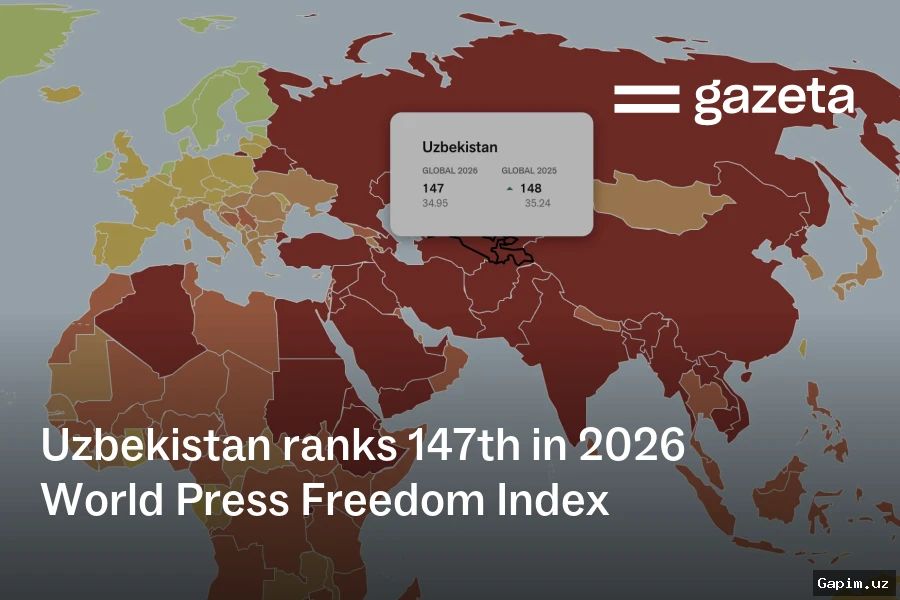
Key Takeaways: Uzbekistan’s Senate Council has established a working group to improve the country’s RSF Press Freedom Index score. The decision cites a 36-place rise in 2019–2022, a 14-place decline since 2024, and RSF’s ranking of 147th out of 180 countries. The group is to study the index’s indicators, assessment methods and foreign experience before proposing legal and media-independence measures.
The Senate document acknowledges problems while noting that the index decline reflects a global trend and that positive changes have occurred in the information sector. According to RSF data cited in the decision, factors affecting Uzbekistan’s ranking include insufficient development of independent private television networks and state-run broadcasting that is largely limited to official information and promotional material. It also points to continued high-level state control over media activity and close ties between some bloggers and government bodies.
The decision says reforms aimed at revising legislative norms that restrict media and journalists have not been implemented sufficiently. It also notes remaining cases of economic pressure by officials and attempts to influence journalists, as well as limited coverage of corruption-related cases in official media. At the same time, the Senate states that recent large-scale reforms to ensure freedom of speech and the press, support journalists and bring positive changes to the information sector have not been sufficiently taken into account in the report.
The document recalls that the Information and Mass Communications Agency under the Presidential Administration, previously responsible for improving the ranking, was abolished in 2025. New responsible bodies include the Inspection for Control in the Field of Informatization and Telecommunications under the Ministry of Digital Technologies, the Media Content Preparation Center under the Presidential Administration and the Center for Mass Communications Issues.
The working group includes representatives of the Senate, the Presidential Administration, several ministries and agencies, and non-governmental organizations. It is tasked with studying the index indicators, assessment issues and data collection methods, identifying Uzbekistan’s strengths and problem areas for each indicator, and conducting a comparative analysis of other countries’ experience. On that basis, the group must prepare concrete proposals on improving legislation, increasing the openness of state bodies, strengthening legal protection for journalists and ensuring media independence. It is also expected to meet journalists, bloggers and experts to systematize problems related to barriers to information access, interference in professional activity, economic pressure and security; threats, pressure, violence and interference in journalists’ work are to receive separate attention.
Source: www.gazeta.uz