Uzbekistan’s Navoiy region has completed a solar power plant and battery energy storage system for Navoiyazot, one of the country’s largest chemical enterprises, at a total cost of $220 million. The project was implemented by Chinese company Sinoma through direct foreign investment. The new facility is expected to supply the industrial site with renewable electricity and significantly reduce its consumption of natural gas.
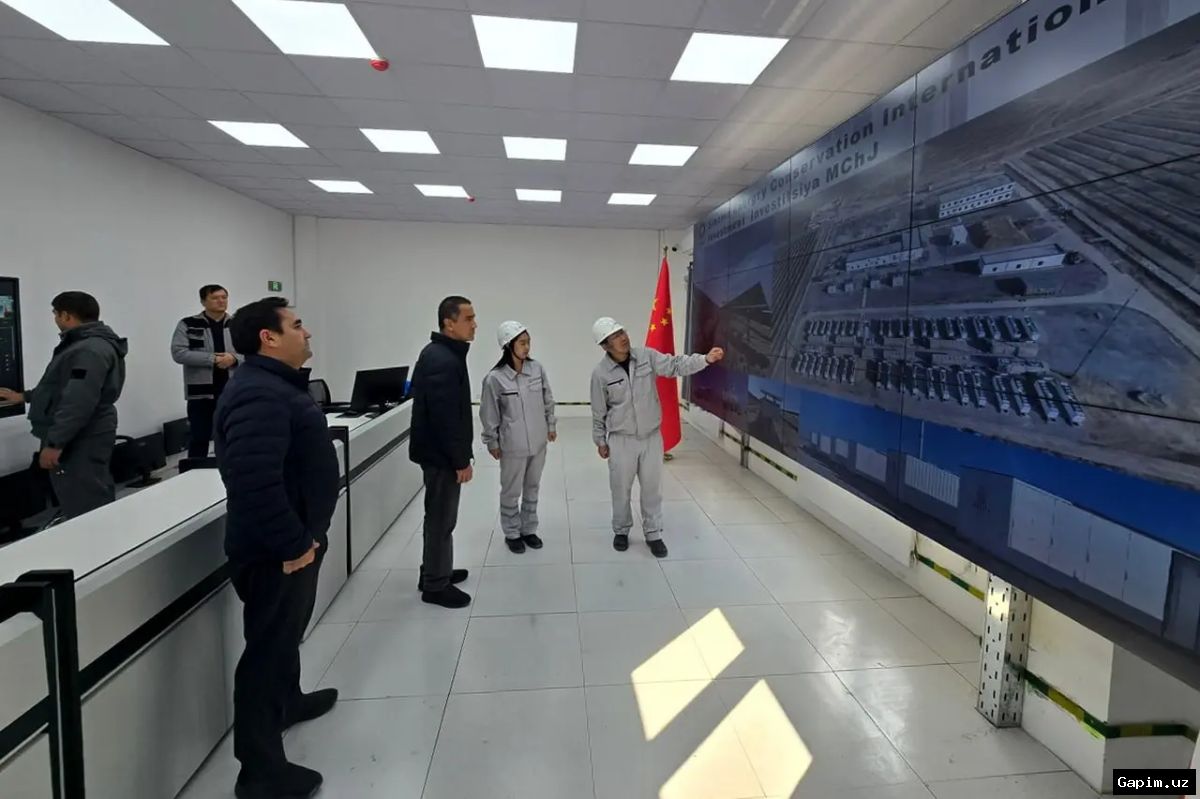
Key Takeaways: The project includes a 300 MW solar plant and a 75 MW/75 MWh energy storage system built for Navoiyazot under a $220 million investment by Sinoma. The plant is projected to generate about 657 million kWh of electricity per year. It is expected to save roughly 175 million cubic meters of natural gas annually and cut carbon dioxide emissions by nearly 378,000 tonnes.
The project fits into Uzbekistan’s broader push to expand renewable generation and improve energy security while reducing the industrial sector’s reliance on gas. By connecting solar output directly to a major production facility, the scheme moves beyond standalone power generation and links clean energy to industrial demand. Such projects are seen as a practical way to modernize energy-intensive enterprises and support the country’s low-carbon transition without disrupting production.
Under the technical arrangement, electricity generated by the solar plant will be delivered directly to Navoiyazot. This is expected to increase the company’s use of green energy in manufacturing and strengthen the reliability of its power supply. According to estimates, annual output of about 657 million kWh will help the enterprise save approximately 175 million cubic meters of natural gas per year. Carbon dioxide emissions are projected to fall by almost 378,000 tonnes, a significant environmental benefit for a large industrial site.
Officials expect the project to support regional economic development and create new jobs in Navoiy region, in addition to lowering the enterprise’s need for conventional energy resources. The facility also adds to local experience in operating solar plants and storage systems, which could be relevant for future industrial energy projects. Investors and government representatives have described such schemes as a way to optimize energy costs and reduce the carbon footprint of major manufacturers.
Previously, the president instructed that ten small-tonnage chemical projects worth a total of $1 billion be launched at the cluster based at Navoiyazot. The new solar plant and storage system are expected to reinforce the energy base for that wider industrial program. Next steps will likely include monitoring actual generation, gas savings and emissions reductions, while assessing whether the model can be replicated at other large enterprises in Uzbekistan.
Source: podrobno.uz