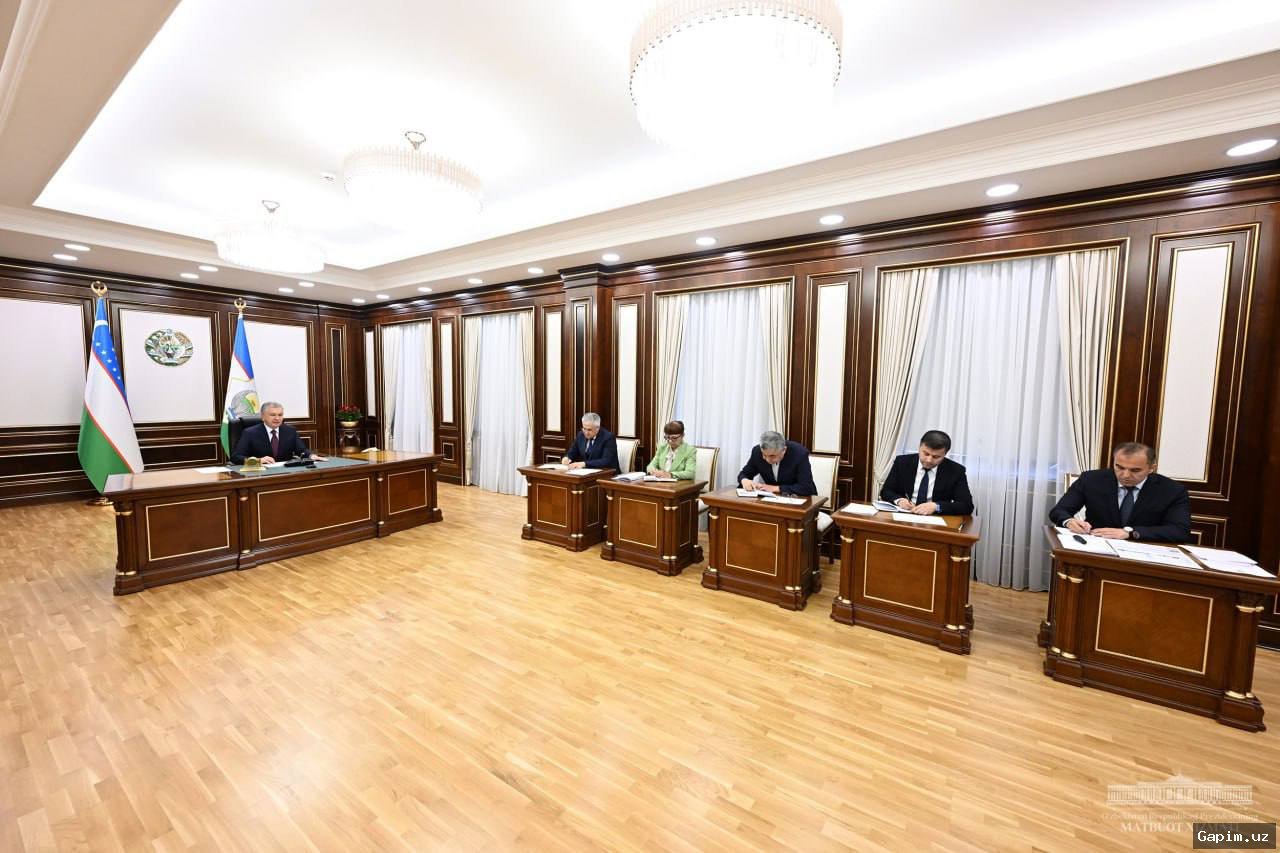
️ President Shavkat Mirziyoyev chaired a video conference focused on expanding production and accelerating the adoption of advanced technologies in Uzbekistan's pharmaceutical industry. The head of state announced new opportunities for pharmaceutical enterprises, highlighting ongoing efforts to boost the sector's growth and competitiveness.
️ During the meeting, it was noted that over the past nine years, the industry has attracted $1.8 billion in investments, with 140 new production facilities launched. Currently, more than 300 pharmaceutical enterprises operate in Uzbekistan, with production volume increasing 3.5-fold to exceed 7.3 trillion soums. Domestic medicines are supplied to markets in 55 countries, creating over 40,000 jobs. The market for medicines and medical products has reached approximately $2.5 billion.
️ Ambitious targets were set for the industry: to attract at least $1 billion in investments by 2026, increase the share of domestic drugs in the internal market to 70% by 2030, and raise export volume to $1 billion within five years. However, challenges were also acknowledged, including the inefficient use of five pharmaceutical zones established on 136 hectares. For instance, the Jizzakh pharmaceutical zone produced no batches of products last year, and plots in the Bostanlyk zone have remained idle since 2017.
️ The president supported proposals from entrepreneurs and announced new support measures. Starting April 1, new projects for drug production and processing of medicinal plants will be exempt from land, property, and profit taxes for three years. Import duties on raw materials and equipment for producers of dietary supplements and cosmetics will be waived. The royalty tax for using foreign brands will be reduced from 20% to 5%.
️ To localize in-demand medications, enterprises will be able to obtain foreign currency loans at 7% interest and preferential loans from the Industrial Cooperation Fund. Half of the costs for technology transfer and Euro GMP certification will be compensated. Additionally, the area of the "Tashkent Pharma Park" cluster will be expanded by 100 hectares to produce the 100 most imported drugs, and a National Bio-Pharmaceutical Research Institute will be established on its basis to integrate science with production.
️ Enterprises with domestic producer certification will be allowed to participate in government procurement regardless of localization level until September 1. A draft law will also be developed to strengthen liability for the circulation of counterfeit medicines.
Source: kun.uz