A man who reportedly posed as a Yunusobodtumangaz employee was detained in Tashkent’s Yunusobod district while receiving 3.3 million soums from an entrepreneur, according to the Department for Combating Economic Crimes under the Prosecutor General’s Office. Officials said the suspect, identified as Sh.R., used a fake service certificate to promise that a 5.2 million soum fine would not be imposed on the business entity. The operation was carried out by the department’s Yunusobod district unit as part of efforts to protect the rights of entrepreneurs.
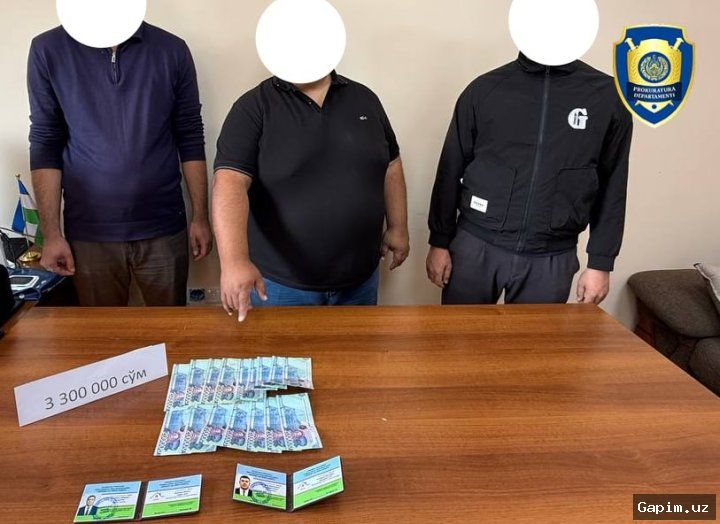
Key Takeaways: Sh.R. allegedly presented a forged service certificate to I.K., the head of C.S. MChJ, and introduced himself as a gas supply employee. He demanded 3.3 million soums in exchange for not applying a 5.2 million soum fine over a violation found at a public catering facility. He was detained with material evidence while receiving the money; a criminal case was opened under Articles 168 and 228 of the Criminal Code.
The case highlights continuing risks of fraud involving fake documents and misuse of trust in Tashkent’s business environment. Using the name of Yunusobodtumangaz, a gas supply organization, raises concerns about public confidence in utility services and official inspections. For law enforcement, such operations are important not only for preventing a specific crime but also for protecting trust between entrepreneurs and official institutions. The department said the operation was conducted as part of its work to safeguard the rights of business entities.
According to the available information, during the operation Sh.R. showed the forged service certificate to I.K., the head of C.S. MChJ. He introduced himself as a Yunusobodtumangaz employee and offered not to impose a fine for a violation identified at a public catering outlet belonging to the company. Officials said the arrangement involved 3.3 million soums instead of a 5.2 million soum penalty. Sh.R. was detained with material evidence at the moment he received the funds.
A criminal case has been opened under Article 168 (fraud) and Article 228 (production, forgery, sale or use of documents, stamps, seals and forms) of the Criminal Code. Investigative actions are ongoing. Authorities are expected to establish the origin of the fake certificate and check whether other people were involved. Further information on the investigation and procedural decisions may be released later.
The case serves as a warning to entrepreneurs: inspections and fines should be handled only through official bodies, proper documents and lawful procedures. Businesses are advised to contact law enforcement in suspicious situations, avoid informal payments and use only legal channels. The department’s operational measures are described as aimed at protecting the business environment and preventing economic offenses.
Source: kun.uz