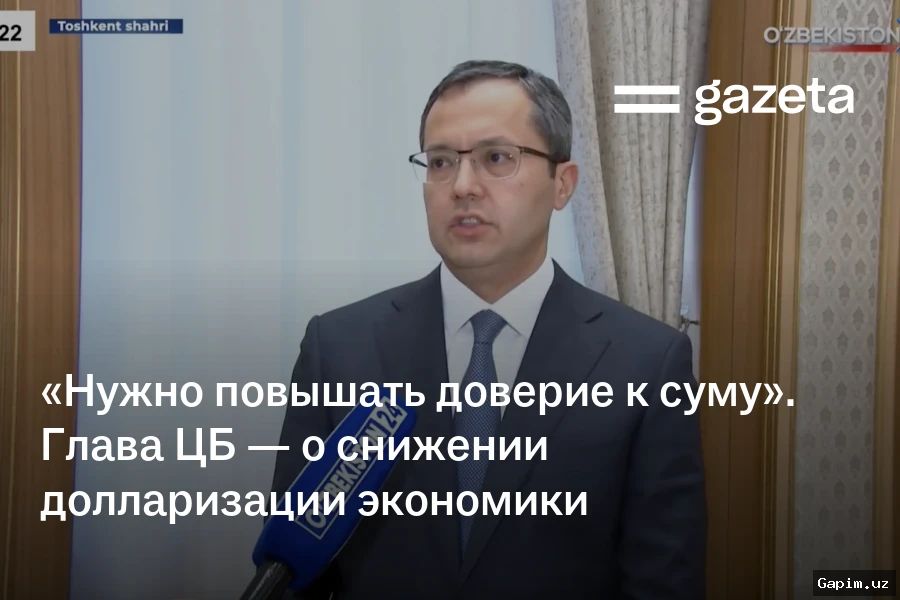
Central Bank of Uzbekistan Chairman Timur Ishmetov, in an interview with the Uzbekistan 24 television channel, explained the tasks set for the regulator at a meeting chaired by President Shavkat Mirziyoyev on 13 November. The meeting discussed the draft 2027 state budget, key macroeconomic forecasts and the next directions of economic policy. According to the Central Bank chief, the discussions focused on safeguarding price stability, improving the effectiveness of monetary policy and continuing banking-sector reforms.
Key Takeaways: The 2027 budget draft and macroeconomic forecasts were reviewed at the presidential meeting; the Central Bank aims to keep inflation below 6% before reducing it to 5%. Priorities include lowering dollarization, strengthening confidence in the soum, improving liquidity management and transforming state-owned banks.
Ishmetov said 2027 would be an important stage in reaching Uzbekistan’s long-term economic objectives. The regulator plans to continue work on price stability, more effective monetary-policy instruments and modernization of the banking sector. Earlier, the Central Bank presented draft main directions of monetary policy for 2027–2029; its baseline scenario envisages bringing inflation down to the 5% target in the second half of 2027.
One of the Central Bank’s main tasks remains reducing the economy’s dependence on foreign currency. “The main issue is reducing the level of dollarization and increasing confidence in the soum, so that the economy borrows and lends more in soums and the population’s deposits and loans are mainly converted into soums,” Ishmetov said. He stressed that lowering dollarization is needed to reduce risks linked to foreign-currency operations and borrowing.
The meeting also set the task of improving the effectiveness of monetary-policy instruments. The regulator intends to expand liquidity-management capacity and develop domestic financial markets. “We will introduce new instruments in both the foreign-exchange market and the interbank market. Overall, we will increase the effectiveness of the Central Bank’s monetary-policy instruments,” Ishmetov said. The document provides for reviewing the interest-rate corridor, strengthening the role of the UZONIA rate as a benchmark for the money market and developing instruments to hedge interest-rate and currency risks.
The Central Bank chairman also emphasized the need to accelerate the transformation of state-owned banks and the privatization of some of them. “The second direction is to accelerate the transformation of state banks and speed up the privatization of some of them. This is needed to raise economic growth and the quality of the economy to a new level in the next decade,” he said. An official statement following the meeting noted the need to expand private capital participation in the banking system, increase credit resources and improve mechanisms for financing investment projects. The next stage will be the practical implementation of these tasks and final approval of budget and monetary-policy targets.
Source: www.gazeta.uz