Traditional Uzbek ayvans presented by President Shavkat Mirziyoyev on the occasion of the 250th anniversary of US independence have been installed in Washington’s historic West Potomac Park for President Donald Trump and the American people. The announcement was made by Uzbekistan’s Ambassador to the United States, Furqat Sidiqov, on his Instagram page. According to the diplomat, the gift underscores cultural ties, friendship and strategic partnership between the two countries. The ambassador thanked President Donald Trump for accepting the gift on behalf of the American people.
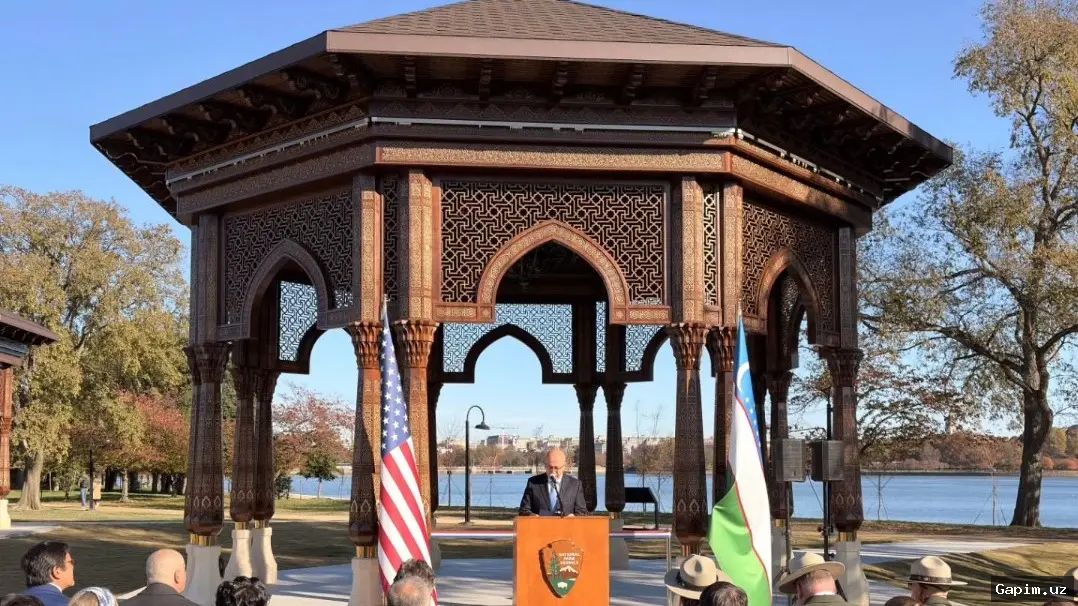
Key Takeaways: Traditional Uzbek ayvans were installed in West Potomac Park in Washington as a gift from President Shavkat Mirziyoyev for the 250th anniversary of US independence. Ambassador Furqat Sidiqov announced the initiative on Instagram and said the gift was accepted on behalf of President Donald Trump and the American people. According to the ambassador, the flight of the US presidential helicopter over the garden gave the ceremony symbolic meaning.
The initiative reflects Uzbekistan’s broader push in cultural diplomacy. In recent years, Tashkent has increasingly used international platforms to promote national architecture, crafts, music and applied arts. Placing the ayvans in West Potomac Park, one of Washington’s most visited historic areas, ahead of the US 250th anniversary creates an opportunity to introduce a wide audience to Uzbek culture. At the same time, the gesture highlights the cultural and humanitarian dimension of relations between Tashkent and Washington, even as broader geopolitical tensions and domestic political polarization in the United States complicate international cultural initiatives. The project also fits into Uzbekistan’s efforts to expand people-to-people contacts and tourism ties with the United States.
According to Ambassador Sidiqov, the US presidential helicopter flew over the garden during the ceremony, lending the event a distinctive symbolic meaning. He described the moment as an expression of friendship and strategic partnership between the two countries. The report states that the ayvans, built on the traditions of Uzbek national architecture and craftsmanship, will serve as a place where tourists from around the world can learn about Uzbek culture and art. They are also expected to become a venue for the Uzbek diaspora in the United States to preserve national traditions and hold cultural events.
Next steps may include cultural presentations, diaspora gatherings and thematic events around the ayvans. Uzbekistan’s embassy in Washington is expected to provide further details. Analysts note that such cultural initiatives can help build trust between societies, though questions remain over whether the ayvans will become a permanent exhibit or remain a temporary project. If maintained as a permanent cultural site, the installation could also require coordination on maintenance, security and programming with local partners. The fate of the installation has not yet been officially clarified.
Source: www.gazeta.uz