President of Uzbekistan Shavkat Mirziyoyev signed decree PQ-394 on further popularization and development of cycling on November 11, 2026. The document is intended to improve conditions for cycling, identify talented athletes and raise the performance of national teams at international competitions. It combines school infrastructure, coach training and mass participation, setting staged targets for 2027–2030.
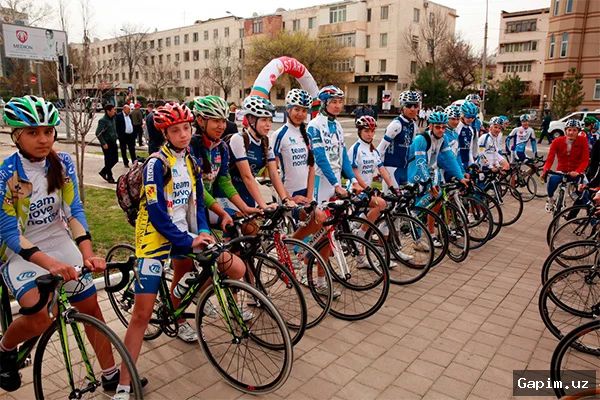
Key Takeaways: The ‘Tashkent Experience’ project will begin in March 2027, with selected schools in the capital receiving bicycles in stages during 2027–2028. Each selected school is expected to receive four mass-use bicycles and one professional bicycle, while the number of mass cycling participants is targeted to reach 30,000 by 2030.
The decree treats cycling as both mass physical education and a talent-identification tool for building reserves for national teams. Developing school sports infrastructure, attaching coach-selectors to schools and involving pupils in cycling are meant to increase children’s physical activity and create conditions for systematic and safe training. The approach is seen as a model that can later be extended to the regions, with early talent identification expected to help bridge mass participation and elite sport.
The document also sets out specific mechanisms: video materials on cycling for school pupils are to be prepared by the 2027–2028 academic year, and a ‘Cycling for School’ programme will be introduced from March 2027. Coach-selectors assigned to selected schools will work on attracting pupils to cycling and identifying gifted young athletes. The project is to be financed from local budget funds, indicating that implementation and oversight are linked to regional authorities.
From 2029, the results of the ‘Tashkent Experience’ are to be analysed and proposals submitted on rolling out the practice gradually across all regions of the country. By 2030, Uzbekistan also aims to raise the number of regular cycling participants to 5,000 and the number of cycling coaches to 350. In the next stage, observers are expected to monitor the practical results of cooperation between schools, local authorities and sports organisations, as well as the efficiency of the bicycles provided.
Source: kun.uz